

Analysis by Steve Ahern
Australian commercial radio businesses are resetting for a new era of audio advertising.
For some time I have been commenting that we are living through a period of change where it is difficult to pick successful trends, as companies experiment with new business models and track changing audience consumption habits.
This week we have seen some clear indicators emerging from the financial reports of four audio media companies.
Southern Cross Austereo (SCA) and Australian Radio Network (ARN) have both consolidated their business activities to audio, after SCA sold its tv assets and ARN sold it’s outdoor assets. This is a vote of confidence in audio.
Both companies have gone through pain over the past few years as they shed staff and restructured their cost base to reposition themselves for the future. The painful reset is over and the next stage now begins.
No matter what anyone says, radio is not dead, but let’s be clear, radio is now only one part of the future for audio media businesses. Audio companies like SCA and ARN have repositioned for the future by embracing digital audio offerings.
In this week’s results reports, both companies separated broadcast radio from digital audio. Digital audio can be further broken down into podcasting and streaming. Associated digital assets, such as social media extensions are also a small part of the revenue mix. Bear in mind that SCA reported its full year results, while ARN reported only its half year results, but the business trends are consistent from both sets of figures.
Trend 1: Broadcast Radio is still the big revenue gorilla.
For now broadcast radio revenue is about 90% of total revenue for both companies, while digital audio revenue is about 10%. When people talk about broadcast radio like it is a lost cause, they are usually unaware that it is still bringing in the bulk of revenue for audio media businesses.
Trend 2: Digital audio revenue is the fastest growing revenue segment
Both companies reported a fast revenue growth rate for digital audio, while broadcast radio’s growth was flat. This of course signals that future revenue growth will come from digital audio and that one day a point of equilibrium will be reached when radio brings in 50% of revenue and digital audio makes the other 50%. If we assume a growth rate of 20% per year for digital audio that point may be reached in 5 years. But the converse need not be true, let’s not assume that broadcast radio revenue will shrink at the same rate, maybe it will hold and digital will grow to bring in additional revenue to grow the total audio pie.
It makes sense that companies are thinking ahead now and resetting their staffing and production workflow for that future. The other element of the digital reset is in advertising.
Trend 3: Advertising
The old method of selling broadcast radio advertising is not fit for purpose in the digital world and companies are moving to sell digital advertising in much faster and easier ways. The days of long lunches to clinch big contracts for radio and tv advertising are long gone, and in their place is online media buying, dynamic pricing and fast turnaround of creative proposals, audio demos and ad production. This is not by choice, everyone loves a long lunch, but the international digital giants invented and monopolised new ways of selling that forced a reset in the way media companies do business with their clients.
Trend 4: Broadcast for reach, Podcast and Streaming for niche
The proposition for advertisers is now much clearer than it was a few years ago. Free to air broadcast radio still delivers mass reach, while digital audio delivers targeted niche reach. Buy both and you get the best of both worlds.
Digital audio offers flexibility and targeting if you understand it properly. Digital audio is more than podcasting. It is also broadcast radio streaming, music streaming and associated visual advertising on apps and websites.
Podcasts deliver audiences aggregated around topics, hobbies, passions and purposes, building communities of interest and fan clubs, that are attractive to some advertisers. Numbers of podcast listeners are important, but so is impact. A podcast does not need a huge audience to have an impact on someone’s life or to sell a niche product.
Radio and music streaming have opened up the ability for hyper-geographic targeting, and for other target segmenting based on weather, time of day and interest. Once a user is signed in to an app like iHeart Radio or LiSTNR, their interests can be aggregated with their podcast topic preferences and their geographic movements, with the appropriate privacy safeguards in place of course.
The digital platform spin offs from each audio product also open up possibilities for additional value ads for clients and more digital revenue.
Drilling down on the figures:
- SCA’s broadcast radio revenue was $376 million, while its digital audio revenue was $45 million. Broadcast radio profit was $97 million and digital audio profit was $2 million. The company has about a 17% profit margin.
- ARN’s half year revenue was $85 million for metro stations plus $56 million for regionals, a total of about $141 million. Digital revenue was $11 million.
- Both companies reported one off figures related to sales of other assets (Regional tv for SCA, Outdoor in Hong Kong for ARN), which either made the bottom line look better or worse for this reporting period, but the significant thing is that “continuing operations” look good for audio.
Over at Nine Entertainment, audio is a tiny part of that business, only about 3% of total revenue, but the trends are still the same. Total audio revenue within Nine was $101 million, out of a total income of $2.6 BILLION. TV’s profit margin within the big Nine Entertainment behemoth was about 16%, while the audio division had a profit margin of about 9%. Nine has also had a business restructure (as well as the more difficult restructure of its culture) to reposition itself to deliver advertising in new ways to its many audience segments.
Nine’s influential talk content on radio, mixed with editorial content from its newspapers and its visual content on tv and digital video platforms give it the scale to sell across many advertising sectors. The speculation about Nine wanting to buy or sell (depending on which piece of gossip you believe) audio assets only reinforces the interest in commercial audio businesses.
Last to report this week was Sports Entertainment Group (SEN). It is a complex business entity that owns sports publications and radio stations, and recently sold sporting team licences and its NZ stations. The company bought its Victorian radio rival RSN and now controls two sports networks in Victoria, as well as its stations in other states. CEO Craig Hutchison said, “These results are the product of years of building scale, reach, and capability across the country. With our cost base reset and strategic initiatives now delivering, we’re well positioned for continued growth.”
It’s about scale, new operating strategies, resetting the advertising business model and expanding into new audio opportunities without throwing the radio broadcast baby out with the bathwater.
SCA CEO John Kelly described it as being “a best-in-class audio company” with radio as the revenue base and digital as the growth segment. Kelly is rightly proud of the success of LiSTNR, despite the sceptics when it was first launched.
ARN CEO Ciaran Davis talked about his company’s reset as a “transformation program” to strengthen “digital capability” that is heading towards a “digitally driven content and commercial model.” Watch for an upgrade of the iHeart app in a couple of months that will give the company more opportunities to leverage digital audio.
Nine CEO Matt Stanton described his reset as a “strategic transformation program” aimed to “refocus [the] operating model, aligning the business across three key verticals – Streaming and Broadcast; Publishing; and Marketplaces.”
It has been a painful period for our commercial audio companies as they tried to figure out how to operate in a new environment where competition for Australian ad dollars is more fierce than ever and the playing field no longer has any geographic boundaries.
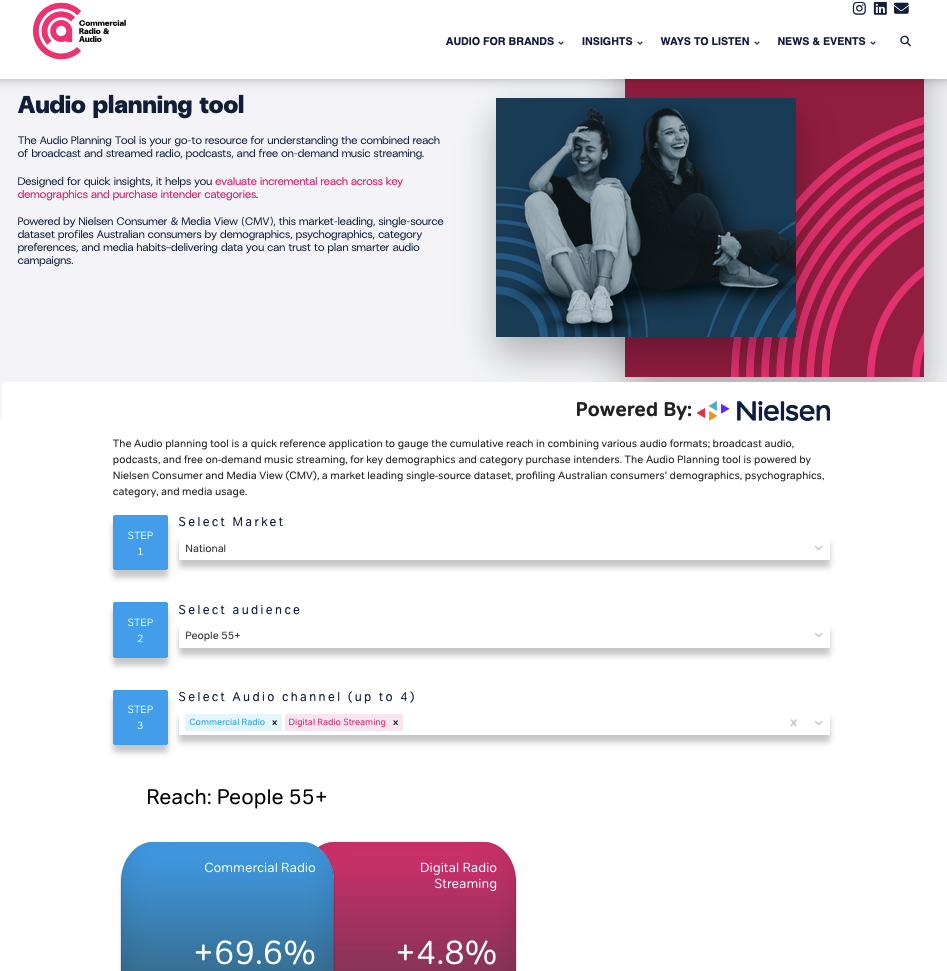
Australian companies are doing their bit to remain profitable so that they can deliver Australian content to Aussies, and CRA is moving forward on digital planing and buying.
Bus Australian media businesses are also asking for help from government to strengthen their hand against the digital tech giants through the media bargaining code, social media regulations and Australian content quotas.
…and just when we thought we were working out the business model, along comes generative Ai.
The interesting thing about Ai is that it might diminish the power of search and may increase the value of original media content, ushering in another rebalancing of the media landscape.
Hold on tight and enjoy the ride!
Related articles:
Fully focused on being a best-in-class audio company: John Kelly on SCA’s 2025 Results
Revenue down, Gold Network outperforming market, KIIS underperforming – ARN 2025 HY results
‘Strategic Value’ – Sports Entertainment Group FY25 results positive from sales and initiatives
About the Author:
Steve Ahern is the managing editor of this publicatiuon and CEO of the training company AMT Pty Ltd.