
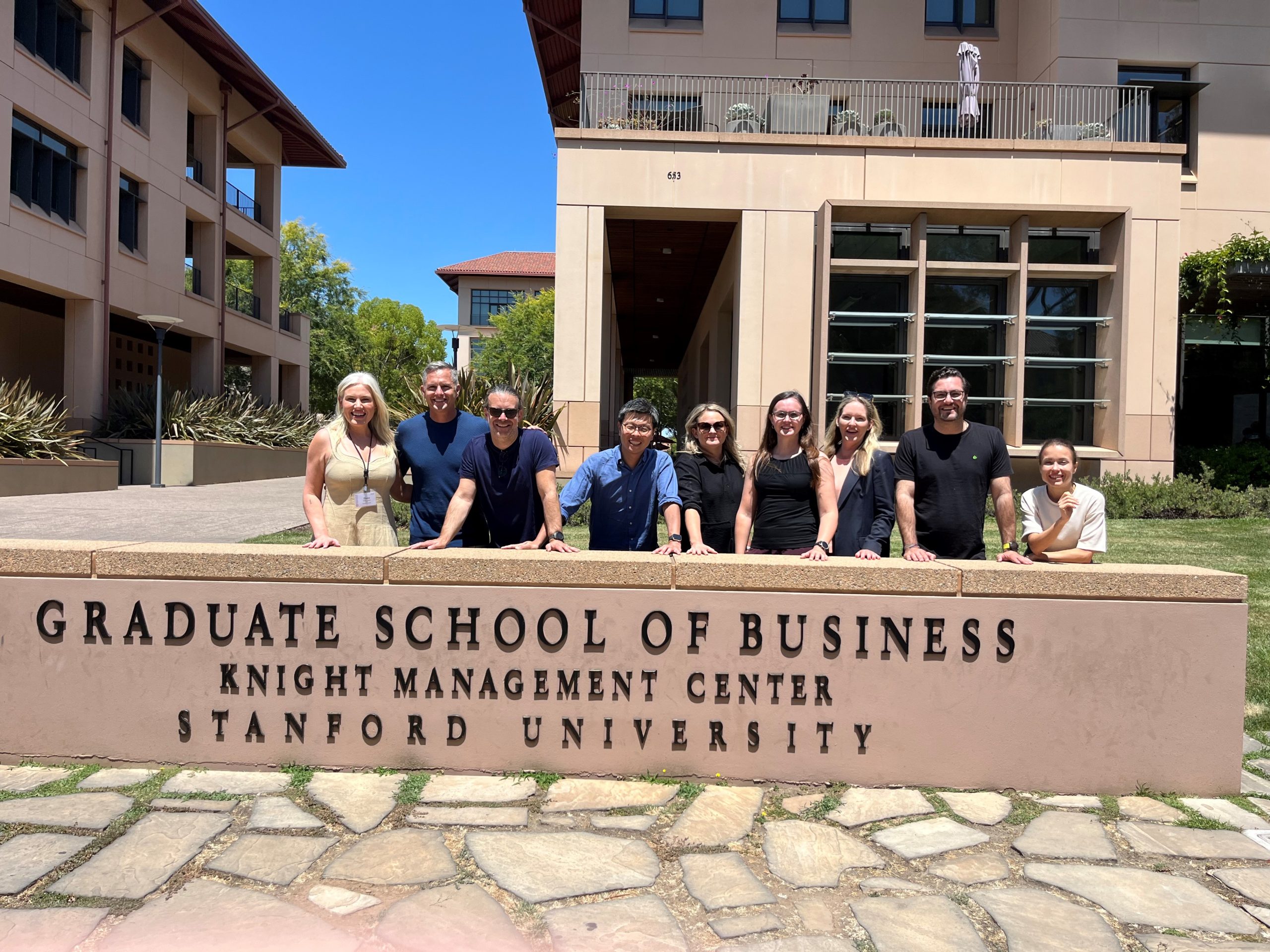
Contribution by Fiona Ellis-Jones, ARN Head of News and Information
“Your job as a leader is not to predict the future. It’s to create the systems that discover the future” – Prof. Bill Barnett, Stanford Graduate School of Business
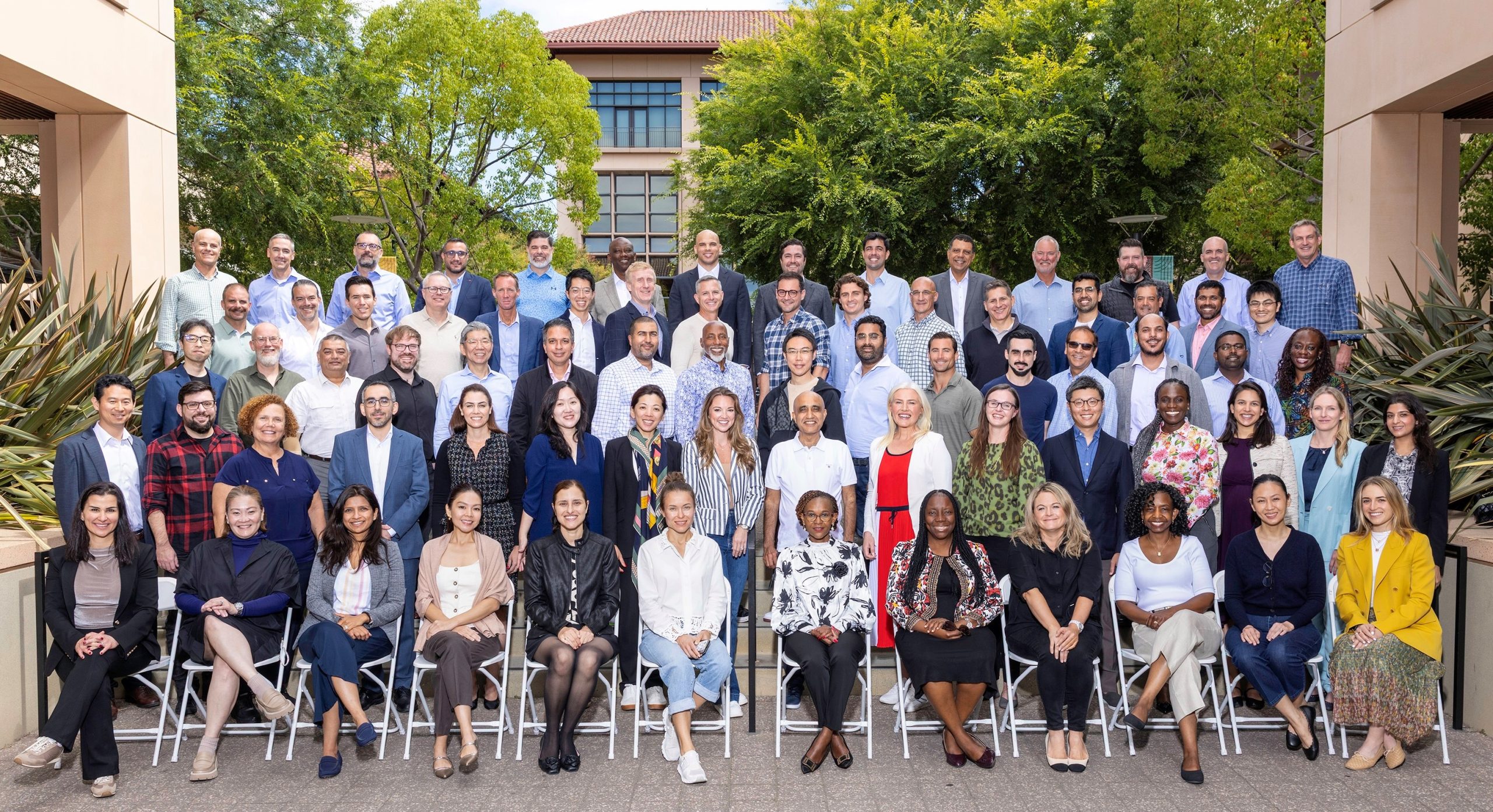
Last month, I found myself at Stanford University, surrounded by 73 brilliant leaders from around the world, deep in the heart of Silicon Valley.
I was there as the recipient of the Maureen Kerridge AM Scholarship, thanks to the generosity of the Kerridge Foundation and Chief Executive Women. It was a once-in-a-career opportunity to study Executive Leadership Development at one of the world’s most influential institutions. And to pause, properly, and think about the future. Maureen was a trailblazer for women in both media and leadership, which made the experience all the more meaningful.
I’ve spent the last two decades at the forefront of Australian news, across the ABC, Nine and commercial radio. But Stanford gave me the distance to examine the forces reshaping our industry beyond the next bulletin, story or platform. The bigger shifts around culture, technology, trust, disruption, and leadership.
And here’s the thing … it’s all about change.
But most of us aren’t nearly as good at it as we think.
We like to believe only the slow or out-of-touch fall behind. But history tells a different story. Often it’s the biggest companies — with the deepest pockets and smartest people — that are caught off guard.
Kodak. Blockbuster. Borders. All household names. Now cautionary tales.
Why? Because the very systems that help a business scale can also stop it from adapting. That’s the real irony. Success breeds systems. And systems breed inertia.
Radio is not immune. We have strong brands, loyal audiences, and incredible teams. But many of the instincts and structures we rely on were built for a different era. Today, the average lifespan of an ASX listed company is just 10 years. Legacy isn’t a protection … in fact, it can slow you down.
One of the most confronting sessions at Stanford was on artificial intelligence. It was equal parts exciting and terrifying.
ChatGPT reached 100 million users in just 60 days. Even the world’s top tech minds didn’t see that coming. Google has projected that, in the not-so-distant future, computing could account for up to 99% of global energy use. Microsoft has already purchased a nuclear power plant to power its AI infrastructure. Let that sink in.
This is not a trend. AI is a fundamental transformation … of how we work, how we communicate, how we earn trust, and how we define what’s real.
And yet, many media organisations still haven’t shifted. If your organisation is not embedding an AI-first mindset into your culture and operations, you’re literally standing still while the ground moves beneath you.
Right now, there’s a clear decoupling between labour and productivity. What used to require human effort is already being done faster and better by machines. That’s already here.
Artificial General Intelligence (AI that can outperform the smartest human experts) is expected to arrive within five years.
AI doesn’t just change how we work. It changes how people experience and interpret the world. We’re moving into a post-trust era, where every voice, image or video can be generated. And faked.
In that world, the question becomes — who can you trust?
And that’s our greatest opportunity.
Radio has always been built on connection. Connection through voice, intimacy, and relevance. Our strength lies in relationships. In this new landscape, trust becomes our product.
Local newsrooms shine in this space. Their accountability, proximity and connection to community offer something technology can’t easily replicate.
These are the creative, relational, human skills that matter most. And they must be harnessed.
Trust also flows from culture.
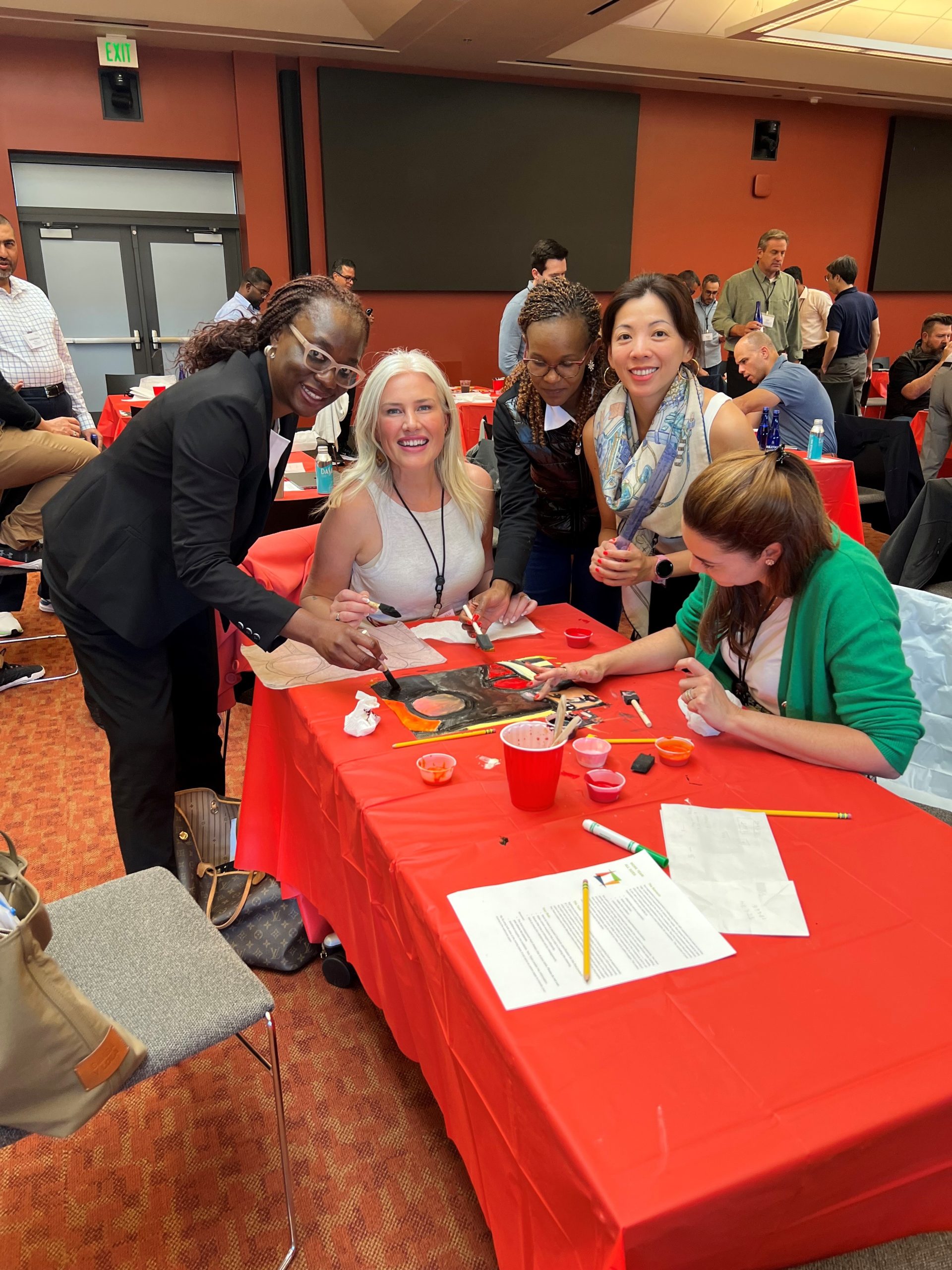
One idea that really stuck with me was the concept of ambidextrous leadership — the ability to lead for both today and tomorrow. To keep the core business strong while also experimenting at the edges. To hold stability and innovation in the same hand.
That doesn’t happen by accident. It takes design. It takes discipline. And it takes a willingness to challenge the status quo.
A second-rate strategy, well executed, will always beat a brilliant strategy that never gets off the ground.
Too often in media, we chase the big idea. We confuse strategy with goals. We mistake vision for execution. We put too much energy into serving our linear masters. And, dare I say, not enough into building the systems that help us discover it.
Did you know Google almost didn’t happen? The word “search” wasn’t even part of the mainstream lexicon. The founders weren’t chasing a market at that point. They were solving a technical problem. Their strategy wasn’t predictive. It was exploratory.
We now live in a post–big data world. It’s not about more information … it’s about better data. And faster testing.
The media companies that thrive won’t be the biggest or the richest. They’ll be the ones that are adaptable. That stay true to their values. That are competent and robust enough to deliver today’s results, while prototyping the future. And those that are brave enough to do the slow, human work of trust, feedback and reinvention.
Radio has always been a medium of intimacy and immediacy. Now, we must also become a medium of transformation.
Because the next five years will decide who’s still here in fifteen.
Images: Fiona Ellis-Jones