

The 2024-25 WGEA pay gap figures have been released for Australia’s private sector advertising and media industries with 100 employees or more. Leading marketing management consultancy TrinityP3 said the data shows improvements for some, including Foxtel, Nine Publishing and Seven West Media, but persistent pay gaps remain. One of the things noted to be aware of is when there is an imbalance in the gender composition of the quartiles and a large difference in average pay between low and high earners this can result in a larger gender pay gap.
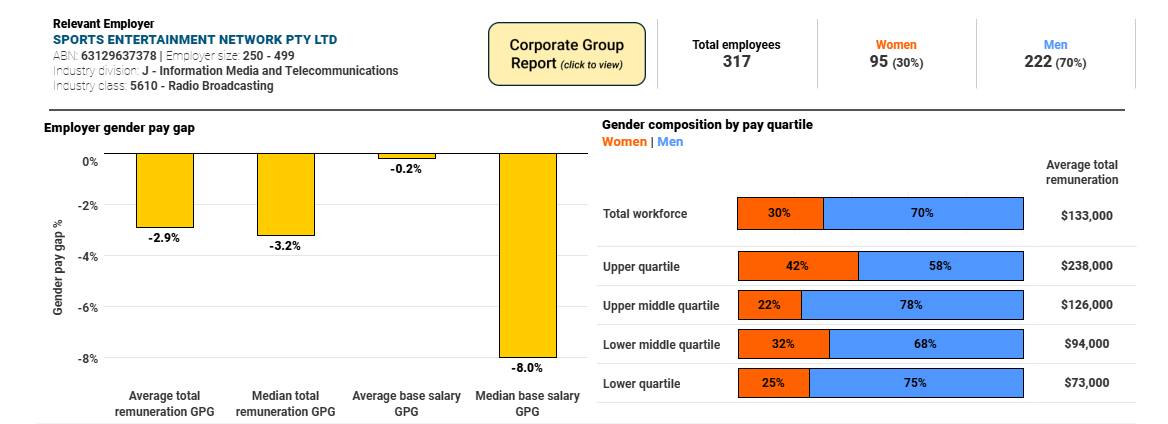
For the Sports Entertainment Network (SEN), where the gender composition is 70% men /30% women, they were the only broadcast organisation with no gender pay gap and women demonstrably receiving equal, if not marginally better pay than their male counterparts. Based on the note above, this is an outcome that CEO Craig Hutchison should be proud of, but perhaps with a view to enticing more women into sports media roles.
Hutchison said:
“The latest data from the Workplace Gender Equality Agency (WGEA) provides an important lens on where our industry stands, and we’re pleased to see that the data reflects the positive progress we’re making at SEN. As owners of three women’s sporting teams, we are deeply invested in the growth of women’s sport and excited about the future; not only for the athletes competing professionally, but also for the many women building meaningful careers across our organisation. We remain committed to strengthening gender equity and continue to invest in strategies that create opportunities for women at various levels.”
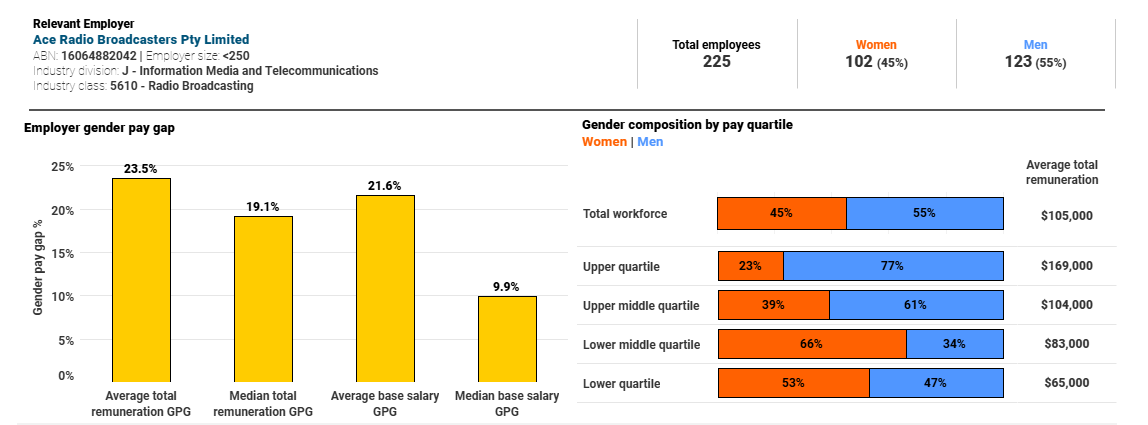
At the other end of the scale, when a gap in the target range between -5% and +5% is considered a fair balance, the ACE Radio Network had the most significant discrepancy. Both average base salary and average total remuneration have a greater than 20% gender pay gap.
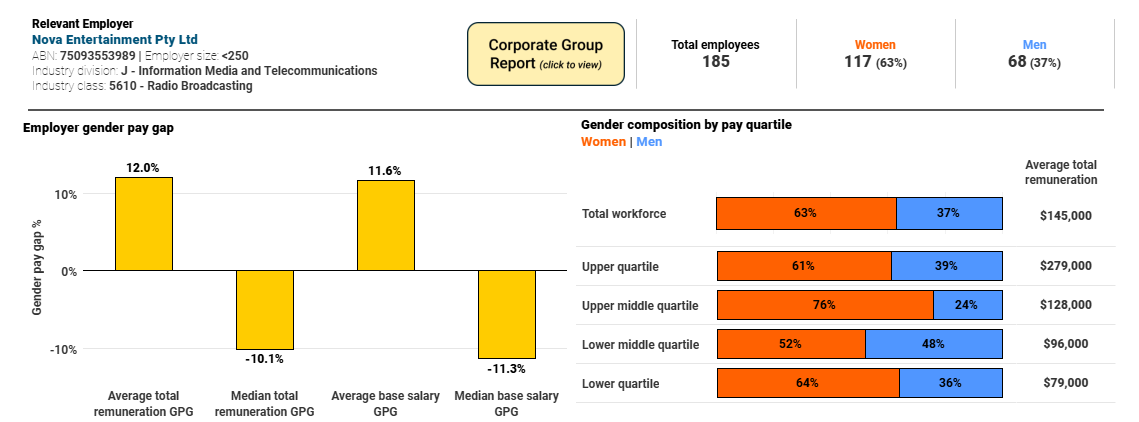
Nova Entertainment, similar to ARN and SCA, has more women employed in the company, but the gender pay gaps in the averages versus the median show that those being paid the highest amount are men, with better pay parity in the mid range salaries.
ARN, with an awareness that much of that upper quartile will be affected by Kyle Sandilands and Jackie O‘s considerable but equal salaries, still saw one of the higher pay gaps across the organisation.

SCA have put effort into addressing their pay gap in recent years, with their upper and middle quarter employees a 50/50 gender composition.

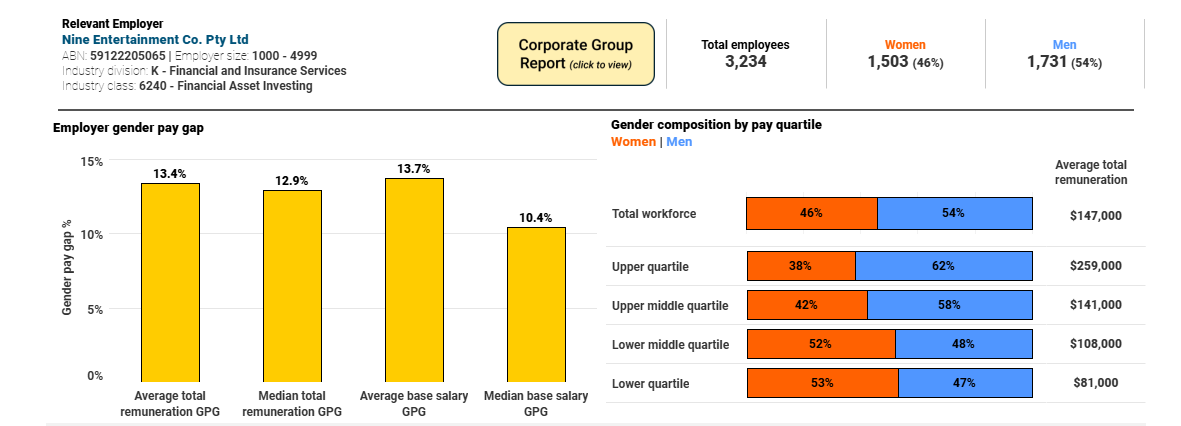
With the release of this data, companies can provide a statement addressing their results. The only two radio broadcast organisations to do so were the ABC and Nine Entertainment. Both results are below with Nine, in their statement and results, showing improvement. For both the ABC and Nine there are a higher percentage of men in better paid roles, with that more significant within the ABC who employs a greater percentage of women.

SBS was also sitting at around a 10% gender pay gap.

Overall radio broadcasting organisations are faring better than the private sector average. The national gender pay gap was 21.1% for average total remuneration and 15.7% for average base salary.
Jen Seyderhelm is a writer, editor and podcaster.