
The final report of the Digital Platforms Inquiry by Australia’s competition and consumer commission (ACCC) “strongly supports” the Government’s intention to introduce a general prohibition on unfair trading practices, and its commitment to implement a new digital competition regime.
The ACCC considers that action is needed, fast, to “legislate the proposed digital competition regime” and prohibit “unfair trading practices” by international digital companies such as Google, Meta, Amazon, Microsoft, Apple and Tiktok.
The commission also recommends an independent external dispute resolution scheme for users of digital platform services, with a forward looking mandate to include new developments in cloud computing and AI.
Digital platform services are “critically important to Australian consumers and businesses” says the report. They are “major drivers of productivity growth in our economy.”
Today, Australians have a clear reliance on these services to participate in modern life. For example, in 2024:
- almost all Australian adults (99%) used a device to access the internet, increasing from 90% in 2019.
- 94% of Australians aged 14 and over owned a smartphone
- 37% of Australians had a wearable device connected to the internet.
Many Australian businesses benefit from accessible and user-friendly digital platform services, but the threat that comes with the ubiquity of digital services means that there is the possibility of the largest international digital services companies and platforms using their size to behave in a way that is anti-competitive and against the interests of Australians.
While constitutional amendments in America give these platforms a degree of legal protection, America’s ‘freedom of speech’ amendments do not apply in Australia, nor do the protections of American corporate law. The ACCC advises that Australian needs to develop its own laws and regulations to enhance the benefits of digital platforms and minimise potential exploitation by the international digital giants.
The benefits of digital platforms “include search and display advertising that allows businesses to reach customers in larger markets, and tools for developing, promoting, and distributing physical or digital products (including apps). The global availability of digital platform services reduces the friction of trading across borders, making it easier for Australian businesses to connect to international customers. Such services are particularly beneficial for small and medium-sized businesses that lack the resources of larger firms to access customers through other channels,” says the report.
The report also recognises that digital platform services have created opportunities for businesses to innovate with their own products, services, and business models, as recently recognised by investments made by Clive Dickens’ company Meliora.
With businesses and consumers relying more on digital platform services, this has allowed digital platforms to become among the largest companies in the world. By the end of 2024, Amazon, Apple, Alphabet (Google), Microsft and Meta had a combined market capitalisation of more than US$13 trillion. Digital platforms are also continuing to grow and expand the breadth of their offerings, most recently into generative artificial intelligence (generative AI).
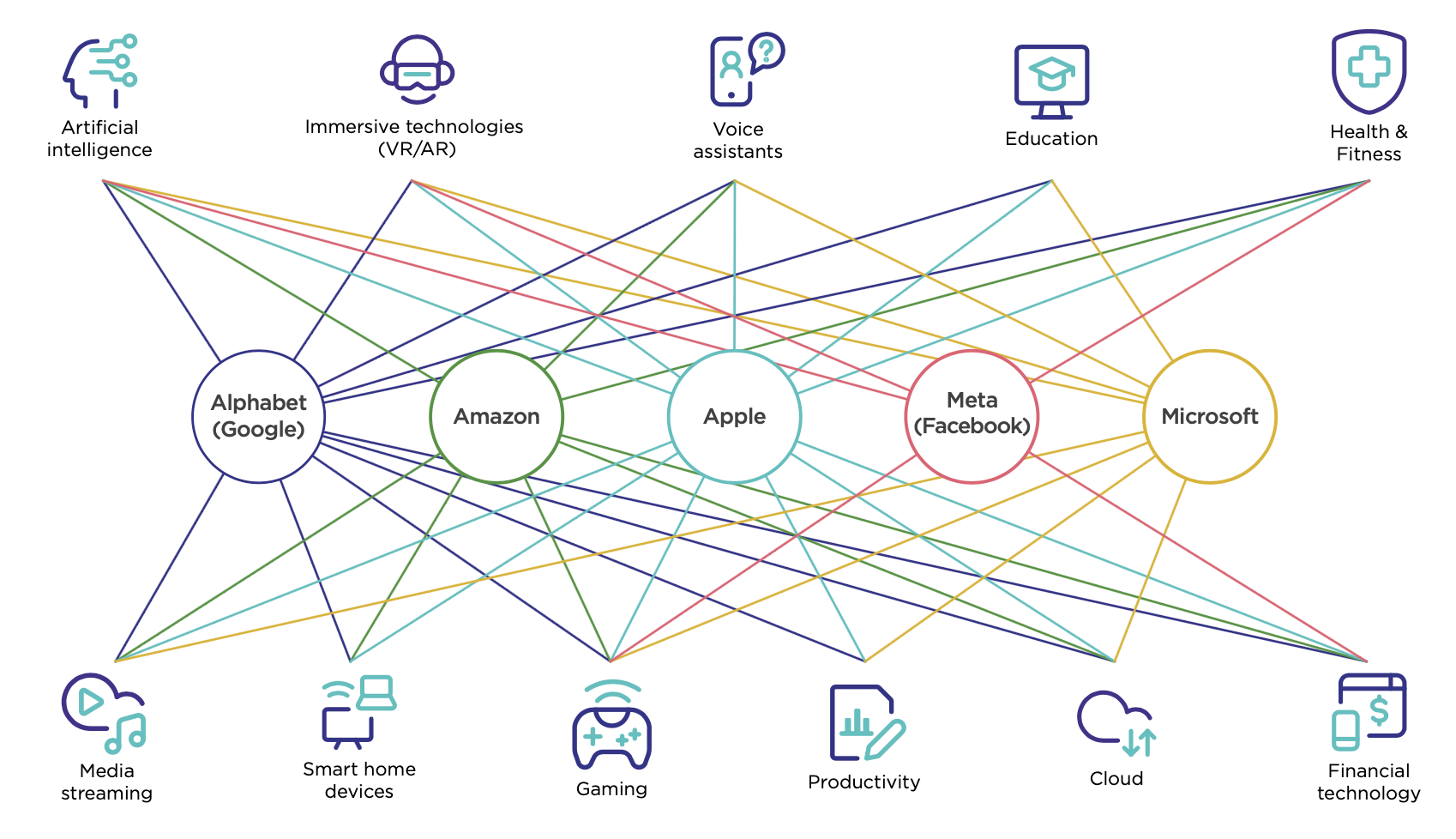
The report examined these areas: recent international legislative and regulatory developments in digital competition regimes, unfair trading practices and dispute resolution, developments in online private messaging, app marketplaces and mobile operating systems, digital advertising technology, online retail marketplaces, cloud computing, generative artificial intelligence, privacy and online gaming.
Throughout this 5-year Inquiry, the ACCC has identified the following risks of consumer harm on digital platforms of all sizes, including Australian based platforms:
- A range of unfair trading practices, including choice architecture that exploits consumers’ behavioural biases and undermines consumer choice.
- Harmful apps that are made available on app marketplaces, despite app marketplace review processes.
- The practice of creating, buying and selling fake reviews and otherwise manipulating reviews is distorting competition in related markets and undermining trust in digital platforms, and has significant consequences for affected businesses.
Australian consumers are still encountering a significant number of potentially unfair practices online. In the context of general online retail marketplaces, ACCC consumer survey data found that 72% of respondents who had used one of these platforms in the previous 12 months had encountered a potentially unfair practice during this time, such as hidden charges, accidental clicks or accidental subscriptions. A lack of redress and avenues for dispute resolution compound these problems.
Significant harms to competition have been identified throughout the course of this 5-year Inquiry. These harms are particularly prevalent across services where the ACCC has identified a small number of large digital platforms holding significant market power.
The positions of significant market power held by large digital platforms give them the ability and incentive to engage in strategic conduct to entrench and extend that market power. Digital platform markets have a tendency to tip (leaving one or 2 firms dominating a market) and often feature high barriers to entry and expansion. This means that dominant digital platform firms have a particularly strong ability and incentive to protect their market power, including through exclusionary conduct and acquiring potential rivals.
The ACCC has observed a range of conduct being undertaken by the most powerful digital platforms and has concerns that this conduct is interfering with the process of competition. This conduct includes self-preferencing, tying, exclusivity agreements, impeding switching, denying interoperability, and withholding access to important hardware, software, and data inputs. The ACCC is also a concerned about lack of transparency and the ability of digital platforms with market power to degrade the quality of the services they offer, including in the terms on which services are provided to business users.
The report says current laws “are insufficient” and reinforces the need for regulatory reform to address digital platform-related competition and consumer harms, and an economy-wide prohibition on unfair trading practices, as recommended in the September 2022 interim report of this Inquiry. It references other regulatory reforms in the USA, EU and UK that have “introduced specific prohibitions against unfair trading practices that occur in digital markets.”
The report notes that then curren tAustralian government has already acted on some of the recommendations of previous reports and adds two new recommendations in this report:
- the ACCC continue to have a monitoring function for emerging digital technologies under the proposed digital competition regime
- the Australian Government prioritise a whole-of-government approach to digital platform regulation and endorse the Digital Platform Regulators Forum (DP-REG) as a permanent forum.
The ACCC has comissioned a lot of research to inform its conclusions. All the research reports are available here.
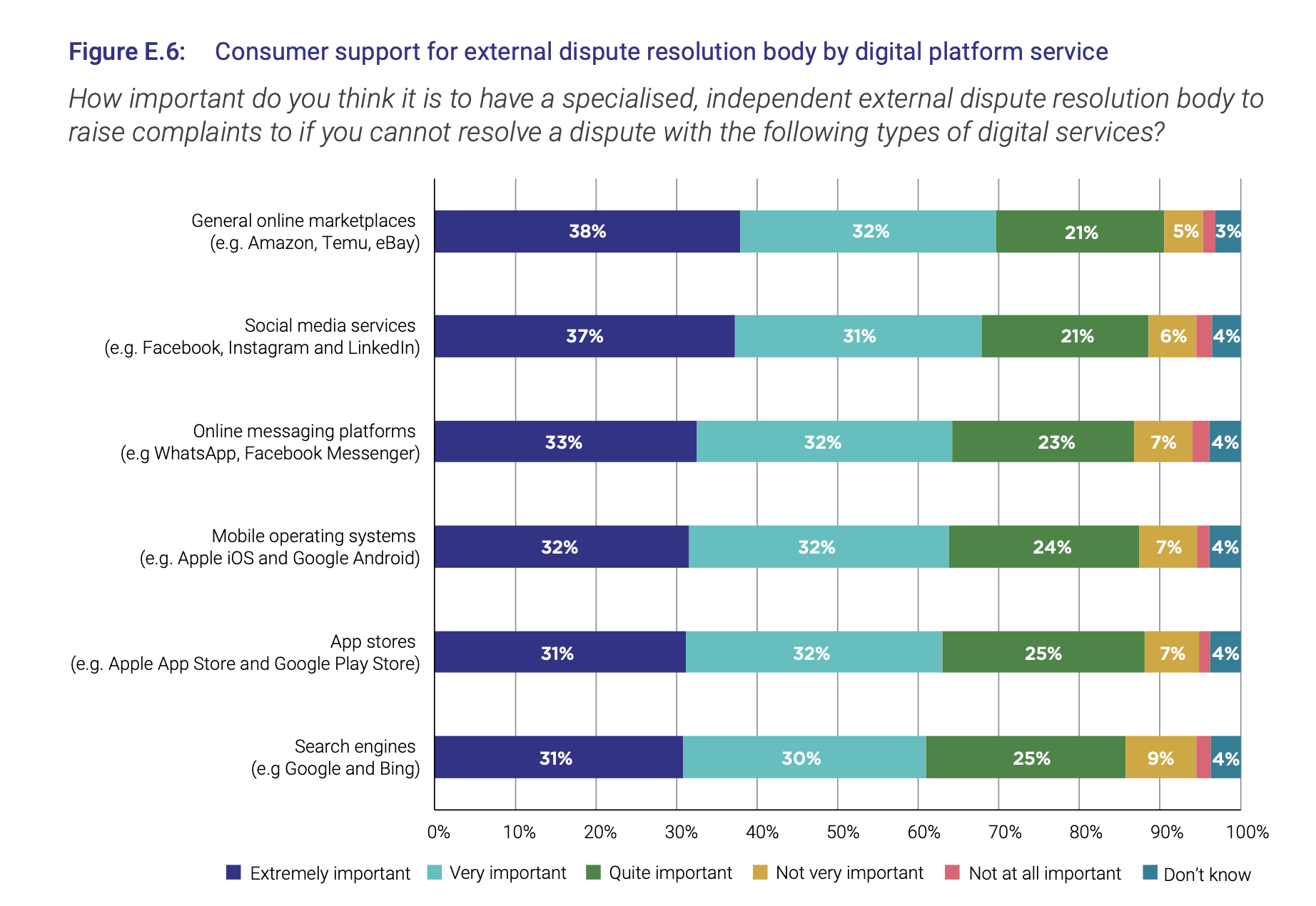
One of the reports found a high degree of support for a dispute resolution body for everything from online stores to phone operating systems, apps and search engines.
With the growth of AI powered search, the final category is likely to grow further, as more companies realise the extent of the click theft that happens when searchers only read the AI summary but don’t click on to the original website that the AI-powered search summary used to give the person an answer.
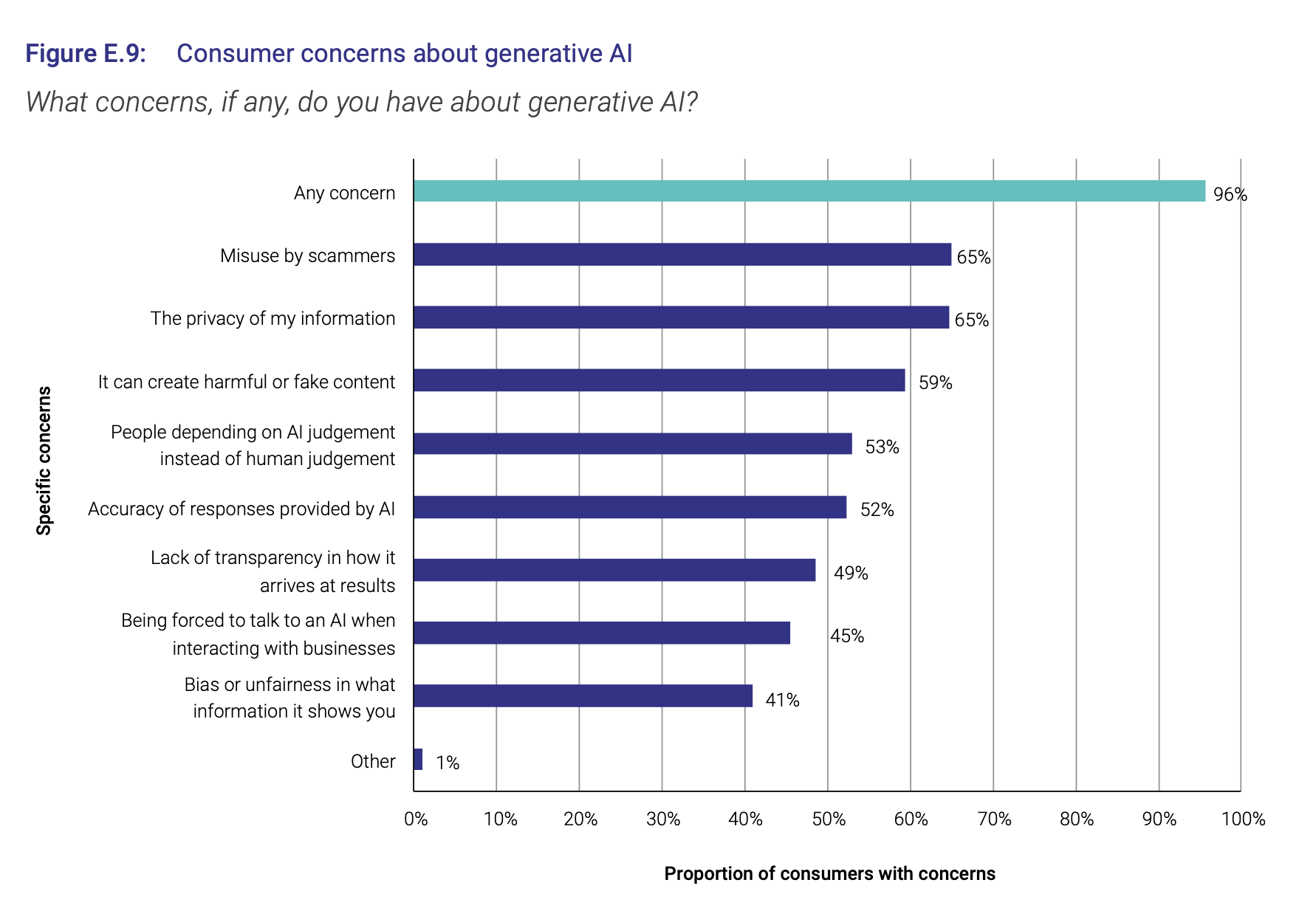
The report also found that Australians have major concerns that AI may be used by scammers, might steal private information, could be inaccurate, and may overrule human judgement.
All the Inquiry reports are available here.
Reporter: Steve Ahern
In all our publications, we employ real people with professional industry understanding, deep connections and long memories, who write real, researched stories. We don’t use AI or automated bots to generate stories. If we use AI for summaries or picture montages, we declare it. You can support our journalism by paying for deep access to our reporting via an annual subscription that supports our independent audio industry trade publication.