
You can solve problems and plan for challenges. You can’t anticipate disasters, but you can handle them in such a way that they don’t become crises. Station techs have to be ready for anything, think laterally about troubleshooting, and have many alternative plans.
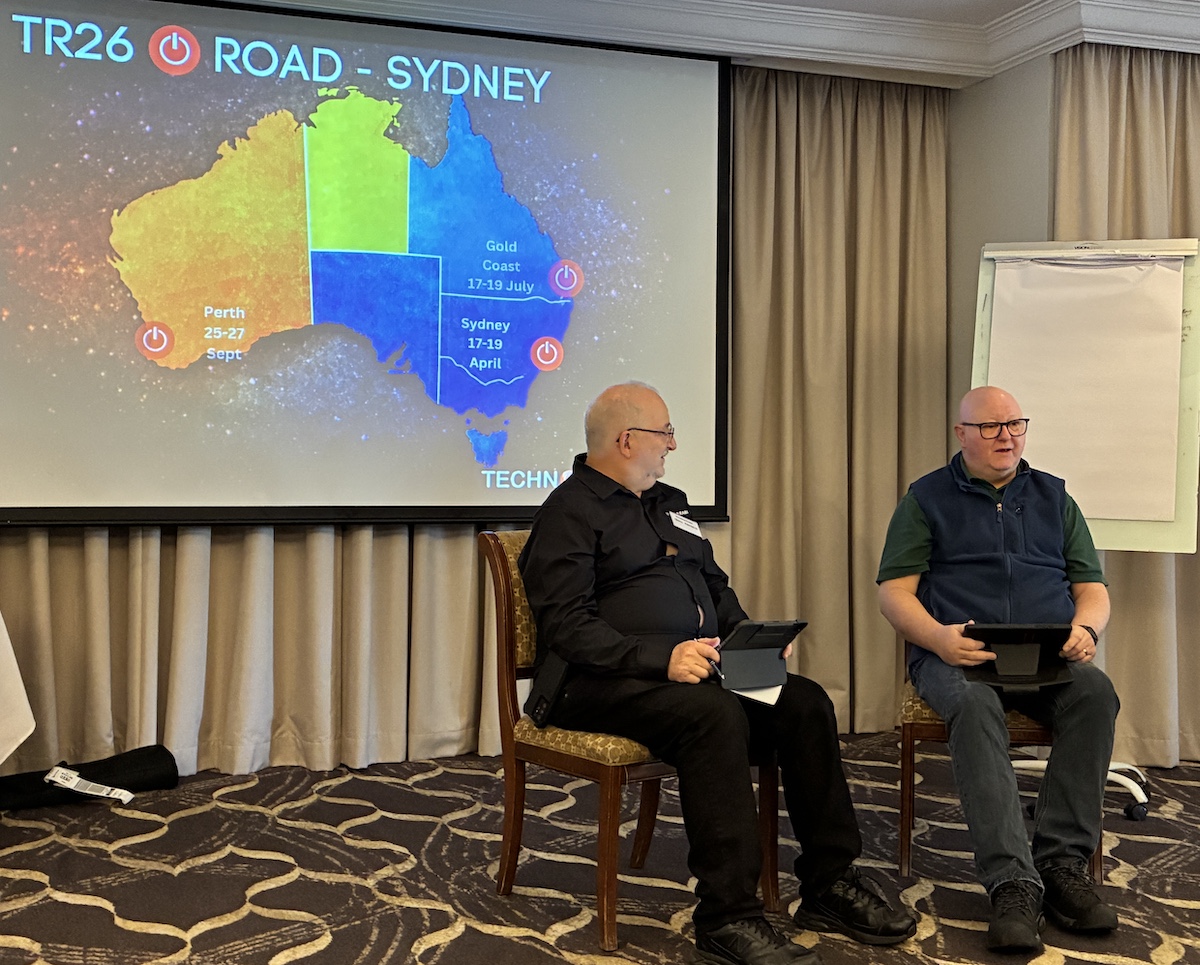
The 2026 Technorama Sydney Roadshow today is discussing “how to avoid getting into crisis situations that we can’t handle.”
“It becomes a crisis when there is insufficient planning or resources to stop people going into a state of panic. Most crisis situations can be avoided by planning,” said John Maizels, opening the day and introducing Scott Rollo for some wisdom from his years of experience.
Scott Rollo has spent his whole career in radio engineering. He had just finished school at age 17 when he got a job at Melbourne commercial station 3MP as a technical trainee. Everything was new and fresh. There were four techs as well as Scott, the junior. The company was eventually bought by the AWA network when he was in the 4th year of his apprenticeship. They sent him to Cairns at age 20. That was when his experience with handling disasters began. In his career he faced cyclones, snakes, floods, lightning, arson, gun shots, installations of new technology and many crises, teaching him not to panic and adapt to everything that engineering challenges would throw at him.
“Like most engineers I developed a flow chart in my brain. Logical analytical thinking:
“Is this working > yes> so check this one > is that working > no > check this > do that…
Other advice from Scott includes:
- If you don’t have it, make it
- Old doesn’t matter if it still works, keep some old equipment for backups
- Document your installation plan first, then install it. Not the other way around.
- Modern solid state equipment is much easier, but it is more difficult to document
- Who else knows what you know, who can take over if you get hit by a bus?
“Know every part of your transmitter site, it is your lifeblood. Know how the signal gets to it and every aspect of the broadcast equipment between the studio and the transmitter. Know every device so that if you need to bypass soomething to keep it on air, you know what to bypass.”
Techs speak a different language to most people in the station. Engineers need to be able communicate the right technical details and bridge the gap between themselves and the decision makers.
“When someone asks a tech for a piece of gear the answer might be no. What you don’t see is the conversation inside the tech’s head where they are analyzing the risk, and trying to protect you from a problem you don’t know about.” said Rollo.
Of all the challenges and changes Scott has seen, “technological change has been the biggest… and it is still continuing… be open to technological change, learn everything, stay updated with all the new developments… it’s not that complicated, break it down and learn it. If you don’t have the latest knowledge you can’t do your job.”
“You must respect my knowledge and authority, is not the best thing to say. Instead give everyone around you some of your knowledge so they can help you solve the problems that need solving. Then everybody will look good.”
Scott’s last tip is, “outsourcing equipment repairs and getting rid of the engineers is not a good business strategy in the long term.”

Technorama training conferences will also take place on the Gold Coast and Perth later this year.