
J’adore Paris et Paris adore la radio.
I love Paris, and Paris loves radio.
The annual Paris Radio Show is a tribute to the radio medium, but, as with other celebrations of radio in the modern era, it is not nostalgic, it is looking forward to new audiences and new ways of engaging them with audio.
This year the show began with a snapshot of audio consumption across radio and podcasts and a look at how all forms of audio are performing in France. Radio remains strong but podcasts are not as successful as in the other countries yet.
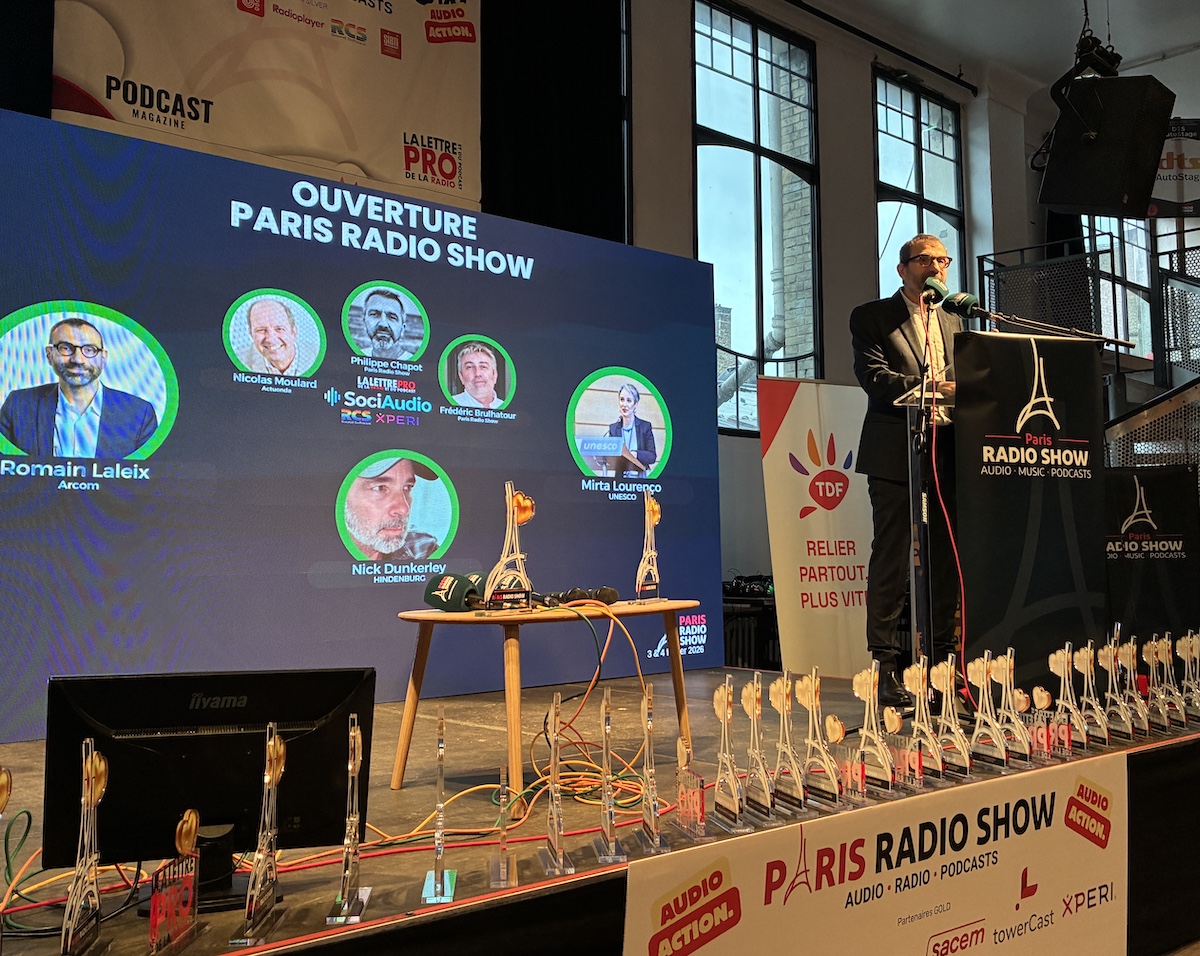
The latest audience research shows that 38 million people listen to an average of 2 hours and 50 minutes per day of radio, according to figures quoted by Romain Laleix from the regulator Arcom (Autorité de régulation de la communication audiovisuelle et numérique).
Several speakers drew comparisons between the way radio measures its audience and the way social media measures its audience. Social media counts audience validity from just a few seconds of consumption whereas radio audience measurement has a higher threshold to ensure the consumption is valid. The tension between the measurement of audiences on the internet and the way traditional media measures its audience was raised several times.
As if to highlight the difference between responsible media and irresponsible media, as the first day of the conference was taking place in the 20th Arrondissement in Paris, the offices of Elon Musk’s X, in the upmarket 2nd Arrondissement near The Louvre, were being raided by police. France has also introduced a social media age limit for children, along similar lines to Australia and, also in Europe, Spain is now in the process of legislating similar laws.
The Paris prosecutor’s cyber-crime unit raided the X offices as part of an investigation into suspected offences including unlawful data extraction and complicity in the possession of child pornography. Meanwhile, in London, the UK’s Information Commissioner’s Office announced a probe into Musk’s AI tool, Grok, over its “potential to produce harmful sexualised image and video content.” Elon Musk has called the actions “a political attack.”
Amidst the social media storm of controversy, 62% of listeners believe that radio is more reliable, that it “plays an important role” and contributes to democratic debate, strengthens civil society and enhances cultural diversity. “Powerful digital services are not subjected to the same rules as radio broadcasters.”
“Radio is a national treasure that needs to be maintained and supported to evolve its unique link with the public.” Radio can now be consumed as linear broadcast radio, streaming, or via catch up radio and podcasts.
DAB+ in France now covers over 80% of motorways and is well listened to by commuters. Public and private broadcasters are now heavily promoting DAB+ receivers. “DAB+ is undeniably adding value for listeners, delivering a more attractive audio landscape in a soverign framework.”
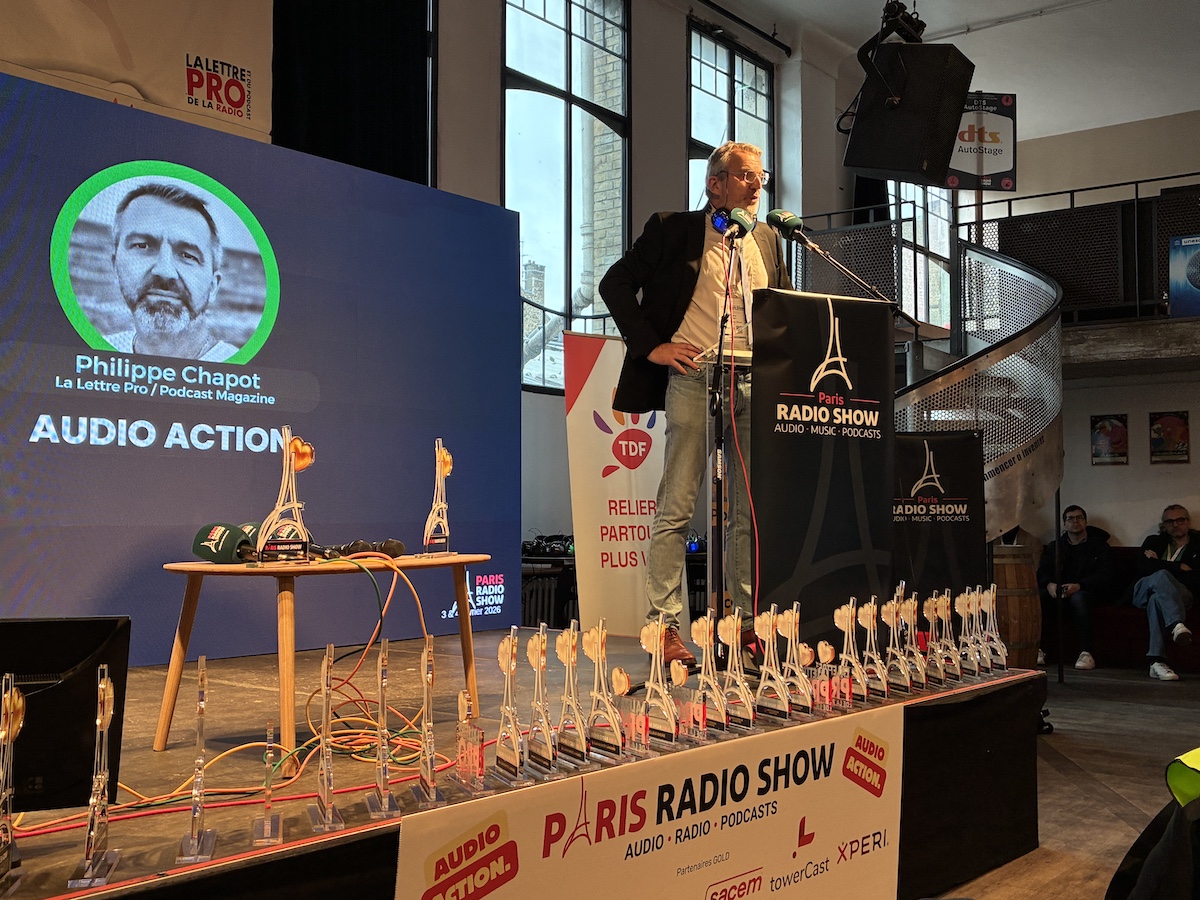
Conference founder Philippe Chapot said radio needs “rules with teeth and professionals to defend the interests of radio” for radio in all its modern forms to continue succeeding. “We need happy audio warriors,” he said.
Drawing a Medieval European analogy ,he described those who are doing nothing, assuming that radio will survive, as being like the important person who goes to the top of his tower, certain that he will be safe there, while around the base are the wolves and the attackers just waiting for him to run out of food. His point was that radio people have to fight to keep their high ground. Plenty of people are still listening to radio, but that is not being communicated well enough.
“We do not have a consumption problem we have a value problem, audiences are not being reminded of our value enough, they are not being convinced of our value proposition.”
“World Radio Day is one opportunity to us to convince them of that value,” he said. Use the day to remind audiences of the value of radio.

Image (c) S Ahern
In another session, Matthieu Boncour discussed the power of radio to help promote musicians.
Audiences are getting tired of algorithms selecting new music for them, they do want to discover new music, but they value human recommendations from radio personalities they are familiar.
Quoting music research reflecting the sentiments of audio consumers, he said some music consumers are moving away from music streaming subscriptions. “I won’t renew my music subscription, I now rely on humans… I want to be surprised by what’s on air.”
Boncour believes radio can offer different entry points for people to support artists, especially using multiple channels available on DAB+ and streams to create targeted music formats. “Live music is fragile, we need to support musicians and this is one way to do it.”
Speaking to me at the end of the conference, Philippe Chapot focused on the value that radio can bring to the audience and the media industry:
“We can’t say radio is only audio, radio is liquid. It has to go everywhere that is possible… the value a radio station can bring in a liquid media environment is everywhere… we don’t know where or how they consume us.
“So what value are you bringing when you have a radio station? If you know about your value and if you’re not boring, everything can happen for radio in the future… live interaction, surprise and singularity are our strengths.”
Reporting:
Steve Ahern in Paris
Related reports:
Radio must be an attractive offering in the automobile cockpit: Paris Radio Show