
From Lee Abrams and Dave Charles
Modern media companies keep trying to buy their way into culture. But you can’t acquire what you don’t understand.
The media business has never been more sophisticated. Complex deals, global distribution networks, streaming algorithms, content ecosystems—it’s a world run by dealmakers, technocrats, and Ivy League strategists. And somewhere along the way, something essential got left behind.
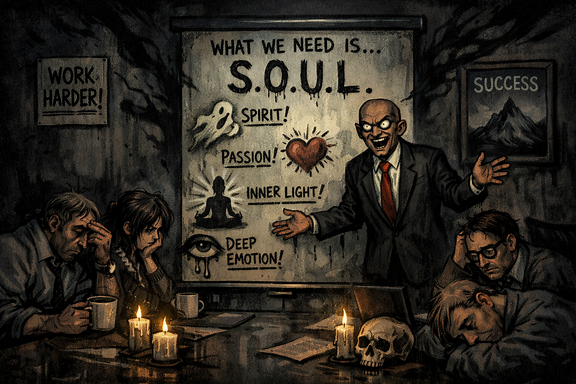
What if today’s media conglomerates had soul?
Not the platforms. Not the pipelines. But their foray into media—what if, beneath the branding and the billion-dollar balance sheets, there pulsed a genuine, non-corporate love of the art form? Imagine the public actually believing in that. Not because of marketing, but because it was real.
That company would be unstoppable.
The trouble is, soul isn’t in the DNA of the business tycoons running these giants. They talk about devices, distribution, and market share. They research “passion” in focus groups and try to manufacture authenticity in conference rooms. And the result is painfully transparent—a marketed fake soul that does more damage than good, reinforcing the perception that they’re trying to buy what they simply don’t possess.
Apple comes closest. There’s a pulse of “getting it” in Cupertino. It’s no coincidence they’re number one in media. But even they walk a fine line between authentic connection and polished commerce.
The Wall Street Trade….
Record labels used to have soul. MTV used to have soul. It happened naturally—born from the streets, from clubs, from genuine obsession with the culture itself. Then they traded Main Street for Wall Street. And while Wall Street is good, it’s not worth the expense of what made them matter in the first place.
Devices are wonderful. Systems are necessary. But not at the expense of soul.
Here’s the hard truth: Soul is the single most important competitive advantage any company even remotely associated with media can possess.
Just as truth is to news, soul is to media. You can’t fake it. You can’t research-and-develop it in committee meetings. It’s intangible. It’s spirit. It’s like James Brown—though it ain’t James Brown—you either have it or you don’t.
If you don’t, better figure out how to get it. Step back from the corporate-speak, the focus groups, the elitist conference-room thinking. Get back to the streets. That’s where winning happens.
Soul Creates Fans, Not “Users”
This is the crux of it. Fans sell you, love you, and make you. Users just consume you.
Media isn’t hardware or software where soul doesn’t really factor. Whether it’s being created, distributed, manufactured, or delivered, media must intersect with emotion. Without that, it’s just more junk culture—pop culture’s sick cousin. Have it, and you possess the key.
As the business side of media gets more sophisticated, it is losing its soul.
That is the root. That is the #1 reason there is trouble in the media industry. And it is the #1 most important value in developing the new systems and technologies that present media.
Without soul—whether you’re a streaming giant, a legacy network, or a tech disruptor—you’re doomed!
Someone will come out with a cooler mousetrap. And if you don’t have soul in your company’s DNA, you’re only as good as your last feature update.
The Independent Advantage….
Independent is where it’s at in media—in terms of image, in terms of cool. Big monoliths with well-publicized multi-billionaire CEOs and teams of perfectly coiffed executives? Not cool. Not in the media and entertainment space.
Why? Because independent has soul.
It’s that simple. Independence breeds authenticity. It forces you to rely on instinct, passion, and a genuine connection to the culture—not market research. That’s a lesson the giants keep forgetting, and it’s costing them dearly. Every algorithm tweak, every curated playlist, every “personalised” recommendation rings hollow when the people behind it don’t truly feel the content.
The media companies that will win in this new era aren’t necessarily the ones with the deepest pockets or the smartest engineers. They’re the ones who remember that media is not a utility—it’s an emotional lifeline. And that lifeline requires a human touch, not just a data point.
So here’s the challenge for every modern media company chasing the culture dollar:
Stop trying to manufacture cool. Stop pretending passion can be coded. Start by actually caring—about the creators, about the audiences, about the culture that makes media matter in the first place.
Because soul isn’t a feature. It’s the whole attitude.


Dave Charles (left) is the President of Media RESULTS Inc. With more than six decades spent working in radio here and overseas he was inducted into the Canadian Broadcasters Hall of Fame in 2024. Lee Abrams (right) has worked as a consultant to over 1,000 radio stations, 12 major print publications, tv stations and cable networks and is the designer of XM satellite.