
This is the first article in a series of interviews exploring the career and life journey, highlights, pauses and key decision points leading to change for women in the media industry.
The aim of this series is to reflect on wisdom gained through formal and informal education, significant supporters, detractors, inner voice and the impact this has had driving forward or shaping their career.
Each participant was also asked to share their story as mentors and give key takeaways to others in the industry.
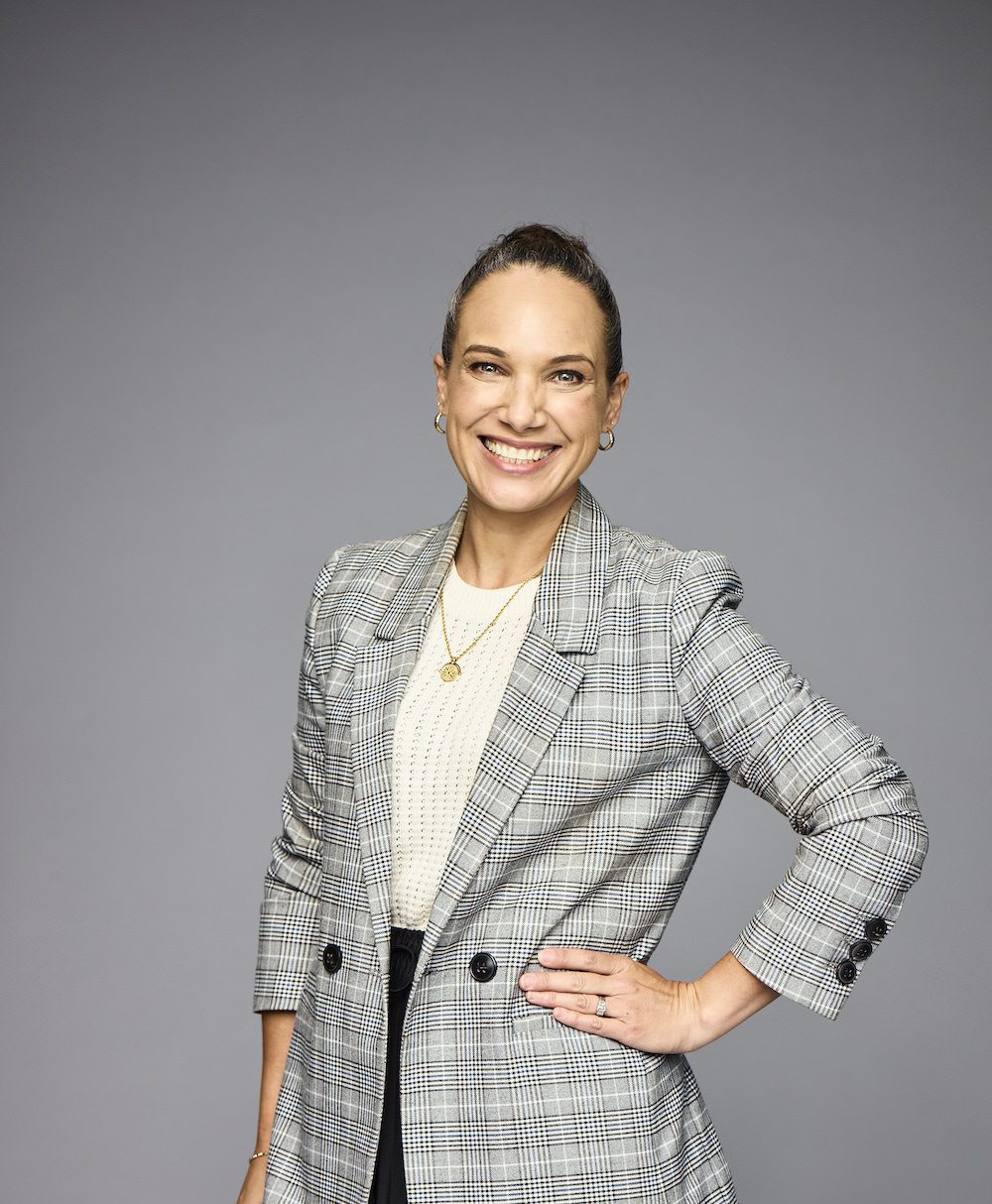
The first profile is Lauren Joyce, Chief Audience & Content Officer ARN.
1. Lauren describe your current professional life and your stage of life.
Professionally I am an executive at ARN, the Chief Audience and Content Officer, which means I look after pretty much everything that comes out of our speakers and how we connect with our audiences, whether that be through an audio channel, a social channel or through marketing an event or something that we’re doing in real life. Lastly, I’m responsible for connecting with those audiences and growing them.
In terms of where I’m at professionally, I think in the last four years the media industry in general have been characterised by a lot of change. I think the entire industry is going through change brought on by the kind of forces of the international digital giants, the likes of Meta, Google and even TikTok. We’re all having to reassess how we continue to deliver Australian voices in the Australian industry and make that change. So, whilst I’m very much about connecting with audiences and that’s the primary role, it’s my job as an executive to deliver a great result for our shareholders and to govern the company in a really responsible way. That’s quite a challenge when you’ve got a constantly moving environment around you. I think navigating through these changes has taken up a fair amount of my headspace over the last four years, but particularly the last 12 months.
In terms of my stage of life, I’ve got young children and they’re both primary school age. I’m fortunate enough to have a really supportive husband who is the primary carer for them. I have no doubt that I could not do this job if it weren’t for him bearing the majority of the home life load, and that’s a decision that we made together.
We’ve slotted into the roles that are best suited to us as individuals, so he’s an amazing companion to my children every single day. When I can’t be there he shows up for both of us. I’m obviously showing up in the office every day and doing the best I can to provide for the family, setting an example for my kids, leading the team and running a responsible business here at ARN.
2. How did you come to be in this industry? Was it a passion from childhood to be involved in media, or a series of accidents, or a focused career path?
I wouldn’t say it was a passion from childhood but I think when I was a child I wanted to be a news reader on the TV! I suppose I somehow ended up in that world.
Although I’ve never managed to read the news on the TV, I certainly did study international communications at university and I’ve always been fascinated by how humans connect. I think the media has a really key role to play in how we progress as a society and how we connect as a community at large. I’ve always been fascinated less though in the broadcast technology and the platform itself and more in the role that media applies in how we as humans make sense of the world and so that’s really what’s driven me. That’s really what I loved studying at university.
My first role in the industry was when Barry O’Brien gave me a start at Total Advertising about 20 years ago. I started as a Media Assistant and worked my way up in agencies so probably spent about 12 to 15 years in media agencies and branded content agencies. Then I moved across to Mamma Mia which was an amazing place to learn about publishing and editorial content. In that environment I had the freedom to contribute in whatever way I could add value, whether being in a commercial sense or an editorial sense and I had the opportunity to learn from some great content creatives there even though I was in a commercial role. I then moved across to ARN in the commercial team and then moved into more of a marketing role but again very focused on audience growth and how we connect with our audiences.
Only this year I moved into the Chief Audiences and Content Role, which brings together both all of our content as well as our marketing activities so I think it hasn’t been a linear path. I guess this would be a point of wisdom for one of the things I’ve learnt is that whilst you can get really good in a certain skill set and have a level of expertise your role doesn’t necessarily have to only reflect what you know about, in my case audiences for example, but how you apply it in different ways. Whether that be commercially in engaging our clients and helping them to drive results or in establishing our content strategy and how we’re going to grow our audiences. I’ve learnt that having transferable skills and finding a way to use your accrued knowledge in different aspects can be super advantageous for people who like me are really kind of restless and always looking for that next area of learning and next area of growth.
3. This makes me wonder, did someone tap you on the shoulder and say Lauren, I think you’d be great for this next opportunity or did you chase those opportunities yourself?
I’d probably say the former. I think I’ve been really fortunate to have a few influential leaders around me who have seen something in me that I hadn’t necessarily recognised in myself. I would like to think that one of my strengths is in seeking out different perspectives so I’m very open to feedback. I would say that I have a very curious outlook on life so if somebody says, “have you thought about it this way?” I’ll often pause on that and really think about why are they saying it? It is a different way of thinking to me and I seek to understand. I would say that I think there’s been a few pivotal moments. Henry Tajer was certainly a really big influence on me during my time at Mediabrands. I think he saw potential in me that I hadn’t necessarily recognised and it gave me the confidence to pursue that.
When I was at Mamma Mia, Kylie Rogers and Mia Freedman, they’re both incredibly inspiring in the way that they both were just really curious and were just throwing themselves at challenges and going ‘if it doesn’t work, then we try a different way.’ That gave me both the permission and confidence to do the same thing. I was there in a commercial role, but I would join the editorial stand-up every morning and be pitching ideas for writing stories and then I would do my day job. On the train on the way home I’d be writing a story that would be published editorial. I wasn’t a trained journalist or a trained content creator, but that business enabled that opportunity.
It was similar when I came to ARN. Ciaran Davis has been a massive supporter of mine and again has recognised where there have been opportunities in the business for me to add value. I think the benefit I bring is a degree of flexibility. I’ll give that a go and trust that even if I don’t have the perfect skill set to fill that role right now, I can learn it and that I can bring the right attitude to succeeding in that role. The other thing I would say is that I don’t claim to know everything, but I’m very aware of where my gaps are. I’m also aware of where my strengths are, so I like to play to my strengths and also trust that I’ve got people around me who can help me in the areas that perhaps I’m not as strong.
4. What are your beliefs and how are your values evident in the work you do and the life you lead?
This is a tricky question because I think often the way you see yourself is different to the way others see you. I don’t know whether it’s a belief as such, more a value, transparency is a really important value for me. I fundamentally believe that knowledge and perspective is what helps people grow, so I’m a big believer in arming people with the right information to then be able to make decisions so that they feel informed and can make the right decision.
I’m clear in my expectations with people and I like to make sure that they can get to that end result in the way that is right for them, so that’s where transparency comes into it for me. I feel that the more transparent I can be with my leaders, then the more you know that they’re going to be empowered and feel empowered to make the right decisions to get us to the outcome we need. Transparency is a big one.
I would also always prefer to have a difficult upfront conversation than to let something fester.
Honesty probably goes hand in hand in terms of how that manifests in the way that I lead my life or lead the team. I think it is about you having the uncomfortable conversations and also doing it in a way that is about curiosity and perspective. I always think there’s two sides to a story and I think that, just because I see something one way doesn’t necessarily mean the other person sees it in the same way. Their perspectives are as valid as mine and there’s something that you can always learn from each other’s perspective. Certainly that’s something I’ve learnt that is a really valuable skill to have as an executive. You may have a really firm belief of what is right or wrong, but often you need to compromise on that to get the best outcome for the total business. I think that’s a skill that the best executives really need to continually keep top of mind.
5. How did your education, formal and informal, enrich your life or career journey? You’ve mentioned some of the mentors that you’ve had who helped you grow. Were there detractors as well?
Education wise I’d say I would love to do more formal study.
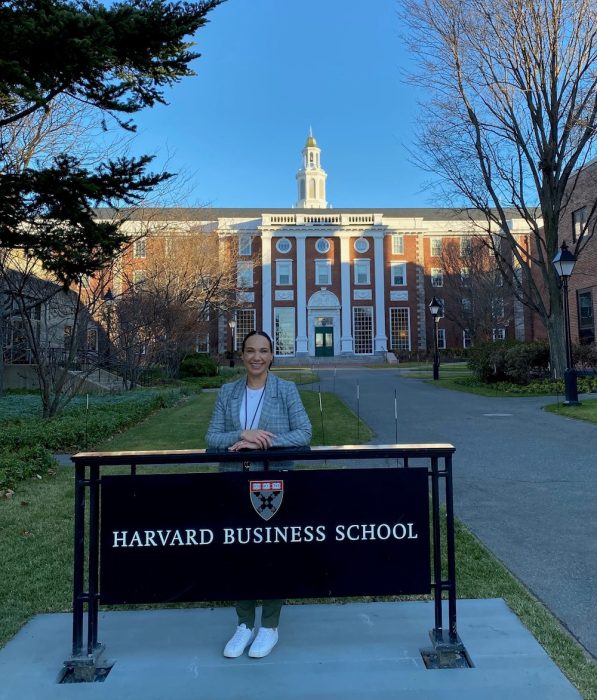
I was fortunate enough a few years ago to be the recipient of the Chief Executive Women Maureen Kerridge Scholarship. As part of that I went to the Harvard Business School and I did a week long course there, ‘Leading a Culture of Innovation.’ It was just such a privilege to be able to shut off from the rest of the world and be immersed in that study for a week. It’s something that I would really value doing again.
I think when we’re young and you’re studying, you don’t appreciate the privilege of just learning, then you get into your day-to-day with your work and you don’t have the headspace or the time to be investing in a course. Your workplace will put you through various forms of training, but that ability to be fully immersed in a particular subject and really tease out the pros and cons and the philosophies or principles that you’re learning, is very satisfying for personal growth. I really would appreciate any opportunity to do that kind of further study.
In terms of detractors there’s certainly people that I feel I’ve rubbed up the wrong way throughout my career and vice versa. I suppose as I’ve got older and more experienced I’ve learnt that, most of the time, if somebody has an issue with you it’s more about them than about you. Then if it is about you, if there’s consistent feedback that there’s a particular way you’re operating that is rubbing people up the wrong way, then there’s probably an element of truth to that and that’s a perspective that you should take on board and consider.
Certainly as I become older I think I’m much more open to feedback and much more balanced in how I take on that feedback. Early in my career, I took everything personally and certainly tried to adjust and changed to fit those around me. Now I try and take it on board as a perspective and approach everything with curiosity, as opposed to becoming personally offended or as having to react immediately to somebody else’s feedback.
6. What are some of your key decision change points and how did they shape your career or life journey? How did this change impact you?
I think that probably the biggest career change I’ve made is moving from a media agency across to a media broadcaster or a publishing site. It’s interesting reflecting on this because it now just feels like part of my journey. At the time it felt like a massive step for me going from making recommendations for clients and being very close to the marketing plan plus the business result, to moving across into a commercial role within publishing. I felt like I was a step removed but what I didn’t know at the time was that the move would give me a much broader business operations perspective and make me a much more valuable employee overall.
I’ve picked up skills that I never would have had the opportunity to learn had I stayed in agencies. A great example was at ARN when I was part of the executive team that acquired Grant Broadcasters, a couple of years ago. Going through that process of acquisition then transformation when integrating Grant Broadcasters into ARN, was an experience that would be incredibly rare to go through with something on that scale if I were in an agency. It gave me a much broader perspective and a much broader skill set than what I would’ve had if I was on the agency side. This was a pivotal moment for me.
What I’ve learnt from jumping into the other side of the industry has been that I was probably very ignorant when I was in agencies, as to why certain decisions were being made in proposals back to my clients or why publishers would be making the recommendations they did. I felt that we’d been very clear on what our needs were in the brief but now that I am on the publisher’s side I understand that ultimately it’s all about the publisher wanting the best outcome for the client and the audience. If something resonates for the audience, it will resonate with the client audience. I think that I did have my eyes opened when I moved from agency to publisher aside and that’s been a really good thing for my career.
7. Just changing it up a bit. What makes you happy? What makes you get up in the morning?
What makes me happy? I started ocean swimming a couple of years ago and I just love it. It’s the perfect exercise for me because it’s just this sense of freedom when you’re in the ocean and vulnerability. I think that I just get to quieten down as we’re so full on in the media industry. People are always talking to you looking for you to solve their problems and have answers to their questions yesterday. Swimming makes me incredibly happy. I’m also happy when my kids are calm. I’m so conscious of how busy the world is around them and how busy our lives are in general. When we can all be at peace and out in nature that’s something that makes me really happy.
8. Share your words of wisdom for others in the industry or those wishing to work in the industry
I think there’s an understanding that in your career you will work for a very long time. You’ll work for 45-50 years of your life so that is a very long time. I think often people who are ambitious get their first job are then ambitious to get their first promotion and then the next one and skip around and constantly looking for what’s next, but when there’s a setback it can feel like the end of the world.
When you take a step back and go actually this career is going to be 50 years long and those small setbacks I find it difficult to recall them now as they’re in the blur of everything else that has happened across my 25 year career today. I think taking a breath when those moments do happen is important because your career is a very long period of time so it’s about having a bit of perspective and giving things time to breathe. In the moment something can feel super intense and feel like it’s the end of the world but actually over a long period of time you know it may just be a blip on the radar.
9. Describe your vision for the audio media industry in the near future.
I think audio plays an incredibly important role in our lives. We are constantly overstimulated and I think one of the reasons we see audio’s continued popularity is that it allows people to connect on their terms. In a way it might be universal content, but it’s personally delivered so it feels like a one-to-one connection even though you know that piece of content may be being consumed by 1 00,000 other people at the same time. I think that will continue to be a truth about audio into the near future and into the long-term future. I think it will continue to be used as a way for people to disconnect but feel connected. My vision for the future is that we have a strong Australian audio industry that is representative of our population.
I think right now audio remains the one medium where there is room for a real diversity of voices and there is room for content to be created in a way that is representative of our population. Whereas a lot of other media is consumed in the social space, the feeds are just so curated that people aren’t getting perspectives and a true reflection of what the Australian population looks like.
My vision is that we continue to develop the industry to be one of enabling choice, freedom of expression and freedom of opinion so that people do get that diversity of content and in voices that is reflective of our population.
10. What role would you like to play in shaping the audio industry in the future?
For me it’s consistent with what I just said about my vision for the future. I think I can play a role in the casting of those voices and continuing to ensure that the content creators within ARN‘s footprint at least are reflective of the audience that they serve, and that we do have a diversity of opinion in voices on air and behind the scenes and that we don’t get tunnel vision around the content that we are developing. For me it comes down to the way that I’m leading the teams and the way that I’m working with the heads of the various networks and departments to ensure that they’re casting in a way that is reflecting their audience back at themselves.
11. Is there anything else you’d like to add? If I heard this when I was younger I’d have been inspired to take more chances in my career.
I hope that people do hear that because I try and make myself very available to the more junior members of our team. I think that there’s so much to be said for putting your ideas out there in the world, before they’re kind of beaten down by the rules of corporate Australia so I hope it does help some people.
Series compiled by Serena Ahern for radioinfo.
If you have a suggestion for someone to be considered for this series, please send a note to [email protected]