
Analysis from Steve Ahern
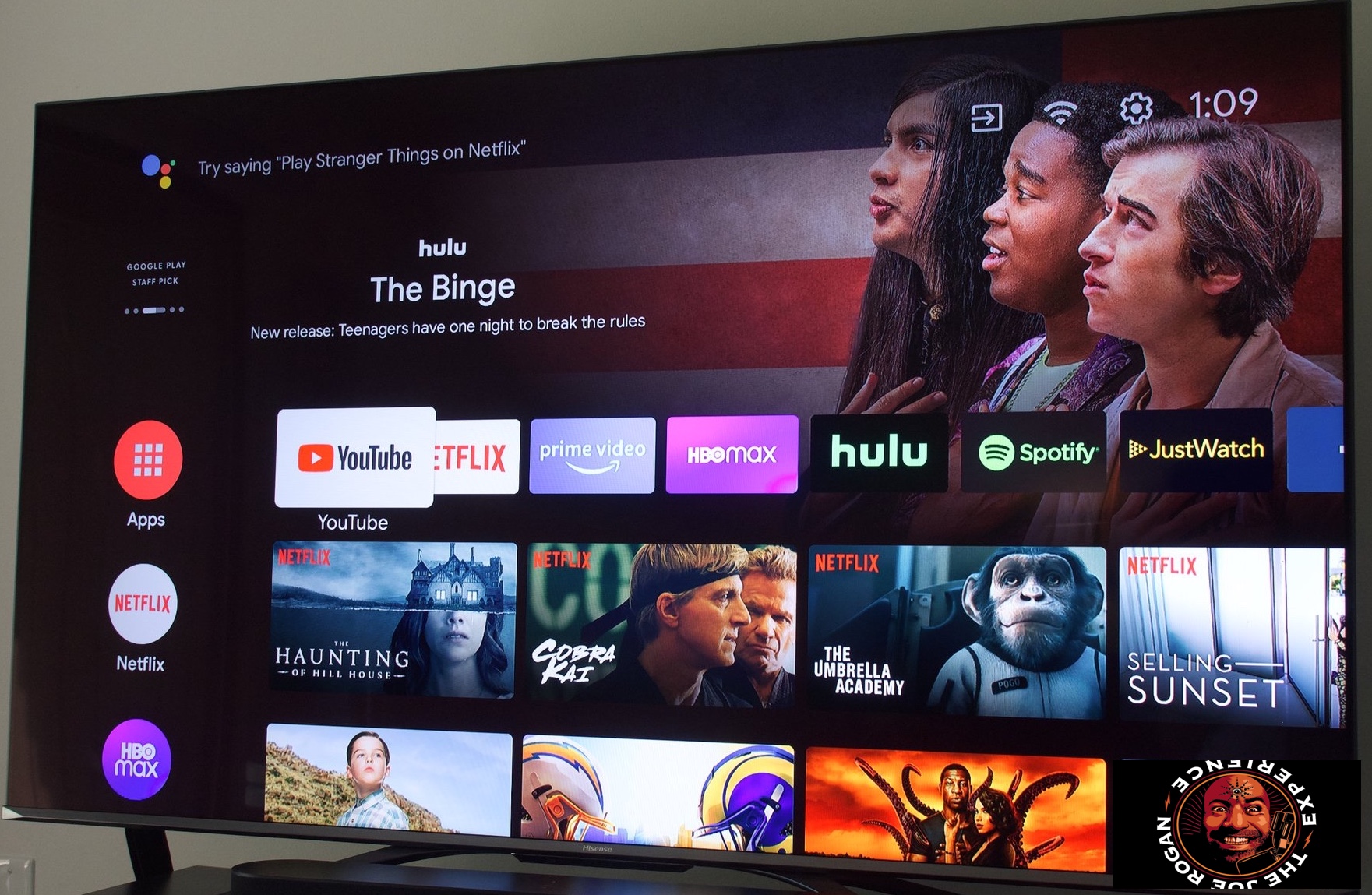
Recent podcast consumption statistics from America indicate a growing trend for people to watch podcasts on smart tvs, expanding the offering for digital audio-first content to yet another device.
Smart phones, connected car entertainment systems and smart speakers have become podcast listening devices of choice over the past ten years. Now, with the integration of Youtube into smart tvs and the growth of podcast consumption via Youtube, it seems that podcasts are reaching listeners (and viewers) through yet another digital device.
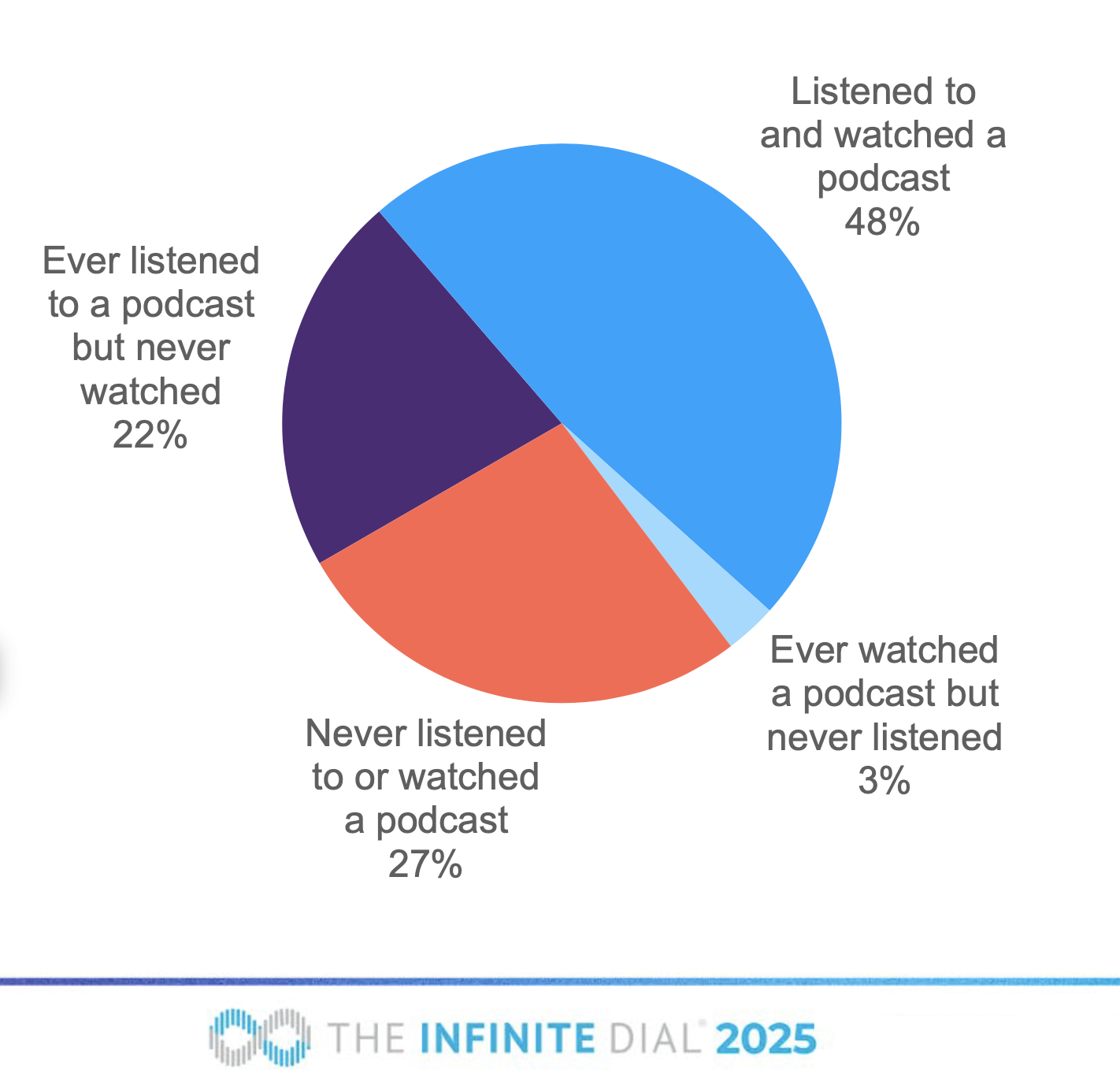
The latest Edison Infinite Dial report shows that podcast listening on smart speakers has levelled out, but that podcast consumption on smart tvs is still growing.
- 70% of Americans have listened to a podcast
- 51% of Americans have watched a podcast
- Smart TVs are now in 75% of American homes
- YouTube is the service used most often to listen to podcasts with 33% of U.S. weekly podcast listeners using YouTube
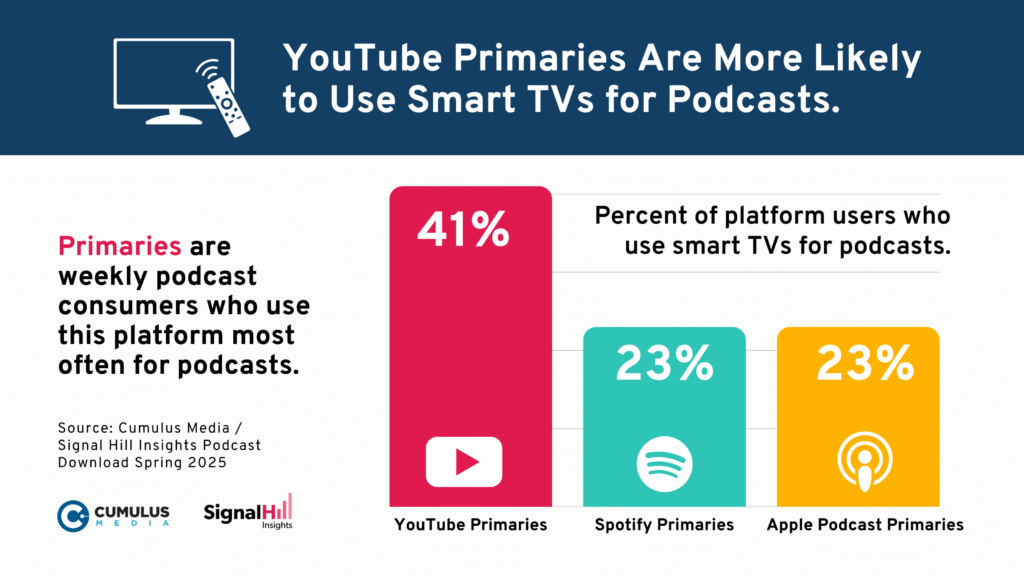
 Last month, Cumulus Media/Signal Hill Insights released its Spring 2025 Report, that confirmed audio listening on the other platforms is still strong, but that “watchable podcasts have also grown in popularity.” Youtube now leads as a discovery platform for podcasts.
Insights from the report include:
- Audio remains the primary mode of podcast consumption (58%) despite growing video options
- YouTube is the leading podcast platform, yet it is not a walled garden as consumers listen to podcasts across multiple platforms
- Driven by Podcast Newcomers, watchable podcasts have grown in popularity
- Podcast discovery: YouTube is the place to be found; 44% of new podcast audiences started listening on YouTube
- Podcast advertising captures hard-to-reach, ad-free video streamers
- Podcast hosts are 3X more influential than social media influencers
- Advertiser adoption of podcast ads continues to grow: Advertiser use of podcasts has jumped from 15% to 59% in the past decade
Research continues to show that YouTube podcast consumption expands the audience base for podcasts beyond audio-only platforms. The research seems to indicate that the smart tv set is just another device that can deliver audio in a convenient manner, especially when at home, while in the car or when outdoors, audiences will still consume audio in car entertainment systems and smart phones.
Tom Websters’ ad effectiveness research also supports the proposition that smart tvs are a convenient way of finding and consuming podcasts, but it takes a more nuanced approach.
Webster goes beyond the idea that people want to watch video podcasts, to the idea that people don’t care if they watch or listen, they are just happy to consume the podcast on any device that is convenient to them.
“What caught my eye was Smart TVs hitting 8% as the primary device for podcast consumption. That might not sound like much, but it’s significant enough to warrant our attention, especially when we look at the secondary device numbers.”
The research asked Smart TV Primary Users: When you think of a podcast, do you expect it to be audio or video?
- Audio only 8%
- Usually audio, but may be video 39%
- Either 26%
- Usually video, but may be audio 22%
- Video only 6%
He concludes: “Smart TV podcast users aren’t necessarily video absolutists. Rather, they’re pragmatists who use whatever screen happens to be in front of them at the time.”
The conclusions that can be drawn from this recent research are that:
- audio consumption continues to be strong on all digital platforms
- podcasting is growing as a component of overall audio consumption
- podcast consumption has expanded to many platforms, most recently smart tvs
- audio advertising on podcasts is influential
- youtube aids discovery of new podcasts, increasingly so through smart tvs
America is usually ahead in consumption trends, but expect Australia and Asia to follow these trends in the next 12 months.
About the Author:
Steve Ahern is the founding editor of this audio industry trade publication.
In all our publications, we employ real people with professional industry understanding, deep connections and long memories, who write real, researched stories. We don’t use AI or automated bots to generate stories. If we use AI for summaries or picture montages, we declare it. You can support our journalism by paying for deep access to our reporting via an annual subscription that supports our independent audio industry trade publication.