
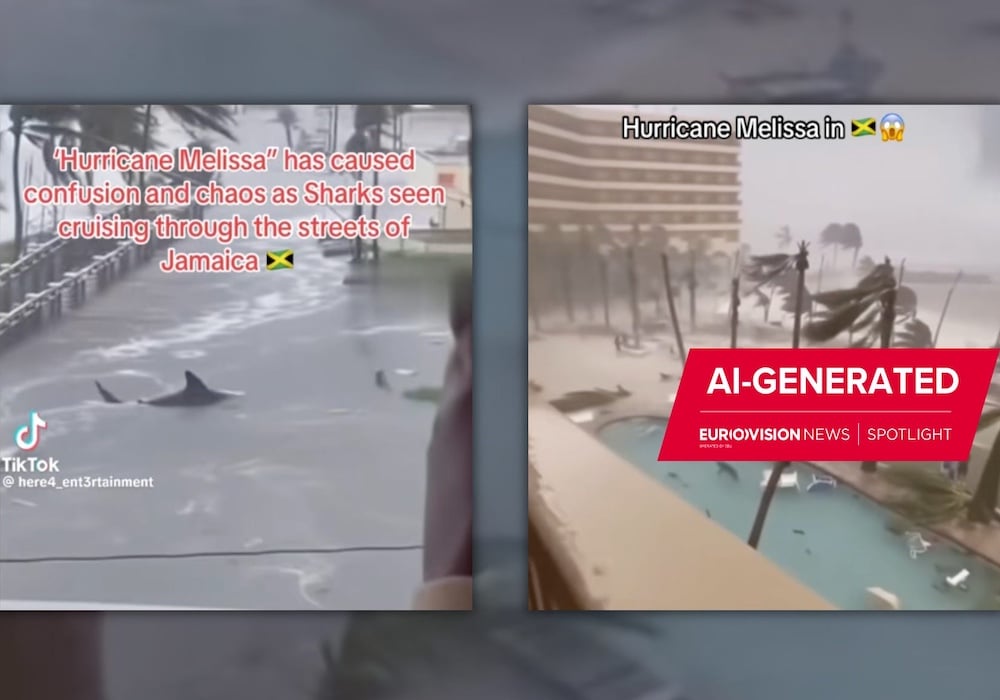
Anyone checking their social media feeds for pictures from Hurricane Melissa last week would have been flooded with video footage of trees falling, roofs torn off and people or animals being blown about by the 295 kph winds in Jamaica.
The problem is, some of it was fake and could potentially distort news coverage.
According to analysis from Eurovision’s fact checking unit, a lot of the pictures and videos published on social media platforms were fake.
With plenty of warning before the hurricane hit, fake news creators had time to edit past storm footage together to create compelling scenes of damage and devestation that drove people to their accounts. Fakes about breaking news stories deliver high viewing numbers, increased credibility and prominence in social media algorithms, as people search for news about the unfolding emergencies.
As Eurovision News points out, many of the hoax videos were made from footage grabbed from previous storms in other countries.
“For a time during the day Hurricane Melissa made landfall in Jamaica, the top result for the storm on TikTok was a video with more than 1.3 million views posted by an account called @police.swat28,” says Eurovision, analysing the video compilation that proved to be fake.

The account has a profile picture reading ‘Tornado News USA’ and posts exclusively disaster-related storm footage. It is a common account type on TikTok, according to Eurovision. “Disaster accounts emerge as top misinformation spreaders every time there is a storm or weather-related calamity… The viral video featured a dozen short clips stitched together as a compilation. Our analysis showed that most of these clips had previously been used to depict other storms.” Eurovision News Spotlight has analysed similar accounts in the past. Clips were shared across multiple social media platforms
“There were other hints that these clips did not show Jamaica. There was an added audio that featured the sounds of thunderstorms, rain, and people screaming, that had no relation to the clips. The video was posted too early, before the full impact of the storm was felt in Jamaica, and featured both daytime and nighttime footage. In one of the clips, a U.S. flag can be seen struggling against the wind, as a tree is ripped from the ground,” says the Eurovision fact check analysis.
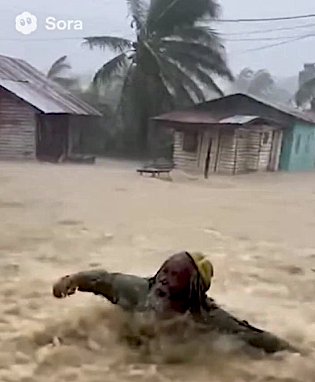
Fake sharks swimming in the streets and a video of a man in flood waters, which should have been obvious as a Sora AI generated fake (the logo top left is the giveaway) fooled those not familiar with AI picture generating software. Many expressed astonishment or wondered if the man survived the floodwaters in the comments below the fake videos, indicating that lots of people thought the pictures were real.
Why do people create these fakes? Mostly to build credibility and followers for their accounts, perhaps just for fun, or perhaps because they are sleeper accounts that will be used to stir up discontent or social unrest somewhere in the world at some future time after they have established themselves as credible or first with the news.
Why do people share fakes? Many studies have identified multiple reasons, including: to ‘check’ if the video is real, to alert friends and followers to danger, to appear to be first with shocking news, to share what they think is true content, to astound friends with something amazing from somewhere else in the world… the list goes on. Most people do not know they are sharing misinformation, they think the videos are real, but a small number of accounts intentionally spread such videos to amplify disinformation.
A full report with fact check analysis is available from Eurovision News here.
Images: various fake social media images, complied and reported by Eurovision News.