
Opinion from Steve Ahern.
Good on you, Michelle Rowland!
Former Communications Minister, now Attorney General, Michelle Rowland has come out strongly in favour of Australian content creators and journalists, on the issue of whether AI bots can scrape data without payment or will be limited in what they can use. She has rejected the idea of a text-and-data mining (TDM) exception to Australian copyright law.
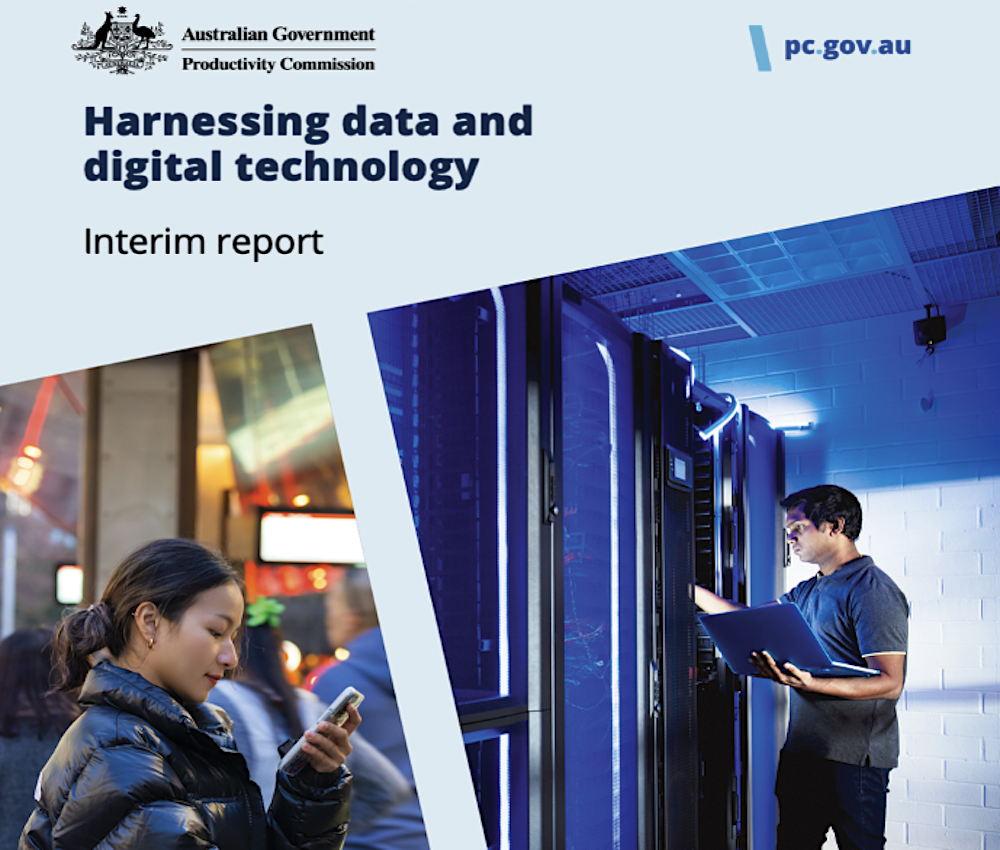
The Productivity Commission report several months ago argued that there should be a copyright exception for AI bots to freely scan material published by Australian artists, songwriters and journalists. That has been rejected by Rowland, who today said the government will move to strengthen copyright protections for Australian publications.
She told ABC Radio’s AM program:
“There is a body of work to do around what the copyright environment looks like in the AI world, but we are making it very clear that we will not be entertaining a text and data mining exception. That gives certainty to the environment, but it also enables the creatives of Australia to have certainty going forward. This is fundamental to their right, as people who are generating works, to ensure that they are fairly remunerated for that and that there are fair terms of use…
“This Government has been working closely both with the tech sector and our creative sector to ensure that we have not only the right settings in place, but also the right pathway going forward.”
The interim productivity commission report predicted $116 billion worth of productivity gains with the use of AI over the next decade, recommending a light touch approach to regulation.
“Experience shows that we need a flexible approach to facilitating data access across the economy, where obligations placed on data holders and the level of government involvement can match the needs and digital maturity of different sectors…
“AI‑specific regulations should only be considered as a last resort for the use cases of AI that meet two criteria. These are:
- where existing regulatory frameworks cannot be sufficiently adapted to handle the issue
- where technology‑neutral regulations are not feasible.”
After studying the full interim report I did not see any recommendations about any of the revenue gained from productivity being distributed to the original content creator rights holders.
The Attorney General’s statements flag an intention to redress the balance in favour of Australian creative and information content creators. With her previous background in the communications portfolio, Roland well understands the importance of local content for the preservation of culture and also for the business success and profitability of local news and information providers.
It will be a balancing act for Roland, who must encourage some of the productivity gains outlined in the report, but avoid sending local publishers, artists and musicians broke when AI pilfers their work and steals the clicks that previously came to them from search engines
There are two sets of regulations in place at the moment that regulate the interaction between digital tech giants and Australian creators. They are Australian Copyright law and the News Media Bargaining Code.
Copyright law currently has fair dealing provisions for schools, libraries, satire, reviews and news, but Roland, rightly, says the legislation needs modernising. The government has formed a reference group and plans to address copyright issues “expeditiously” in the next few months.
The News Media Bargaining Code is more complicated. The current code and its implementation are grossly inadequate for the protection of smaller news publishers.
When first introduced, the bargaining code was hailed for its success in bringing the digital tech giants to the table to negotiate payments to rightsholders. But the bargaining code has failed to include many small publishers, independent radio stations and trade journals, whose click-throughs are now being stolen by artificial intelligence summaries within search engines. The ACMA’s 2025 News Media in Australia report identified 2,864 professional news outlets, just over 80 companies are registered under the bargaining code.
The code either needs a revamp or a different regulatory mechanism should take its place, given some of the tech giants have flagged they may not renew their agreements under the code when they expire.
Minister Rowland says the government may take a small claims tribunal approach to these issues, which may or may not solve the problem.
After experiencing AI content theft first hand in a spectacular case of AI hallucination, a Nine Entertainment spokesperson said that “by acting decisively, the Australian government has set a clear marker to big tech that our ideas, our intellectual property, our national voice in this world is not free to swipe, ingest and grow their models at our expense.”
News Limited has also applauded the government’s approach, with Michael Miller saying in The Australian: “By upholding the creator’s right to control access, terms of use and payment, it reinforces that our copyright law works to ensure effective market outcomes.”
It is a complicated, fast moving environment, but rather than just accepting the Silicon Valley mantras ‘move fast and break things’ and ‘fail fast, learn fast,’ this government has realised the things that might be broken in the fast pace of change could be small businesses, Australian music, arts and culture.
I am pleased to see our government intelligently addressing all the issues surrounding AI, rather than just being swept along in a wave of tech hype.
No doubt we need to harness AI. It will create more productive work places, deliver many benefits and speed up the pace of research and content creation, but this must be done in a way that fairly compensates the owners of the original content that AI bots are using for training.
View all the submissions to the Productivity Commission’s inquiry here.
Download the Productivity Commission’s reports here.
Steve Ahern is publisher of this Audio Industry trade journal.
Radioinfo is not registered in the News Media Bargaining Code.