
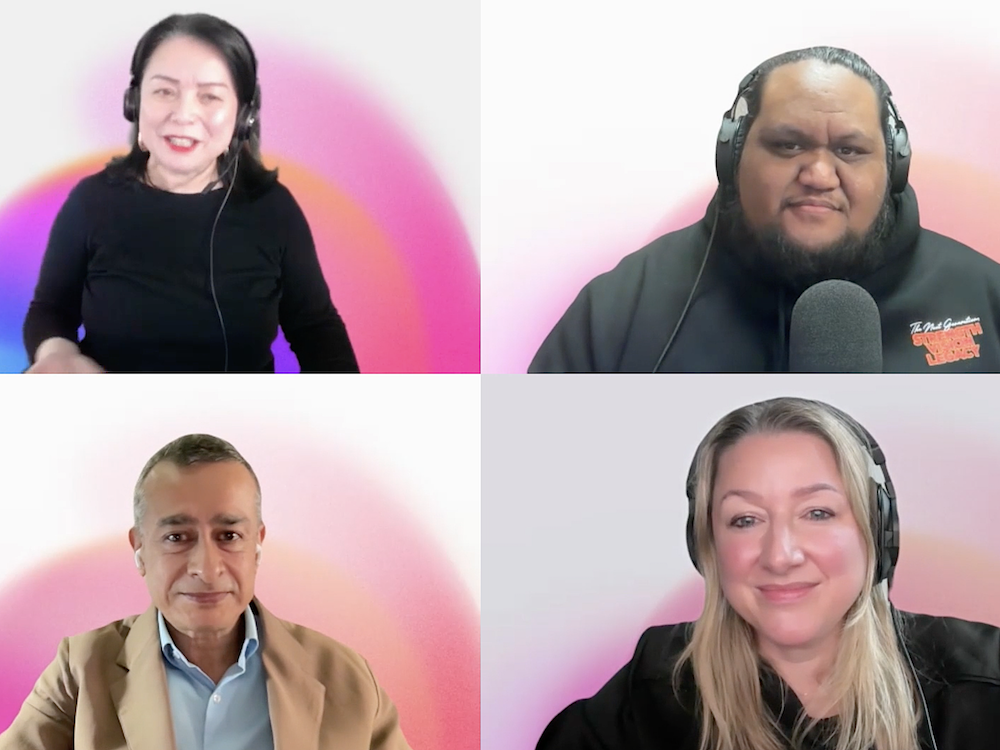
Session 4 of the recent AFTRS Digital Futures Summit, titled “Hear-Say: Exploring the Future of Listening,” focused on the rapidly evolving landscape of audio content production, distribution, and consumption. The session brought together broadcasters and industry leaders to reflect on how traditional forms such as radio are being reshaped by technological disruption, changing business models, and shifting audience behaviours
Moderated by AFTRS Discipline Lead, Radio & Podcasting, Andrea Ho, the speakers were Dre Ngatokorua, Broadcaster, Umeewarra Aboriginal Media Association, and Suman Basnet, Regional Director, AMARC Asia-Pacific and Rachel Fountain, Executive Producer at NewsCorp Australia.
A central theme of the session was that radio is not dead, but it is no longer the dominant form of audio media. The audio industry is now a complex, disrupted ecosystem where radio coexists and competes with podcasts, streaming platforms, smart speakers, and immersive audio experiences.
The speakers addressed the economic and structural challenges facing the audio sector. Traditional business models for radio and audio are under pressure, as advertising revenues shift and audiences fragment across multiple platforms.
The session highlighted the importance of diversity and inclusion in the future of audio. A recurring point was the enduring value of community connection through audio. Despite the rise of global platforms, local radio and community broadcasting remain vital for fostering social cohesion, cultural expression, and information sharing, especially in remote and marginalized communities.
“Audiences need to know what is trustworthy, radio gives you that. Ai tools are handy but trust is within humans.”
Rachel urged community broadcasters to use their “authenticity and close audience connection” to get the message of trust through to the audience and funders.
Suman said community broadcasting is “not about scale, it is about your community… by the community and of the community at an ownership level,” is the core of community broadcasting, which will help it survive in the competitive audio landscape.
Dre made the point that there may be no need to scale up to get big if you are really serving your community. Uniting community can be done in a small way at grass roots level and be very effective. The Umeewarra Aboriginal Media Association has gone beyond audio and now also uses video as part of its broadcasting because that is what the community wants. Some listeners consume the media in groups while others listen individually, so both forms of media work for different parts of the community.
Issues such as content discoverability, monetization, and audience engagement were also discussed, with an emphasis on the need for innovation in both programming and business strategy.
Generative AI is being used by some stations, “everyone is experimenting with it,” But there is also a healthy distrust of sharing community stories to Ai bots without knowing whether those stories will be used in some other way by the bots beyond what was intended.
“Ai is scary because it doesn’t understand indigenous languages and doesn’t care about cultural appropriation… for archiving it may be useful,” said Dre.