
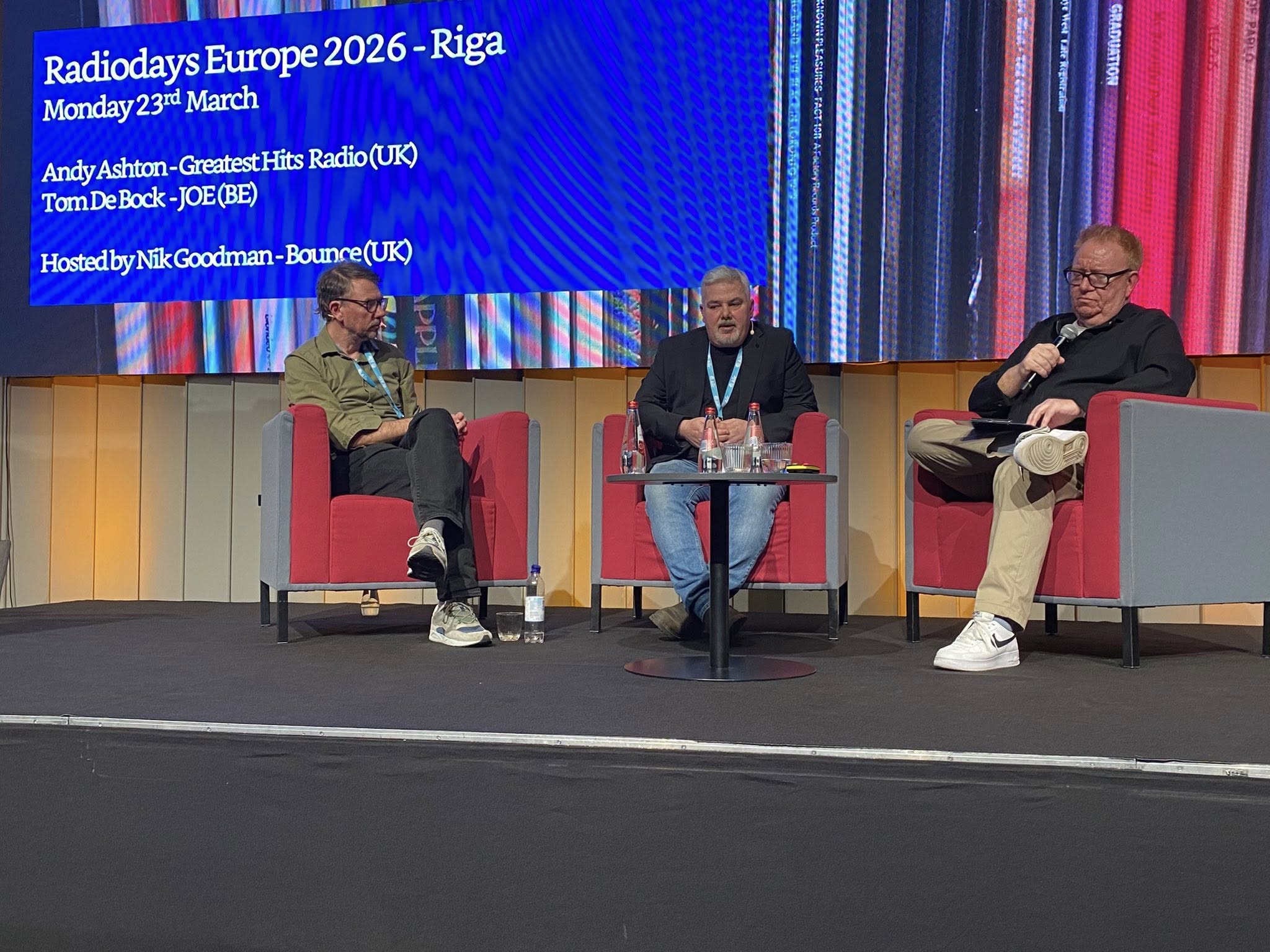
To start the Classic Hits Comeback session at RadioDays Europe 2026, Andy Ashton the content director of Greatest Hits Radio UK had us all stand up and think about what our favourite musical decade was.
He started with the 50s and 2010s – no one sat. The 60s and 2000s had a couple. the 90s and 70s had quite a few but the 80s left standing was easily half the room. TikTok and TV shows like Stranger Things have made the 80s the sweet spot of music lovers at present.
It is Greatest Hits Radio that I particularly want to focus on as JOE in Belgium runs more similarly to ARN‘s Gold Network with all the bangers from yesteryears mixed in with a new generation of classics. Greatest Hits Radio plays hits starting from The Beatles emergence in 1964 through to a spattering of 90s. The 70s and 80s are the core.
None of this is innovative or unique so far. What is worthy of more than a mention is the audience of this station that is just seven years old.
3.8 million listeners and counting. The split is exactly 50/50 men and women.
While the target demographic is 55+, 1.3 million of those listeners are aged 15-34. Half a million are 15-24. As Andy said, “to them it is all new music.”
The appeal to the target demographic is different too, with one listener saying, “I don’t remember the 70s like that!” It’s a compliment because every era, alongside its Queen and ABBAs has hits like the truly odious You’re Having My Baby by Paul Anka and Odia Coates, or Float On by The Floaters that were of its time and best never repeated.
In Australia many of Fleetwood Mac’s best known tracks either never charted or barely rated a mention. We also love acts like Steely Dan, The Doobie Brothers, Van Morrison and Leonard Cohen whose catalogues have become revered later. The Chain, by Fleetwood Mac, is a prime example. It is among my teenage son’s favourite songs but was never really valued upon release.
The mantra of Greatest Hits Radio is to promote a shared love and passion for music, delivered in a contemporary way. The announcers are important, Ken Bruce was a huge coup for the network, poached from BBC Radio 2, but their role is to support and enhance the music, not fill the space with chatter.
The soundscapes of stations was a large focus of this Radiodays from voices, to imaging and jingles. From the outset Dawn French, the wonderful and warm comedian, does all the station IDs. They are redone, with input from Dawn, each year so there’s always something fun, funny and familiar between the songs.
And it’s a huge song repertoire, Andy said second only to BBC Radio 2. The most a particular song was played in the week of this session was 6 times, and that was Another Brick in the Wall by Pink Floyd. The decades don’t get played together, unless its a 70s weekend and the network has also invested in FM and DAB distribution where you can get your fix of just 60s if that is what your heart desires.
In the question time a young woman asked what was there for her 15-24 demographic specifically, who love the music they are discovering via the station. Last year the station introduced the Stephanie Hirst Vinyl Show, with the tag line ‘Music my Dad used to listen to’ and every single track played off the original 45″. What a great option for new and old vinyl lovers.
There is so much scope for this concept in Australia, with some examples like 70s Music and MMM and Gold 80s featuring on DAB+ as well as the ACE Radio Network’s 4BH, 2UE and Magic 1278 leaning into the genre (with more talk and ads though). A clean and clear music centric classic hits station, with nothing past the 90s can work and provide, as Andy perfectly summed up, ‘moments of surprise and delight every single day.’
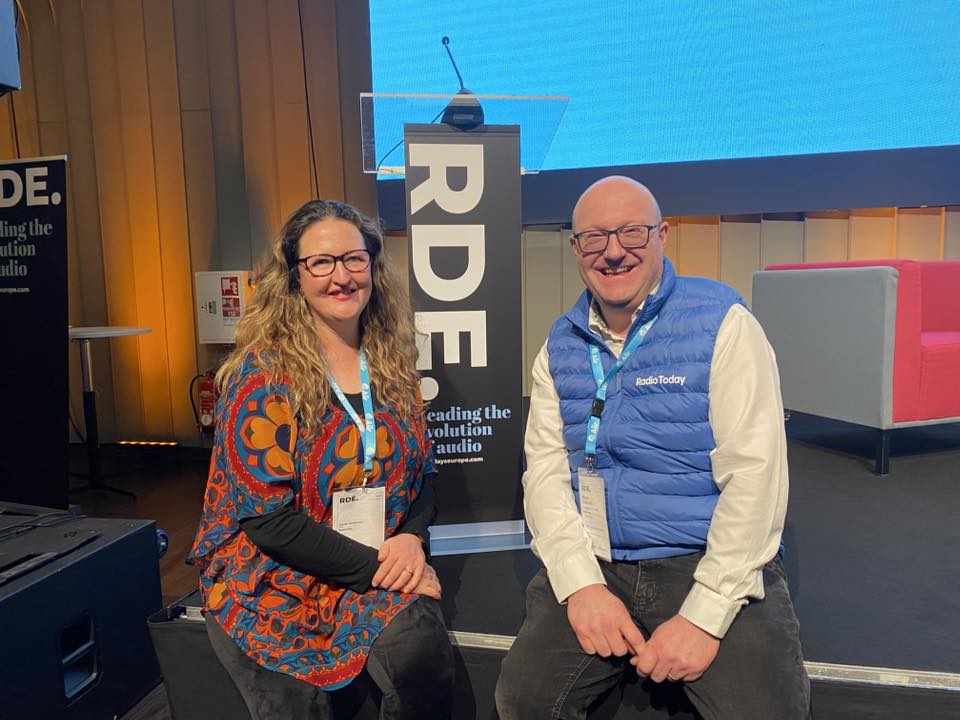
Jen Seyderhelm is a writer, editor and podcaster for Radioinfo. She is pictured at Radiodays Europe 2026 with Radio Today UK writer Stuart Clarkson (who loves the 80s).
Related: