

Medianet has just released its 2026 Australian Media Landscape Report.
On the day that ABC staff are on strike, the report gives an industry perspective on the negotiations between unions and ABC management.
Speaking on ABC 702 Sydney today, ABC Managing Director Hugh Marks said: “I think the offer that we’ve made to staff is fair and reasonable. I keep getting told that it’s below inflation, but it’s not.”
The Medianet report, which is described as a “snapshot,” not a “comprehensive study,” has some salary comparisons.
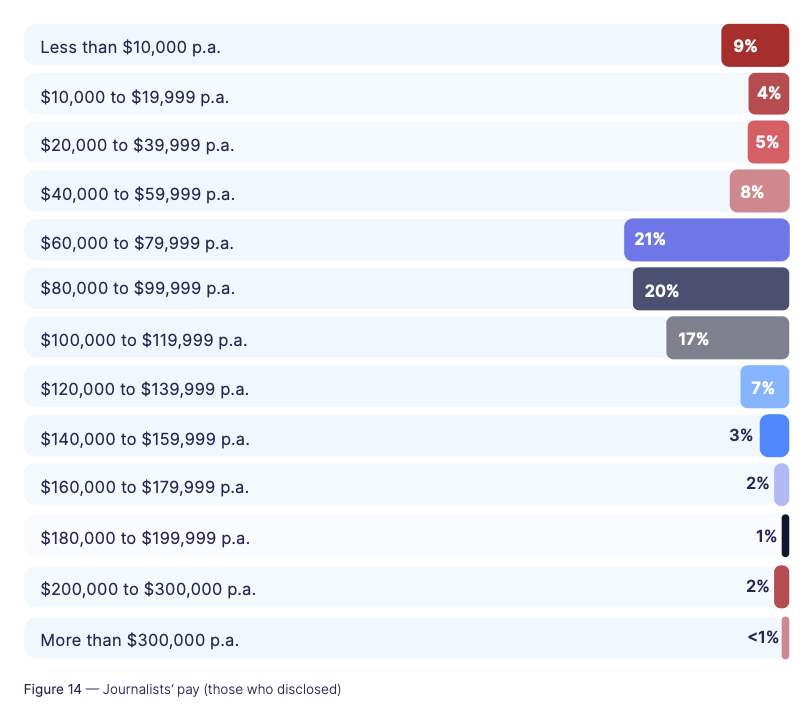
The most common pay bracket for journalists in 2025 was between $60,000 to $79,999 per year, followed by $80,000 to $99,999 per year.
TV remained the highest paid sector, with over half (51%) of all journalists working in TV receiving over $100,000 per year. This was followed closely by podcasting (48% paid $100,000 per year or more), digital (32%), print (29%) and radio (28%).
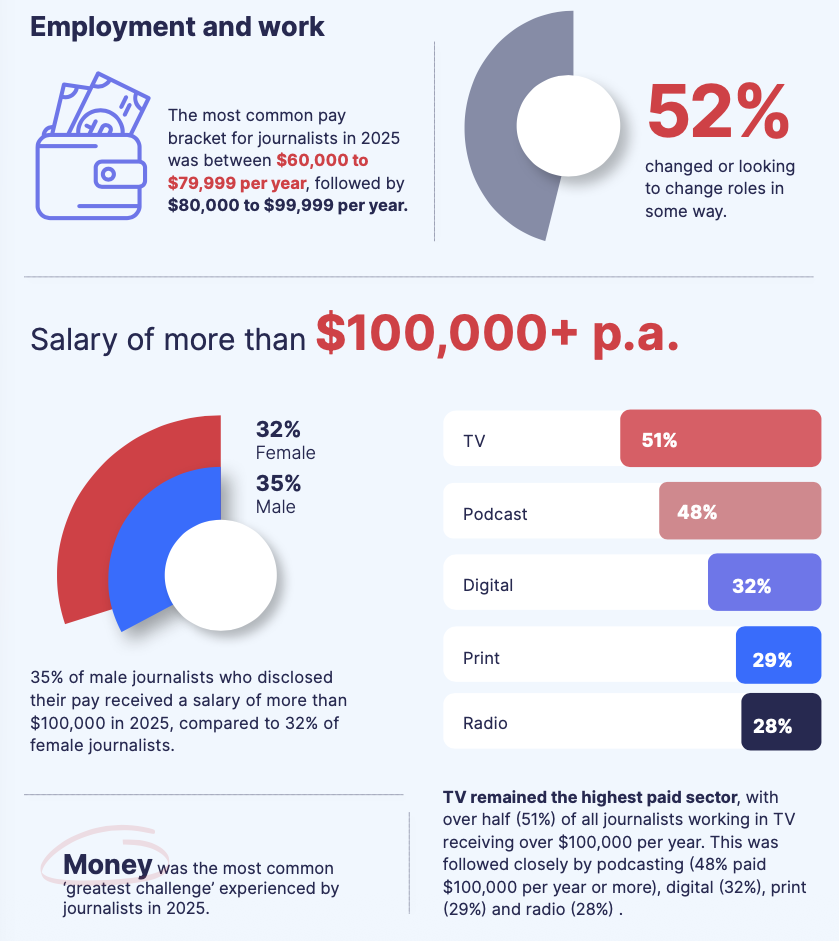
According to the report, those working in publicly or government funded media outlets are better compensated, with 51% working in these types of media outlets earning $100,000 per annum or more. Those working in community media are the least paid according to this year’s survey respondents, with only 10% in these outlets earning $100,000 per annum and over half (52%) of community media employees reportedly earning $60,000 or less per year.
 52% of respondents said their job or role had changed in some way in 2025, including changing jobs in the industry, changing roles at the same organisation, taking on additional work, or starting a side hustle. Eight percent said they had started looking for a job outside of journalism.
Money, uncertainty about the future and changes to workload were the three most common greatest challenges experienced by journalists in 2025.
Over the past three years, financial concerns have remained the most pressing issue for journalists, reflecting the continuing economic strain on the media industry.
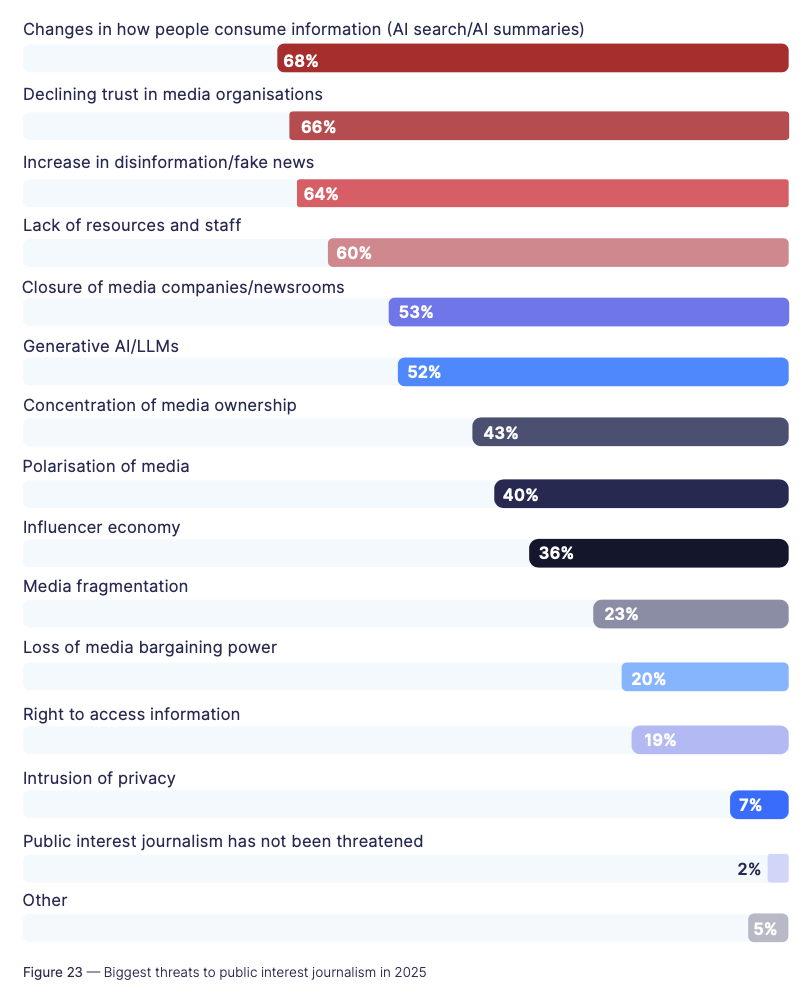
For five years in this survey, ‘Increase in disinformation/fake news’ was the top threat to public interest journalism as identified by respondents. This has now been replaced by a new threat: ‘Changes in how people consume information due to AI’.
Commentary from respondents pointed to the increasing difficulty of audiences discerning whether content is AI or human generated as contributing to the growing distrust of the public towards the media. AI summaries have also been blamed for driving traffic away from news sites.
The majority of journalists (54%) said that they have used generative AI/LLMs in their work in 2025. This is in high contrast with last year’s data which showed that 63% of journalists had not used generative AI/LLMs at the time.
Journalists say they can tell when a PR pitch is created with AI, considering it lazy public relations and often dismissing the press release as AI slop.
Other findings include:
• Almost half (49%) of respondents are running or considering an alternative platform for their work (like Substack). 46% of those respondents want more creative freedom, while 29% want a more direct audience relationship.
• The outlook on the state of the media in Australia is mixed with just over half of journalists feeling optimistic (53%). Many describe an industry in transition, characterised by a move away from traditional newsrooms and towards a more fragmented landscape.
The full report is available here.