
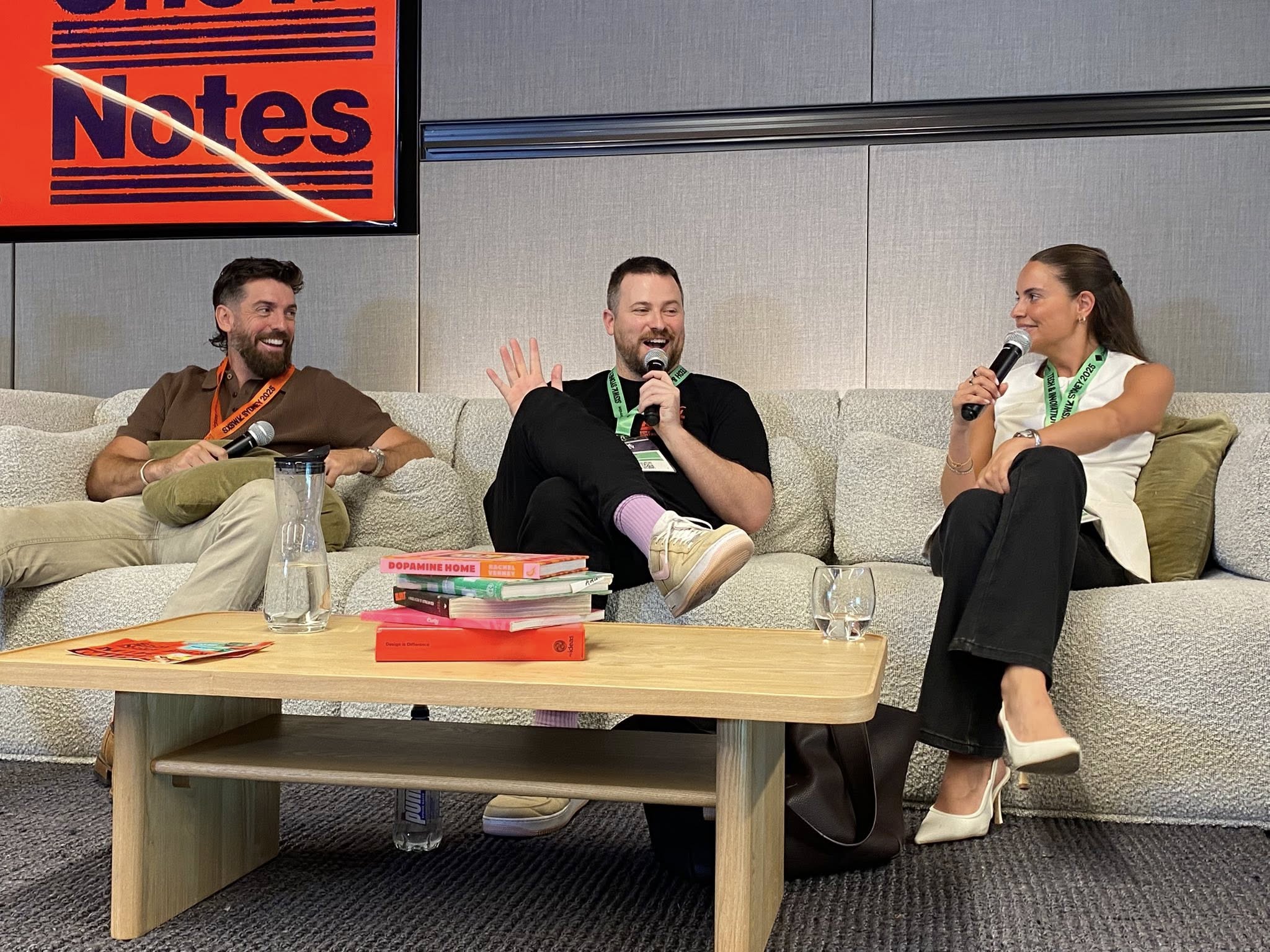
SXSW Sydney last week held a podcast day featuring –
In Sync – The Chemistry between Australia’s Favourite Co-Hosts – featuring Craig Bruce as moderator with Ryan Jon Dunn from the Toni and Ryan podcast and Luisa Dal Din and Jack Archdale (Lu and Jarch) from the We Mean Well podcast and the national Early Drive program on Triple M (Jarch, Ryan and Lu pictured main).
Legacy to Loyalty – Reinventing Entertainment for the Attention Economy – featuring, from MIK Studio, Amelia Chappelow moderator with Mitch Churi from the Mitch Churi Chat Show and Myf Warhurst from The Moment podcast.
Independent Voices – The Rise of Political Podcasting in Australia – featuring, from ABC Radio National’s MediaLand , Viv Kelly as moderator with co-host of the Lamestream podcast Osman Faruqi and co-hosts of the We Used to be Journos podcast, Antoinette Lattouf and Jan Fran.
And, The Rise of an Empire – From Good Podcast to Great Business – featuring Acast’s Guy Scott-Wilson moderator with Just the Gist podcast host Rosie Waterland, Neuralle’s Jordan Michaelides and from the US, Josh Lindgren, Head of Podcasts at CAA.
Ryan Jon on why political content has no place in the Toni and Ryan podcast:
“The best analogy I can give is imagine you have a bully at school and they’re everywhere you are. Then you go home and go to your favourite podcast, and your bully is there too. We want to be the one place where your bully isn’t.”
The above was my single biggest takeaway from the four sessions I attended. The Toni and Ryan podcast and We Mean Well are intended as a brain break, and for that reason Toni and Ryan and Hamish and Andy are perhaps the two most successful podcasts in Australia. Leave the political discussion to Lamestream and We Used to Be Journos.
The sessions were packed and filled with tips, resources and many of the things you never knew you needed to know about as a beginner or even a seasoned podcaster, especially if yours is gaining traction and looking for next steps to increase reach and monetization.
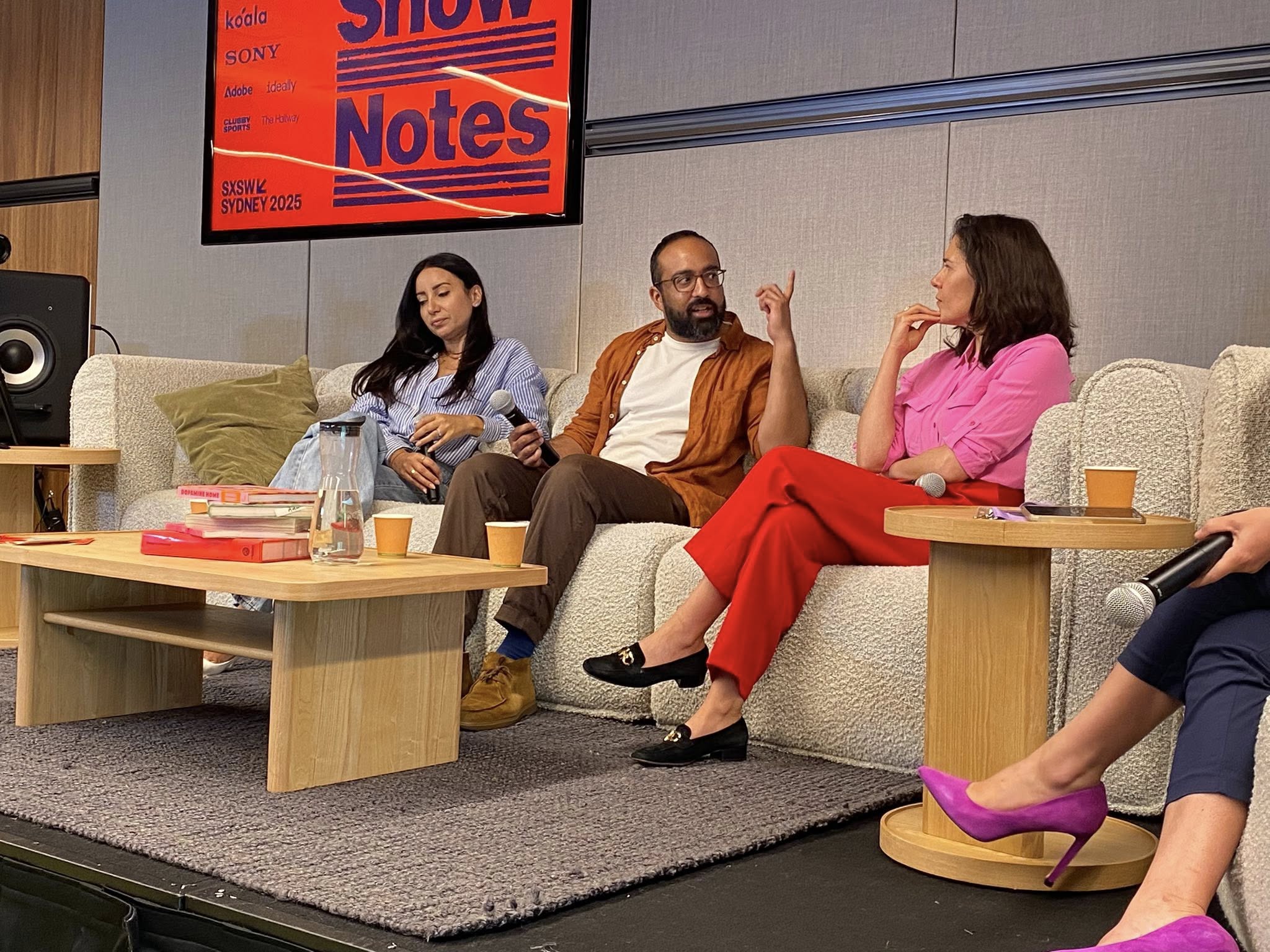
L-R – Antoinette Lattouf, Osman Faruqi and Jan Fran
Below are 11 takeaways for podcasters new and expanding from SXSW Sydney:
- Start now
Josh Lindgren: “You can’t go back to now and buy shares when they were that cheap.”
This doesn’t just apply to the many of you who have a concept but time/money/life is getting in the way of any kind of launch, this is also toward those who are making something but you’re not putting any additional energy into what more it can be, and where.
Connect with people who can be the next link in that chain. Explore releasing short versions on Instagram and TikTok or start a YouTube channel. See how things land.
Mitch Churi said, “you don’t need the content director.” You can make things in your image and ideal and place then wherever you want – but start now. Who knows where you could be in 12 months time.
- Quality over Quantity
Recently Lamestream changed from releasing one podcast a week to two. While this does now mean that Osman Faruqi has to work on a Sunday, he said the reasoning was that the world moves so quickly that sometimes they would have just finished recording and a major news story would break. He and co-host Scott Mitchell would be aware that when the edited podcast was released the next day it would be missing that content and a whole week would go past before anything was mentioned about it.
Jan Fran said she and Antoinette Lattouf were thinking about doing the same thing because, the more podcasts in a week the more downloads, but because of the amount of research and time that goes into every episode of We Used to be Journos their priority was the integrity of the product and maintaining a high quality.
Jan said: “I don’t want to churn them out.”
- Let it breathe
This was a recurring theme for the ex-radio announcers. The joy in not having to watch the clock or know that someone was going to cut down your 15 minute interview to 4, and suck all the life out of it.
Lu and Jarch talked about coming in with a plan but choosing a different path if the conversation went that way. Some of their favourite episodes were the ones that looked entirely different than first thought.
Jarch said he’d go home and his wife would ask what they had talked about and if he couldn’t remember then that was invariably a sign of a cracker episode that hadn’t followed the plan.
Myf said it is still a work in progress getting rid of the radio ‘crutches’. She was so accustomed to interviewing to a set time frame and is still consciously ‘getting out of her own way’ in using YouTube and just being in the moment (pun intended) with her guest.
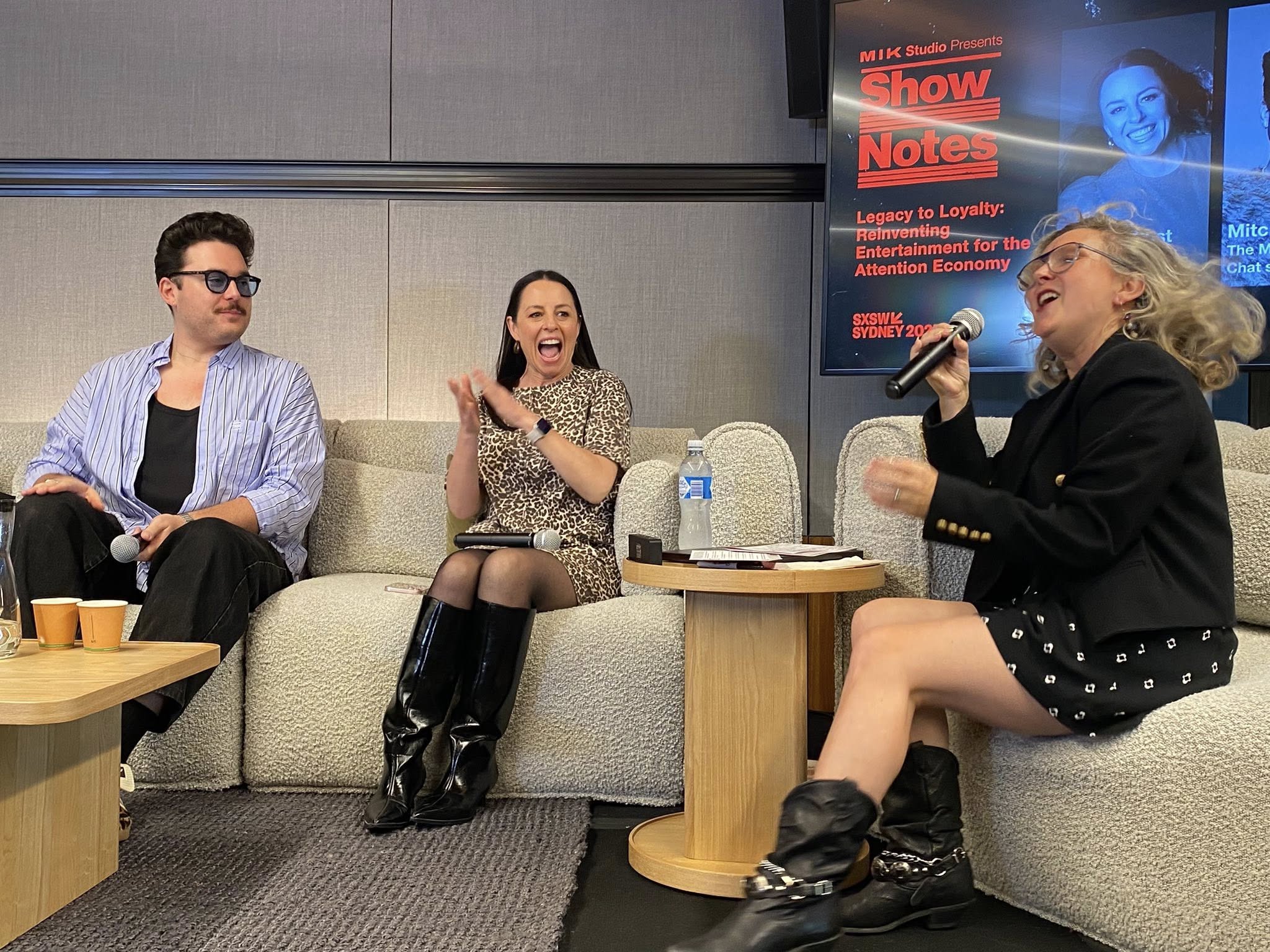
L-R – Mitch Churi, Myf Warhurst and Amelia Chappelow
- Trained broadcasters make great podcasters
An observation of all the trained broadcast professionals, particularly Myf, Ryan Jon and Mitch, was they know how to work a microphone. Despite not wearing headphones to hear themselves, all used the space and their innate relationship with the microphones to exceptional effect. Not only was every ‘on’ but they sounded amazing.
By contrast I sat in on another live session, four people with mics attached to the tables, where only only one was actually on mic. I was distracted by the variance in what I could hear, and I was sitting in the front row. One coughed straight into the mic too.
There is research from the ANU by Dr Eryn Newman who found that when people listen to recordings of a scientist presenting their work, the quality of the audio had a significant impact on whether people believed what they heard.
This was a case in point for me. Ryan Jon definitely played down his intelligence in his words but I was left with the impression that he is smart, canny and brilliant, and some of that was simply over how good a communicator he is.
I would recommend voice and microphone training to any would be podcaster. It makes a profound difference and the standards now are so much higher for audio quality.
- You just need one person in your corner
This was said by Jarch and he was talking about Nova 969 breakfast co-host Michael ‘Wippa’ Wipfi.
Jarch started in radio sales, did an unpaid internship while finishing his radio degree, worked with the street team, voiced ads on occasion and basically anything he could to get on the other side of the mic. He was about to throw in the towel and head back to the family sheep station when he connected with Lu. Wippa, saw his potential beyond, as Jarch put it, being pretty shit at sales. He encouraged Jarch to stay in touch and offered guidance and advice to Lu as well.
“Toni is not the laugh track, Toni is the main event”
Ryan Jon met Toni Lodge through radio and, similar to Jarch, she was doing everything to get a gig on air. They started Toni and Ryan as a demo to get Toni that job! Ryan said the quote above around Toni being the funny one of the duo and the show built to showcase her humour, not the other way around, and the podcast may not have happened if she’d got that on air job.
- Listeners are choosing you
We are a long way past ‘2WS is my station’. To build a podcast, listeners choose you.
Mitch said that in his radio days they had the typical station listener, “Betty in Blacktown”. He said radio tries to be one size fits all but through his chat show he’s understood that “people choose you.”
Myf agreed that radio was a broad church but for her The Moment was about doing something in her image independent of anyone else. She said:
“You don’t have to please everybody. This is content I want to make and it’s resonating.”
One of the most extraordinary stories I heard was from Ryan Jon. He and Toni recently did a podcast tour of the US. They got stuck in Atlanta, Georgia with no idea how to get to their next destination so they put the call out to TARPers (the name for dedicated fans of the Toni and Ryan podcast) and a listener drove them there themselves! How’s that for loyalty?
We often think that our legacy travels with us especially if we have some media profile. I know Ryan Jon from radio, we both worked in Canberra. I first encountered Lu and Jarch via their Triple M roles. One of the people in the audience of that session, before they asked their question, said that they had no idea that Ryan Jon, Lu or Jarch were ever radio presenters. They only knew them from their podcasts and had chosen them there.
- Anyone can do a podcast, not everyone can be a journalist
From the Rise of Political Podcasting session I would suggest that this was very much what Osman, Antoinette and Jan wanted the audience to take away with them. Many who podcast are commentators, not trained and experienced journalists.
A recent example of this was a story that Antoinette and Jan broke about the leaked phone numbers of the Prime Minister and other ministers and identities. Antoinette discovered via the leaking of her own number. She and Jan then had to decide whether the story was in the public interest and what the implications could be. Jan told of how she rang the PM to test the veracity of the information and left a weird voice message as she was on the spot:
“Um, so call me back? Bye.”
Osman wasn’t sure that audiences knew the difference. In the lead up to the election Anthony Albanese and Peter Dutton chose podcasts like Abbie Chatfield’s and Sam Fricker, all they chose not hosted by journalists because they knew they wouldn’t be held to account in the same way. Albanese turned down the daily news podcast The Briefing which Antoinette is part of and was in the same building, at the same time, as Abbie Chatfield’s It’s a Lot.
Osman said: “Your job is to hold them to account, not to let them say whatever they want to your audience.”
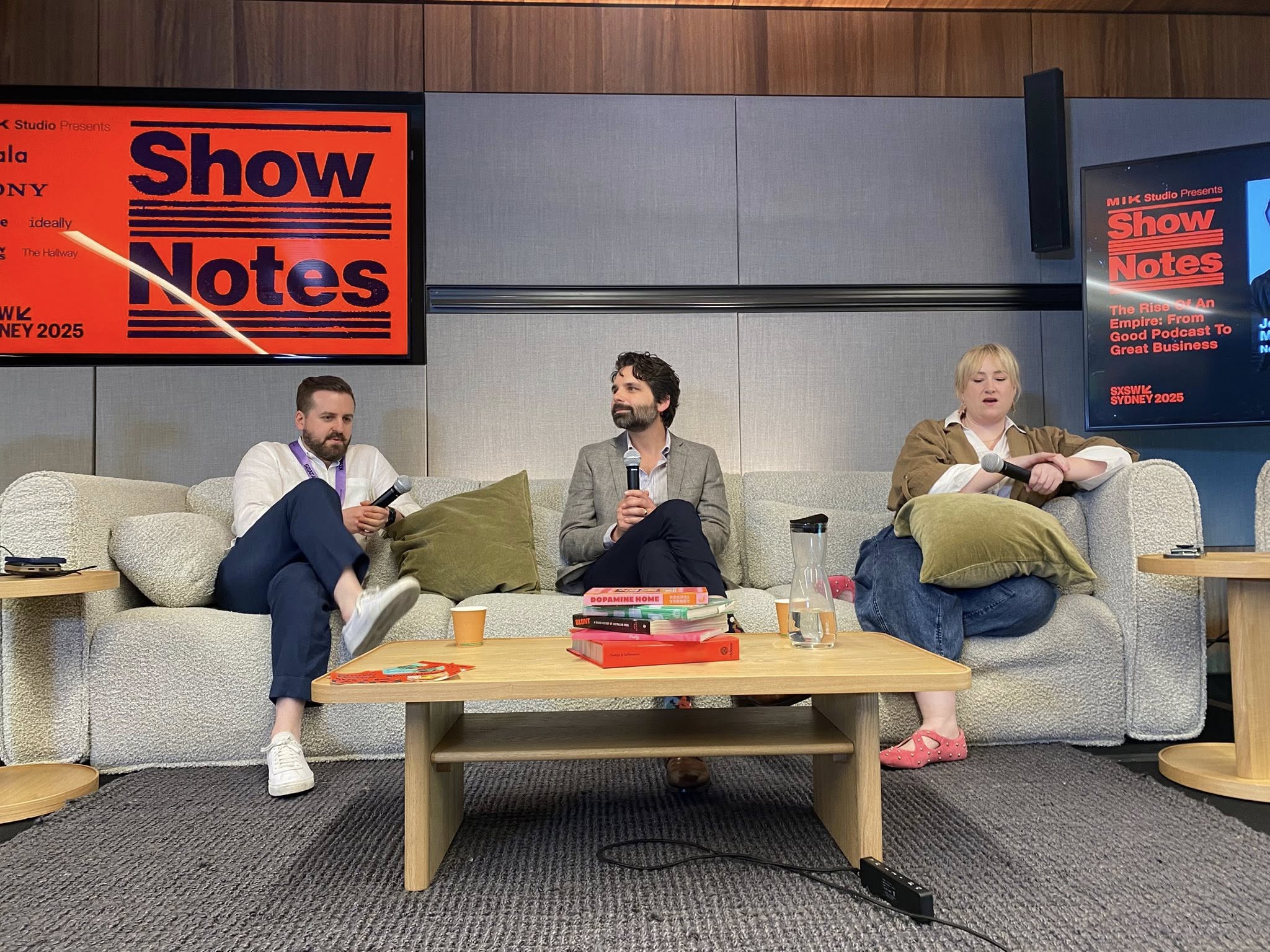
L-R – Jordan Michaelides, Josh Lindgren and Rosie Waterland
- Beware the legal implications
Following on from the above commentators are different to journos, Osman revealed that he had been sued five times (pre podcast). One time, due to the nature of the content, he knew it would become a legal matter however he said it, but the story had to be shared. What he missed the most working for The Age and Channel Nine was the scaffolding that was in place to allow journalists to do their jobs properly, and the excellent media lawyers.
Now, with independent podcasts, none can afford to be sued so all are in some ways more cautious with Osman saying, “there are big stories in the inbox that just can’t be covered.”
Rosie Waterland’s legal experience is different. She has recently moved Just the Gist from another network to Acast. The breakup of the first relationship was messy with Rosie not ending up with the initial RSS feed (like the podcast’s website) and co-owning the master recordings. This led to her redoing some of her original episodes again, à laTaylor Swift. Her biggest financial investment now, towards her podcast, is having a lawyer.
- Ethical and active monetization
I’d not heard the term “warehousing a podcast” which roughly means that it exists within a network but isn’t front facing or particularly promoted. Like up-and-coming bands who sign with a label only to discover that their needs are superseded by the Taylor Swifts of that network, the same can be true of a podcast.
In radio an advertising client might be spending big but where that advertising goes likely won’t reach down as far as your fledgling product. That’s part of Josh Lindgren’s role at CAA with his approach to ‘broaden the horizon. There’s a whole tier below that advertisers can spend on.”
For the news and political podcasts like We Used to Be Journos and Lamestream, they take care with what products are aligned with their brand so as not to muddy the waters.
Separately, the client who specifically chooses a podcast pair like Toni and Ryan might also want to do their research. Ryan said he and Toni were asked to be ambassadors of a Mother’s Day event not knowing that Toni’s mother had died and Ryan, who is adopted, doesn’t know who his mother is. That was a point of connection for Toni and Ryan in the first place, but not with that client, which they turned down.
I did like Rosie’s comment, when she was asked by Acast if she would normally shopped at Chemist Warehouse or Priceline Pharmacy. She said, “whichever one you want me to.”
- People are fans of lots of things at once
“Radio’s mistake is that they like to think you don’t listen to anyone else. Stations compete with each other in a race to the bottom. You can be a fan of more than one thing at once.” – Ryan Jon.
There are a lot of cross sharing of guests and shout outs to others in this much more inclusive and encouraging podcast environment. Jarch said when you’re confident enough in your own lane there’s nothing lost by waving to the next lane over.
Viv Kelly asked Antoinette, Jan and Osman for what other podcasts they were listening to that wasn’t someone’s already sitting on the sofa. Jan had been prepped to answer Lamestream and had to pivot. She was almost bashful to admit she was listening to All Things Plantagenet, like she’d been sprung reading Mills and Boon.
Mitch and Myf have both styled their podcasts around shows and themes that they admire, the visual aesthetics a new direction for what is for some just an audio product. Mitch finished the session by inviting Myf to come on his show. He said there’s room on our dance cards for lots of podcasts.
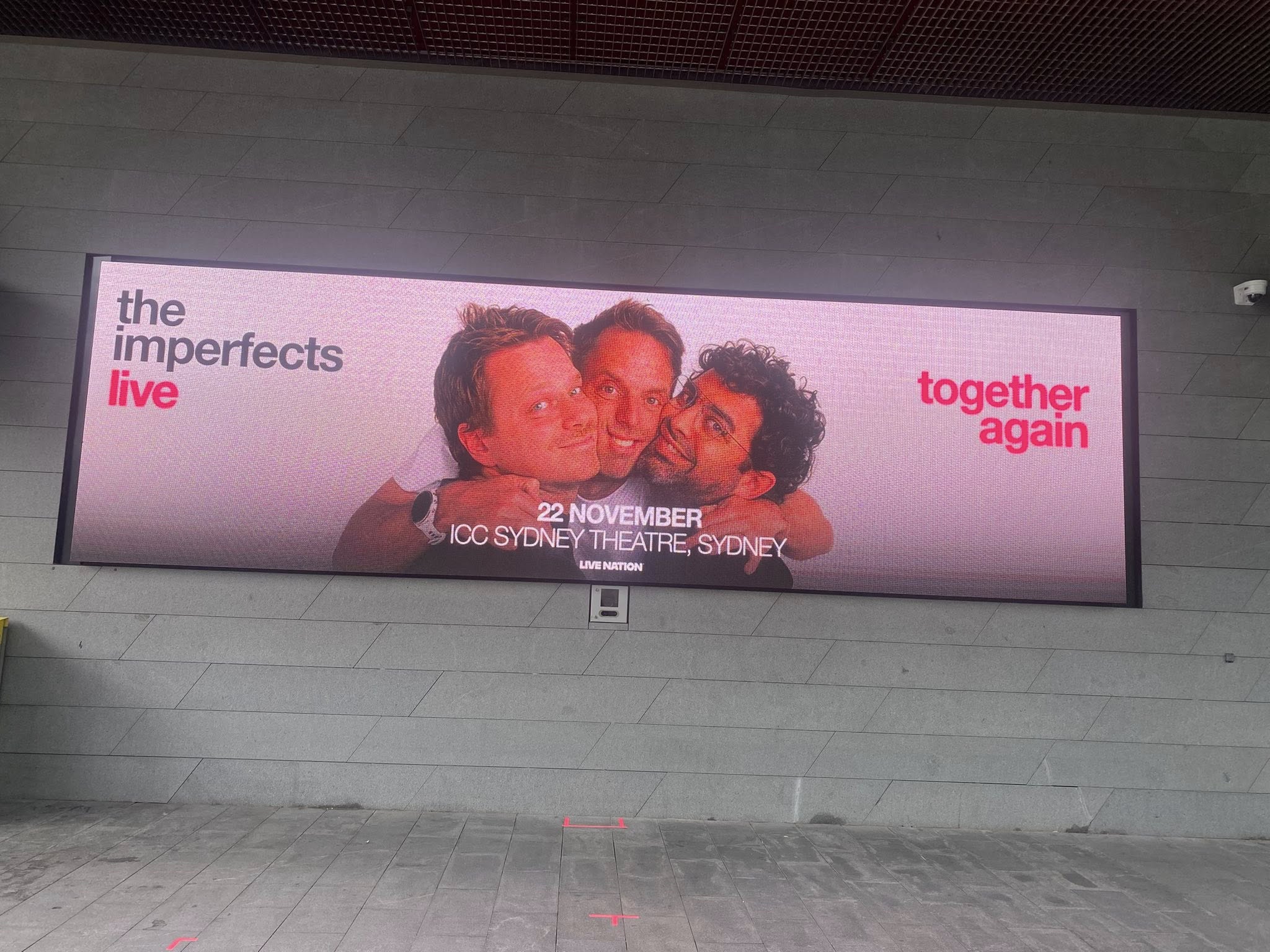
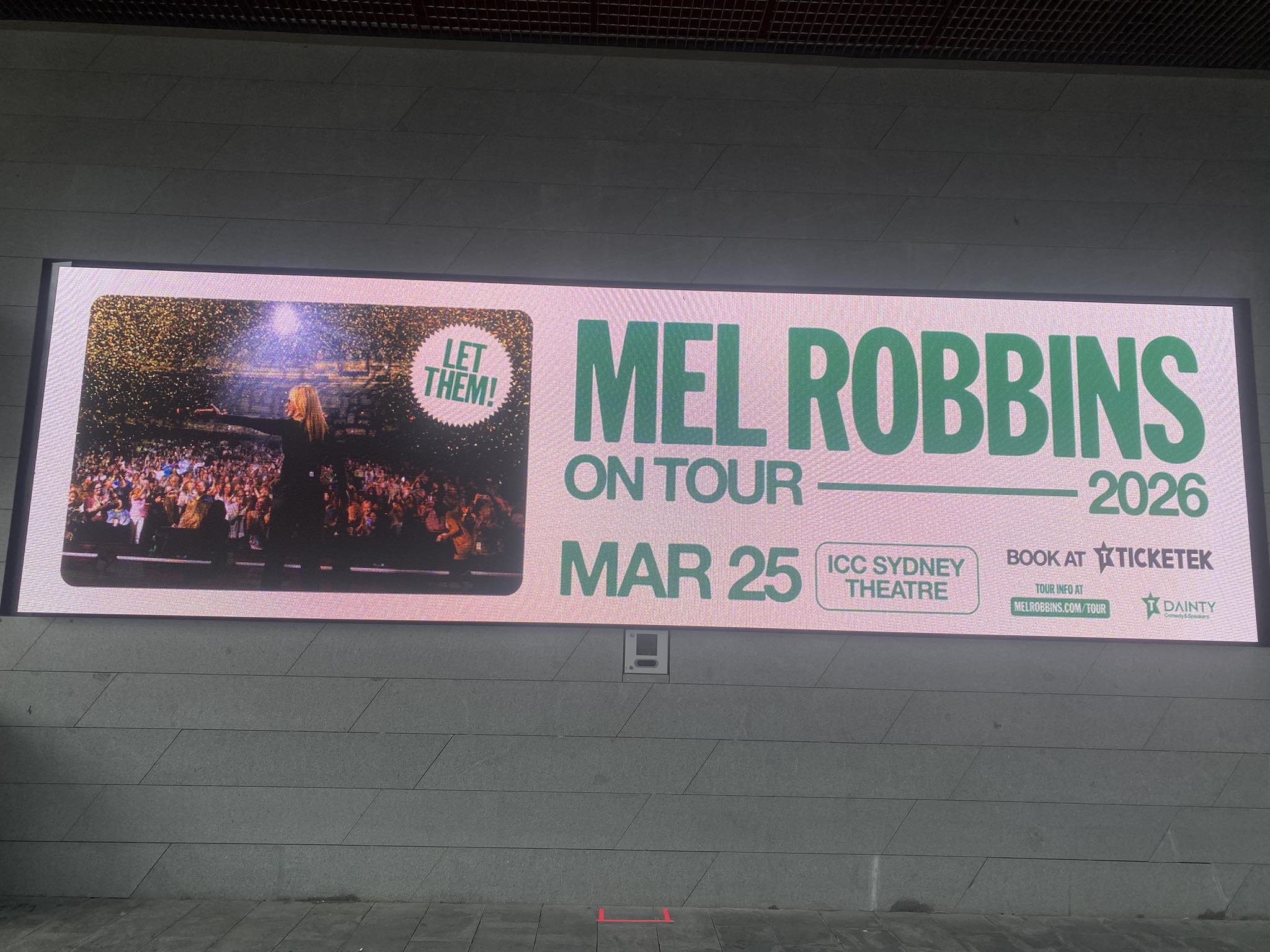
A couple of banners for live podcast shows happening in Sydney
- Meet and greets give you fans for life
In May Toni & Ryan won the People’s Voice category at the Webby Awards in New York City. At that event Ryan went around and took selfies with all the people he felt like he knew through listening or watching them. That is why he will always stop to say hello to a TARPer, have a chat, take a pic or even embark with them on a long US road trip. He said that across the world, if he was stuck, there’s an open invitation of a bed and a feed in hundreds of cities now.
Myf and Mitch were chatting about how much they miss live radio, but how live shows for podcasts have the same if not a bigger impact as well as creating the most loyal of fans, like the TARPers or Rosie Waterland’s Gisteners.
I’ve tried to avoid the overused words of chemistry and authenticity so far, however across these sessions, I was struck by how honest and real I felt everyone was, even when asked sticky questions, and a real magic at how well they worked off each other.
They know they won’t be hauled before the content director afterwards to justify why they said or didn’t say something. These independent podcasters, yes within the confines of agreements with agencies and advertisers, still felt free.
Jen Seyderhelm is a writer, editor and podcaster for Radioinfo.