
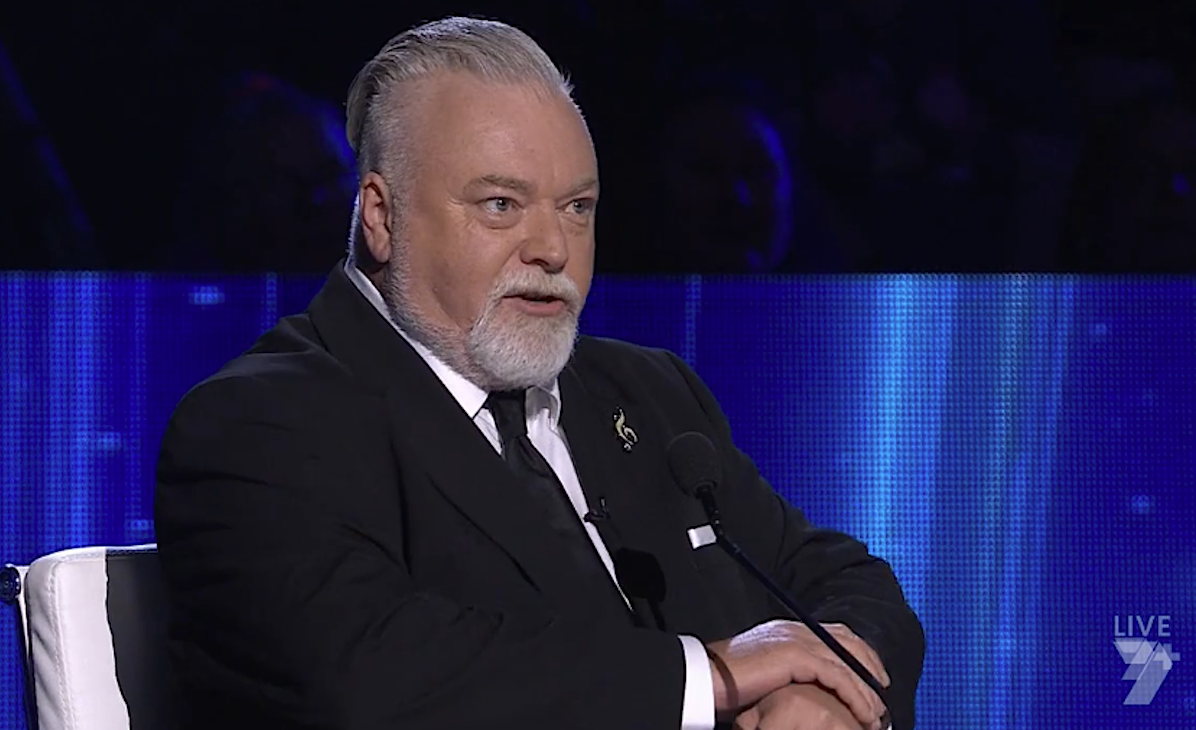
Documents filed with the Federal Court this week want the court to declare that the “purported termination” of ARN’s contract with Kyle was “invalid and of no effect.”
Court documents in the case, obtained by radioinfo, ask the court to declare that the termination was invalid and that the contract should be honoured.
It’s important to know all the acronyms in the court documents, otherwise it gets confusing, especially since the Broadcasting Services Act, which is not referenced in the court documents, is also sometimes referred to as BSA.
The documents outline various parties to the contract, described as the Broadcast Services Agreement (BSA) in the statement of claim. ARN and the company holding the licence for KIIS 106.5, called Commonwealth Broadcasting Corporation (CBC) are the parties being sued by Kyle. Kyle’s two companies in the agreement are Quasar and Quasar IP, referred to as ‘The Applicants’ in the documents.
Here is our summary of the court documents in Kyle’s side of the case:
Termination Invalid
The Applicants contend that the purported termination was invalid and of no effect.
Why?
For two reasons.
- Because Kyle was denied a reasonable opportunity to remedy the “serious and imminent injury” that he was alleged to have caused, because ARN terminated Jackie’s contract (Ms Henderson’s BSA).
- Because the purported termination was premised on Kyle Sandilands committing an act of “serious misconduct” causing serious and imminent injury to the CBC’s business that he was given a reasonable opportunity to remedy.
But Kyle says no “serious misconduct” within the meaning of the contract (BSA) was committed. That brings on a discussion of the meaning of “Serious misconduct” as defined in the contract.
Serious Misconduct
Kyle was specifically allowed to be a “robust character” on air, according to the contract, so his case is that there was no misconduct in anything he said on the show. This is how section 6(d) of Kyle’s contract with CBC describes it:
CBC “acknowledge[d] the tone, style, voice and robust character with which [Mr Sandilands] has performed radio presenter services during his career” and expressed a “desire” that Mr Sandilands would present in a “robust character”.
The contract also provided a censor and contractually protected Kyle from a range of potential breaches, unless:
(a) the material was actually publicly exploited under the BSA;
(b) Mr Sandilands had actual knowledge that the material would, or was likely to, breach a term of the BSA or give rise to a Claim;
(c) the aspect of the material that would, but for cl 5.5, breach the BSA or give rise to a Claim could not have been known by the Censor or the legal clearance personnel of the BSA privy to the material prior to its exploitation;
(d) the material was not material of the type referred to in clauses 17.1(j) or 17.1(k).
These contractual exemptions are important because ARN may use them in their defence.
What reasons did ARN use to terminate Kyle’s contract?
The contract outlines these reasons for termination:
- If Kyle “commits an act of serious misconduct which affects or compromises the Program Services” “by causing serious and imminent injury to CBC’s business, having been given a reasonable opportunity by notice in writing referring specifically to [cl 17.1(a)] (not exceeding 14 days) to remedy same (where it is capable of being remedied)
That is why ARN had to give Kyle 14 days notice to reply to the notice of termination.
- If there is a “serious and persistent breach or non-observance of any of the terms of the [BSA], having been given written notice of the relevant breach and a reasonable opportunity (no exceeding 14 days) to remedy same (where it is capable of being remedied)”.
Kyle’s statement of claim seeks to establish that there was no “persistent breach” because ARN knew what that it was hiring Kyle for his “robust character” on air and that it put measures in place to manage his style. Kyle contends that ARN encouraged his on air style for ratings and revenue. He said last week in his public statement:
ARN knew exactly what they were getting when they signed my deal. They’ve worked with me for over a decade. They knew how I work, they knew the show, and they were happy to pay for it —because I delivered. Number one ratings. Year after year. Hundreds of millions of dollars in revenue for their business. I held up my end. I always have.
That section of the contract also mentions Jackie, saying CBC should “use its best endeavours to ensure Ms Henderson performs her services at all relevant times and cooperates” with Kyle so that he can deliver on his contract requirements.
What kind of show did ARN want Kyle to present?
The program brief as described in the court documents says ARN wanted Kyle to be deliberately outrageous and often offensive and Jackie to be a warm and emotionally attuned moderator for Kyle:
The show was “high-energy and controversial involving the broadcast of (amongst other things) material that was irreverent and deliberately provocative, including using crude humour, ribald commentary and sexual innuendo. On occasions, the Show was confrontational.
“Banter and tension between Mr Sandilands and Ms Henderson was a central dynamic to the Show. Mr Sandilands generally performed the role of the dominant and abrasive personality who was deliberately outrageous and often offensive, whilst Ms Henderson played a moderating role as a warmer and more emotionally attuned character.”
That part of the claim references the exchange on 20th February and notes that Kyle continued on air and followed ARN’s instructions not to contact Jackie.
Kyle’s misconduct breach
The court documents show that, contrary to much of the speculation over the past weeks, bullying was not the reason why ARN said Kyle had breached his contract. It was that Jackie said she could not work with him again.
The court filing describes ARN’s “purported Notification of Breach and Direction to Remedy” as saying Kyle breached his contract because he “commit[ed] an act of serious misconduct which affects or compromises the Program Services … by causing serious and imminent injury to CBC’s business” because Jackie “refused to ever present with Kyle again.”
The court filing contends that the termination was invalid because:
- Kyle did not commit serious misconduct
- The on air stoush did not cause “serious or imminent injury” to ARN
- Any injury was caused by ARN terminating Jackie’s contract, not by Kyle
- Kyle was not given a “reasonable opportunity” to fix it
- It was not a “persistent” or “serious” breach, because Kyle was playing the “role” assigned to him by the company in his contract
ARN’s “Unconscionable conduct”
The court documents contend that ARN made it “impossible” for Kyle to “remedy” the situation with Jackie because they terminated her contract. Under Australian Consumer Law, unconscionable conduct is harsh, oppressive, or unreasonable behaviour that goes against good conscience, it can include high pressure tactics or unfair influence.
Kyle’s contract details
The court documents also describe in more detail than already known, juicy details of Kyle’s contract.
- The Term of the contract was ten calendar years from 2025 to 2034
- A “Fee” of $7.4M per year was to be paid, plus
- A “CADA Consultancy Fee” of $200,000 per annum
- A “Flight Allowance” of $120,000 per annum, and
- “Contra Airtime” valued at $500,000 per annum
- Sub-licence fees for intellectual property totalling $2,000,000 per annum.
There is $85 million left to pay within the contract conditions if Kyle is successful in his case against ARN.
ARN disputes the claims and intends to defend the proceedings.
ARN’s share price fell by about 4 cents on news of the legal action, to 28 cents per share
Court document analysis prepared by Steve Ahern
Image: Australian Idol, Channel 7 broadcast