
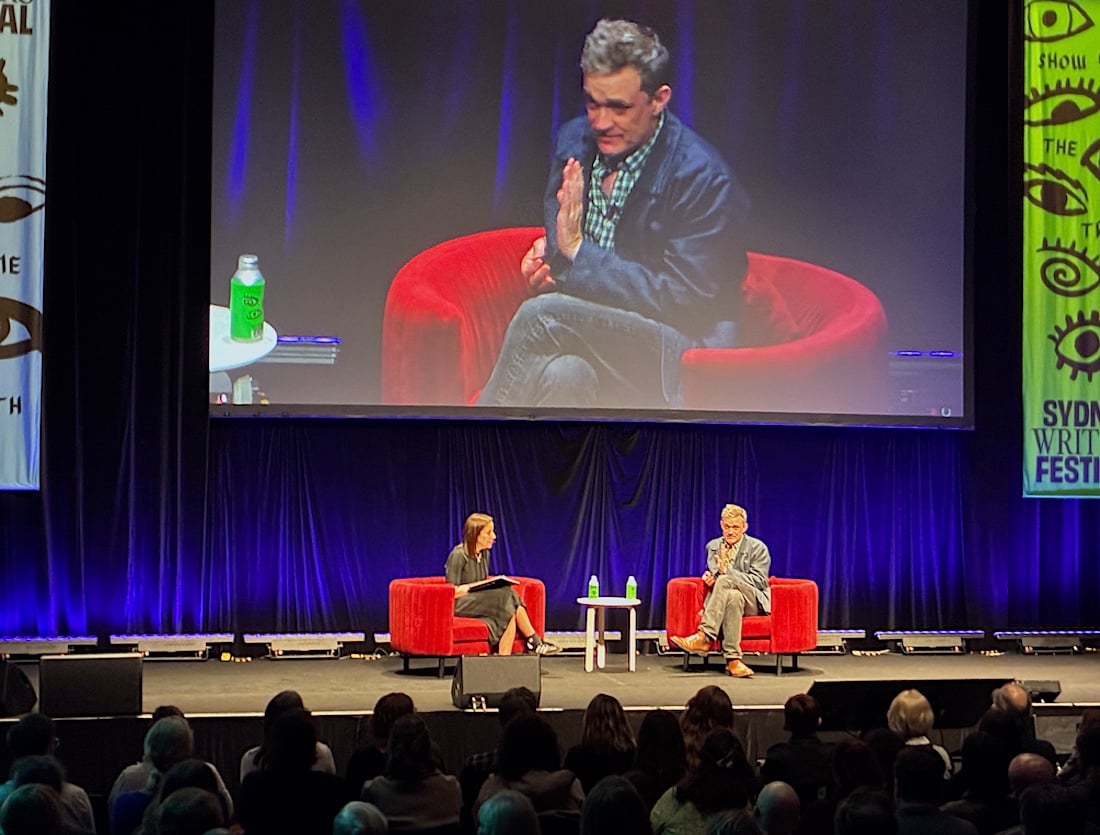
Patrick Radden Keefe is an investigative journalist and podcaster, who also reads his own audio books.
He spoke at the Sydney Writers Festival about journalism and audio.
“When I was growing up, my dad would read aloud to us. He would read Charles Dickens, A Christmas Carol to us every Christmas and he was really good at it. We would be terrified because he would do Ebenezer Scrooge and the clanking of the chains and all of it. These were really profound experiences for me as a kid.
“Writing has always been a kind of oral thing for me, when I am writing, I read aloud to myself. When I finish a chapter, I’ll read it to my parents, or I’ll read it to my wife.
“I narrate my own audiobooks, I take some pleasure in doing so. I did a podcast, which I spent a year on… I learned a lot about how to read into a mic because I was working with great producers who told me all the ways I was doing it wrong.
“There’s an element of performance to doing the audiobooks that I enjoy, but also the process of thinking about how it sounds and the rhythm is quite integral to my process of writing.”
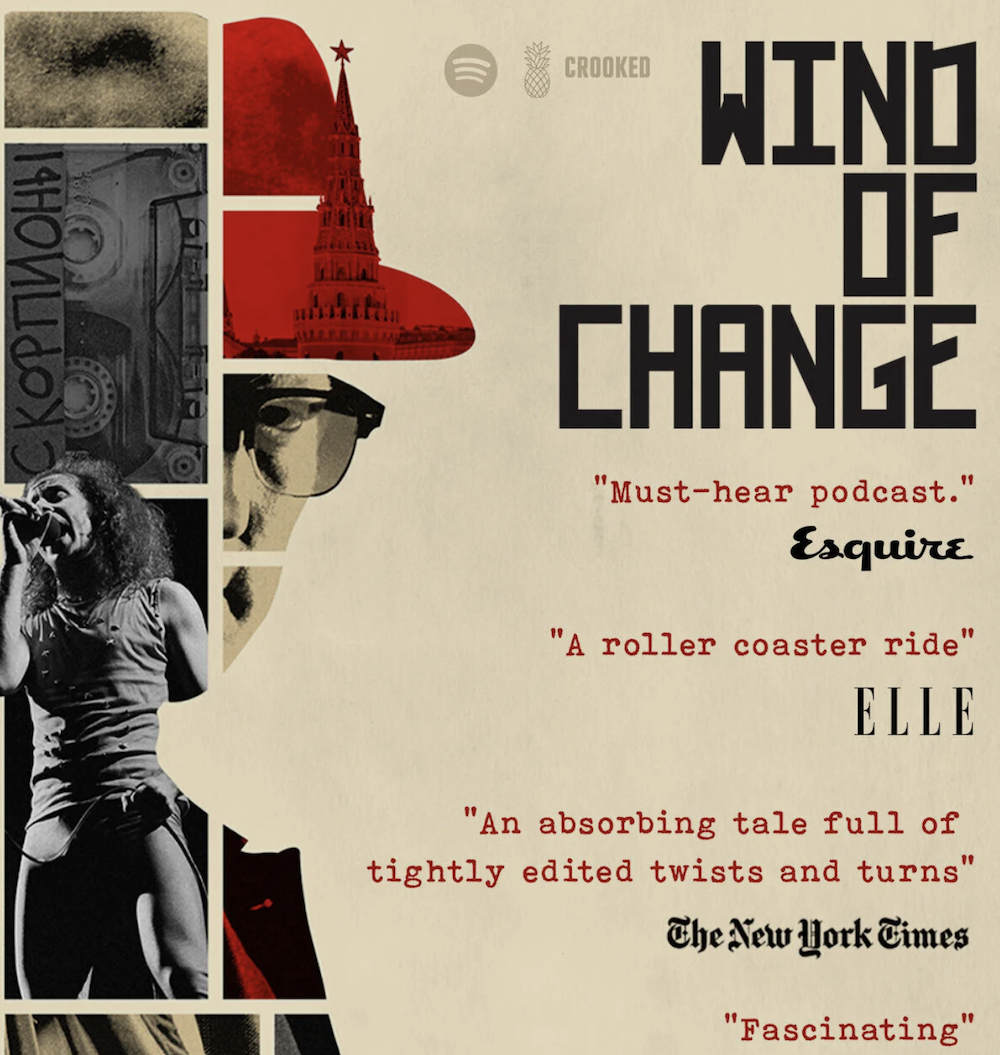
Patrick Radden Keefe is an award-winning staff writer at The New Yorker and author of London Falling, Rogues, Empire of Pain and Say Nothing, as well as two earlier nonfiction books. He wrote and narrated the investigative podcast Wind of Change.
Keefe’s approach to investigative journalism is to take time to get to know and build trust with the subjects and sources, for his long form articles, which have also turned into books and podcasts. As a staff writer for the New Yorker he acknowledges that he has the luxury of being able to spend the time to do thorough research and also has a long word limit, often up to 10,000 words, to be able to do justice to his investigations.
His latest non-fiction book, London Falling, investigates the suspicious death of a 19-year-old London teenager who was living a double life pretending to be a billionaire oligarch’s son. His previous books have covered the IRA, the Chinatown underworld, killers, rebels and crooks. He believes people are still interested in long form writing and audio.
“We hear about people’s attention spans contracting, and nobody wants to read a whole long book or a whole long article anymore. Editors sometimes ask me, what’s your angle… I tell them, I’m going to see where this thing goes.
“There is a big argument for long form, both in articles or books. The impact of revelation, the impact of a narrative switch back or a sudden moment where you refocus and you realise you’ve been seeing something the wrong way. It’s not the same if it’s a shorter thing that [a reader is] absorbing.
“In Say Nothing, my book about The Troubles and the murder of this woman, Jean McConville, in 1972, at the very end of that book, there’s this moment where I suddenly tell you who the murderer was. It works for the reader I think.
“In the first instance I didn’t know who the killer was… After four years of research alone in my study at home, poring over, for the third time, an unpublished interview that I’d read a couple of years ago, suddenly I had a piece of context that I hadn’t had before. And it just hit me with the force of revelation. I could feel my heart racing and the hair standing up on the back of my neck… reporting is a thrill, the deeper you go into a story, the more thrilling it can become… you only get that for the investment of time and interest.”
In investigative reporting Keefe says it is important to remain open-minded and humble and be open to the idea that you could have it all wrong. “Leave yourself open to the idea that you could discover some piece of evidence that actually upends everything you believed, that’s not a weakness, it might actually be a strength.”
Where possible, he does his research in person and takes his time with it. “I believe more strongly every day that the best stories are ones you’re probably not going to find on the internet… Get your nose out of your phone and interact with people.
“I find myself in this situation where I’m meeting with people and I’m asking them to talk at great length about the worst thing that’s ever happened to them. I think most people want to tell their story.”
For London Falling, he spent a long time talking to Rachelle and Matthew Brettler, the parents of Zac, who fell to his death after secretly leading a dangerous double life.
“A strange thing happened with the Brettlers, which I’ve encountered with others as well. When you have a terrible loss or a terrible ordeal you become kind of obsessed with it. It’s all you want to talk about… then I come along and I’m like, bring it on, if you want to talk about it for 4 hours, we can. You want to have the same conversation tomorrow with only minor variations, I’m here for you. But I didn’t want to twist their arm.
“I’ve been doing this long enough… I think you have a duty of care as a writer. So I said to them, I really want you to tell me this story, but I need to [explain], if you say yes today, there’s no take backs… if you get cold feet 3 or 4 months from now, and I’ve been working on this, I’m not going to quit. I was giving them a bunch of reasons not to talk to me, because I wanted them to be extra sure. After a couple of meetings, they decided that they would.
Good journalists work “really damn hard to get it right” and to follow an ethical process. Keefe believes that is the basis for continuing trust in journalism.
Related Reports:
Reporting and images: Steve Ahern
Patrick Radden Keefe appeared thanks to the support of Phillip Keir and Sarah Benjamin, supported by The Irish Consulate-General