
Audio Academy – a joint initiative of radioinfo and Abe’s Audio.
Learn from experienced professionals across the audio industry.
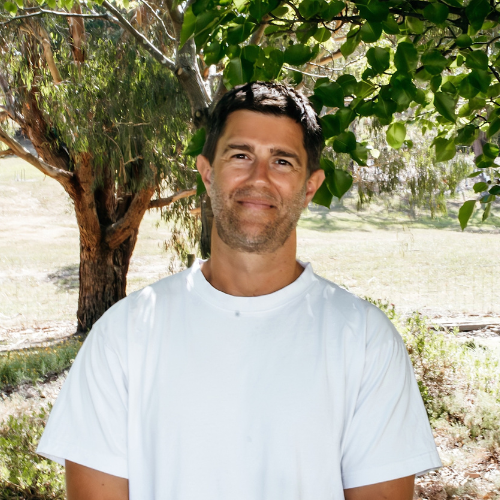
Sam Cavanagh has done it all.
From EPing Hamish & Andy to overseeing LiSTNR’s Original Content for SCA – he’s a guy who knows what he’s talking about.
We spoke with him about his career, what makes shows stick, and the realities (and challenges) behind building successful audio content today.
Sam, tell us briefly about your career. How did you get to where you are today?
That’s going back a long way! The first time I set foot in a radio station was because my best mate at the time – still my best mate – Jules Lund won a competition on the Fox FM Breakfast Show called ‘The 15 Days of Fame’. (Jules tells the story on the Game Changers podcast.)
I just rode on his coattails as a freeloading mate trying to sniff out free beers. At the end of that, (then Head of Content) Craig Bruce said to Jules, “You sound really good on air – would you be interested in doing a radio show?”
They gave Jules a late-night slot, and he asked me to produce it. I was at uni studying criminology and had never thought of working in radio, but we said yes.
What was great is we didn’t realise no one was listening at that time of night, so we treated it like a big deal. We did that for about a year, learned a lot, made mistakes – and it didn’t matter.
From there, I became an assistant producer on the breakfast show, worked with great mentors, and eventually brought Hamish into the team, who then brought Andy in. That turned into a Saturday show, then national, then drive – and the rest is history.
Now I’m Head of Content at LiSTNR podcasts. We’ve got a great team producing shows, working on partnerships, and creating content across the board.
What’s the biggest difference between a podcast people try once and one they keep coming back to?
Successful podcasts are consistent. They show up at the same time every week over a long period of time, regardless.
Listeners also fall in love with the hosts. It’s such an intimate medium – people form a connection with the person they’re listening to, regardless of the content.
How much of a podcast’s success comes down to content vs production quality?
It’s not one or the other. People will forgive bad audio if the content is good enough – but listening to poor audio over time is fatiguing.
Content always comes first, but we should still strive to make everything sound as good as possible.
Should all podcasts now be video, or can audio-only still work?
Not everything has to be video. Video is more expensive to produce and creates barriers for creators.
One of the great things about podcasting is that it’s open – you can create something cheaply, distribute it anywhere, and keep 100% of your revenue. That’s not the case on platforms like YouTube or social media, where they take a cut.
There are opportunities in video, but creators should be cautious. We’ve seen what happens when platforms control access to audiences.
As a leader in the podcast space, what’s one thing you wish you knew when you started?
Podcasting requires you to think about everything – content, distribution, promotion, and monetisation.
In radio, those things are handled separately. In podcasting, you need to understand it all.
It’s also constantly evolving. What we’re talking about now – like video – wasn’t even part of the conversation a year ago.
If someone wanted to start a podcast tomorrow, what should they focus on first?
Think of it like Instagram. Not everyone makes money from it, but there’s value in creating, connecting, and learning.
If you’re doing it for those reasons, it’s worth it. If you’re doing it because you think it’s an easy way to make money, there are easier ways.
In your Hamish & Andy days, podcasting was in its infancy. What did you notice?
When we podcasted the show early on, the podcast audience was smaller – but far more engaged. They were the ones emailing, turning up to events, and interacting with the content.
Podcast listeners choose to be there. That makes them far more invested.
Is there an ideal duration for an episode?
No. It depends on the content and the audience.
Some podcasts work at two minutes, others go for an hour. But when you’re starting out, it’s better to keep it shorter – people are taking a risk with their time.
Click below to hear our full chat with Sam.
This is part of our Audio Academy series. See also: Geoff Bickerton & Tom Wood.
Related reports: