
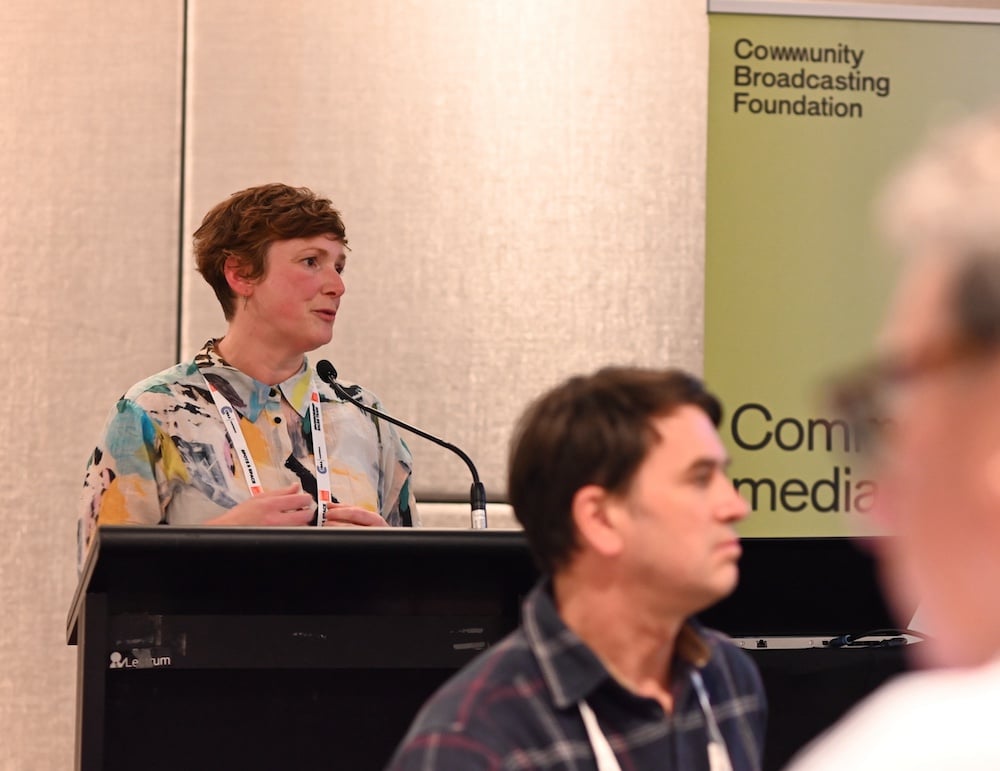
The Community Broadcasting sector’s annual conference began today with a series of workshops for CBAA members.
The Small Station workshop focused on boosting stations’ capacity and confidence across the areas of grants, sponsorship, volunteering, and technology.
When stations apply for a funding grant they are asked to measure outcomes because that shows the effectiveness of the funding and helps build the case for future grants.
“Outcomes are the change or benefit that you expect to occur,” explained Kate Randall from the Community Broadcasting Foundation. In explaining the outcomes, ask yourself “who will experience the change and how will they benefit.”
“It’s not what we do, it is the result of what we do that is important,” Kate said, using the workflow:
Activity > Output> Outcome> More outcomes
When writing a grant you need to determine a single sensible unit of measurement to track your outcomes. For example: dollars, numbers of people or events, watts of transmission power, percentage of people, hours of programming, listener analytics, financial reocrds, sales results, etc.
Collect data to show the evidence of your outcomes for funders.
“More than 5 million people listen to a community station each week. The CBF allocated more than $21million in grants to 176 organizations,” said the CBF’s Sheah Sutton.
She advised stations to approach their grant applications as a story, with a beginning, middle and end. Tell the same story, say how it reflects the station, does it have all the elements of the story in it.
Beginning:
- Preparation – evaluate the past year and plan what to do and what is needed for next
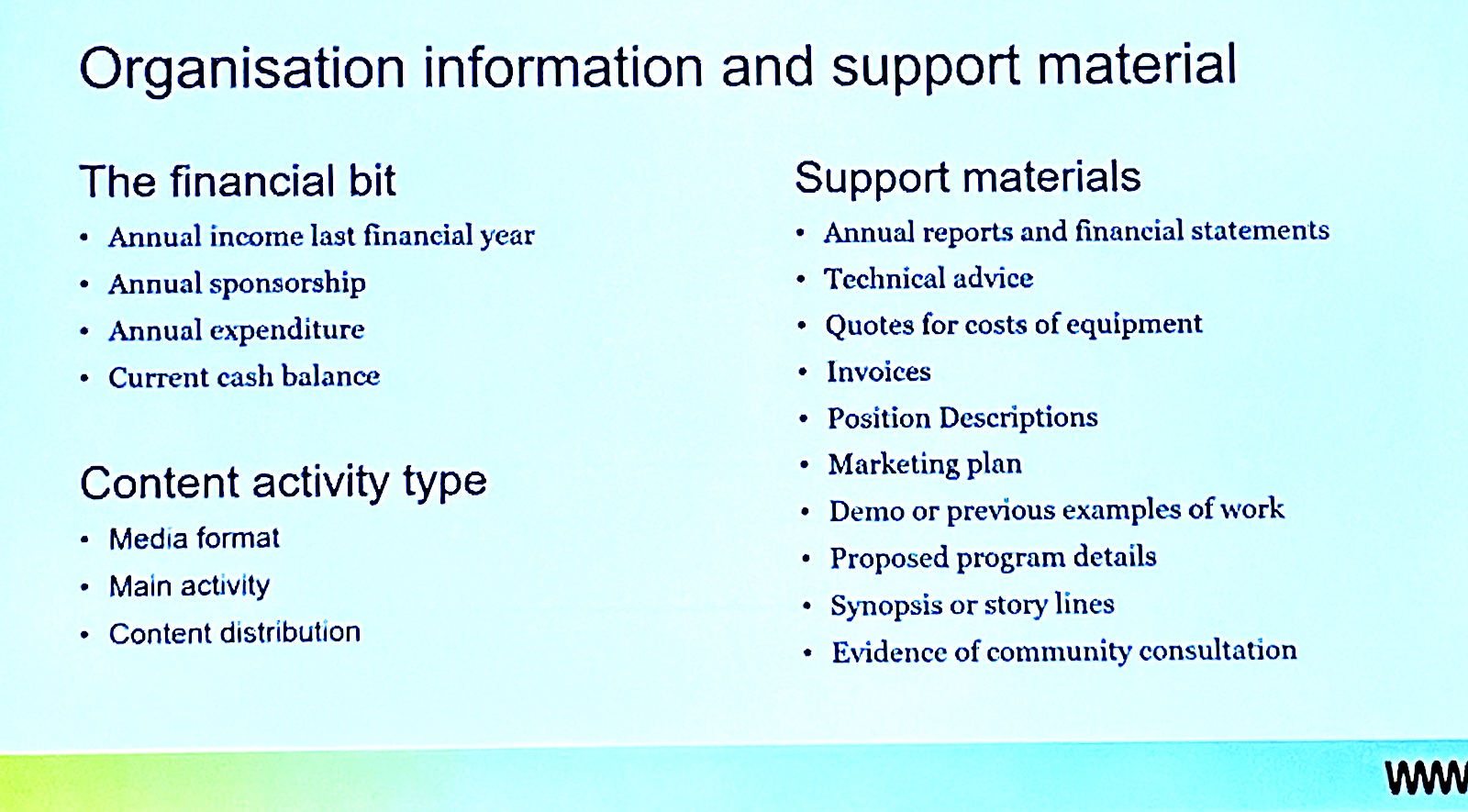
- Background – who are you, tell the CBF about your station. Programming, licence area, specifics of your community and how you met their needs. Choose the material that best supports the story you are telling.
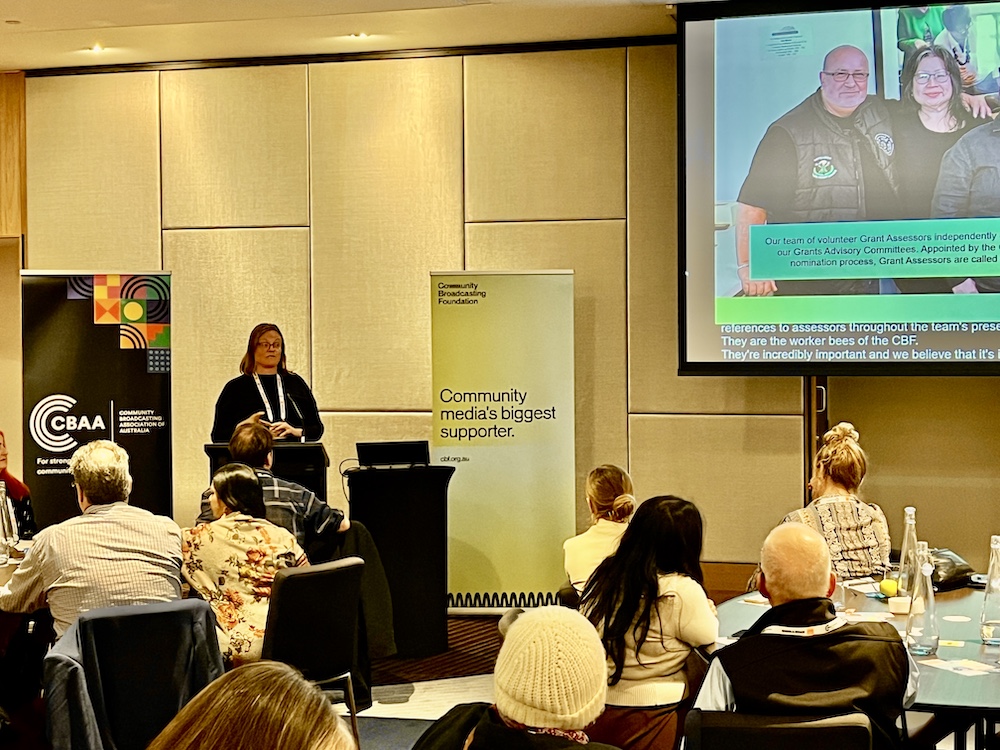
Georgie Boucher, the CBF’s Grants Support Team Volunteer Manager, thanked the community broadcasters who volunteer to be grant assessors, recognising that they are the core of the grants process. During the conference there will be a briefing sesison for current and potential grants assessors.
Discussing what an assessor needs in order to award good marks for a technical grant, John Maizels said:
“Without evidence an assessor will just say this doesn’t make sense or, it doesn’t feel right.”
So what is needed to impress assessors?
A way of showing context, for example a station block diagram
Evidence of what you already have, an asset register
A credible narrative, can you show research that support your equipment choices
If you are replacing or upgrading equipment, what happened to the previous equipment you had for that function?

Things the assessors don’t want to read:
The application makes outrageous claims
‘Existing gear is faulty,’ but no evidence of the faults, or fault log
‘Existing gear os old and needs replacement.’ Even old gear can work, just because it is old doesn’t mean it needs replacement.
A transmitter application form someone who has never been to look at the transmitter site.
More CBAA Conference reports here.
Pictures: Jonathan Brown and S Ahern