
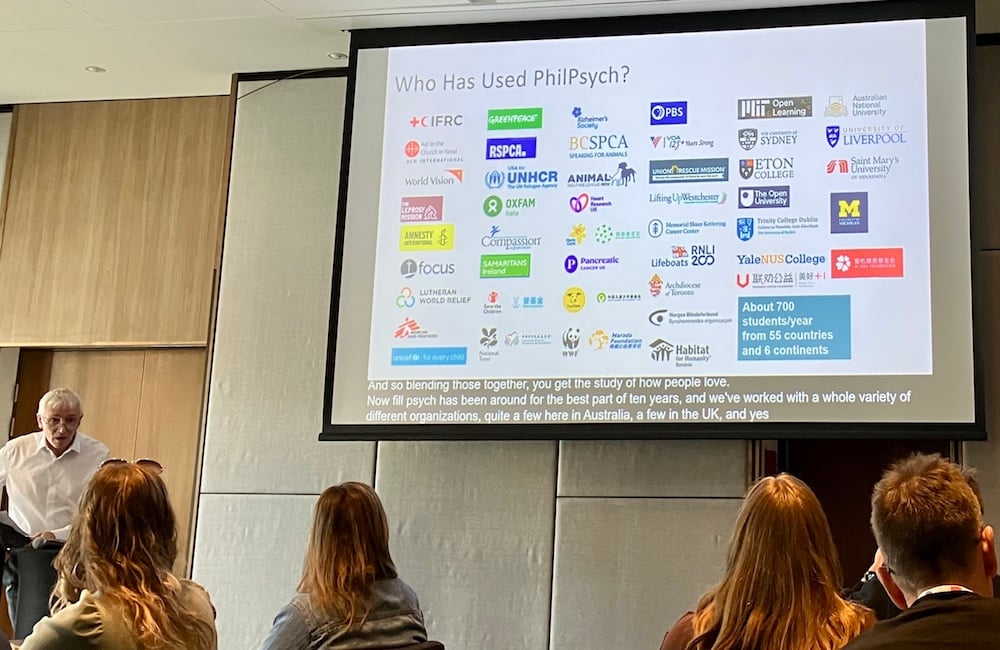
At the CBAA conference in Hobart this afternoon, Adrian Sargent, Professor of Fundraising at the Institute for Sustainable Philanthropy in USA lead a workshop focused on helping stations double their fundraising income through a mix of strategy, research, and hands-on advice.
Participants came to address a mix of shared fundraising challenges such as donor burnout, to find new ways to raise money, to make fund raising more sustainable for people on the ground and to exchange fundraising ideas.
“Understanding and applying Philanthropic Psychology, the study of how people love to fund raising communication is important,” said Sargent. “Philanthropy is the love of humankind while Psychology is our sense of who we are or its expression.”
The key concepts of philanthropic psychology are:
Identity – Who are your donors?
Love – How do they love?
Psychological wellbeing – How can we help our people feel best about giving?
When looking at a fundraising relationship it’s important to decide whether you’re aiming for a transactional (focus is on raising money and not always adding support to customers) or a relational one (focus is on providing a decent quality of care so they keep giving).
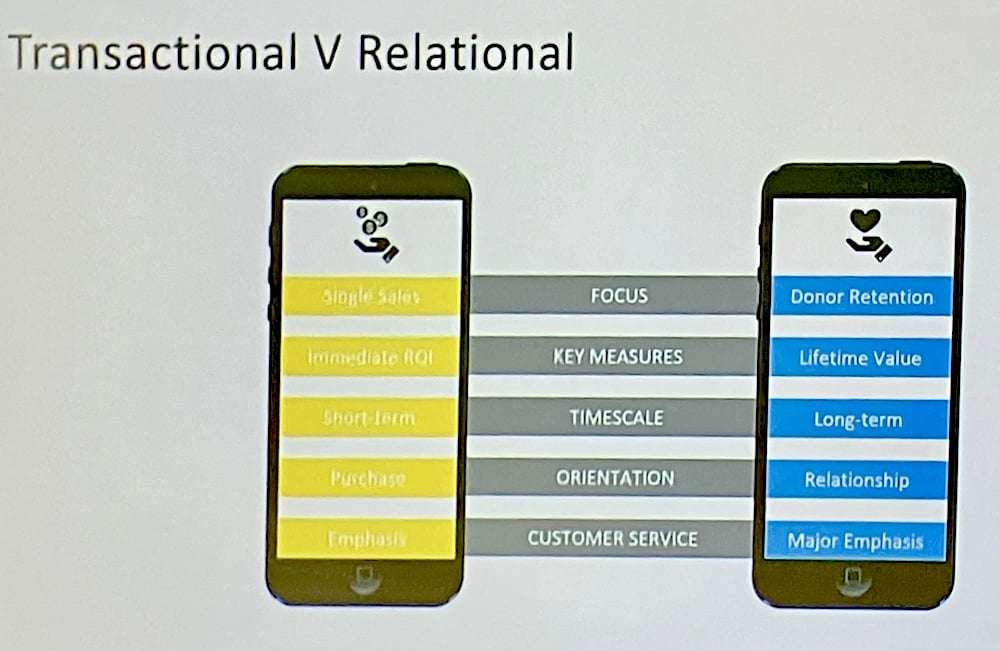
There are plenty of contexts where a transactional approach is all that’s needed. However, if the aim is to get closer to the supporter, then planning is needed for now and the medium term to deepen the supporter’s emotional bond with the organisation.
Marketing approach
Marketers measure and are remunerated for building supporter relationship satisfaction, commitment and trust, three factors which should be aimed for overall.
So what matters?
– Keeping your promises
– Providing feedback
– Responding within a reasonable time
– Treating donors with respect
– Capturing data accurately
– Respecting preferences
– Reflecting interests
– Communicating appropriately
– Not swapping names
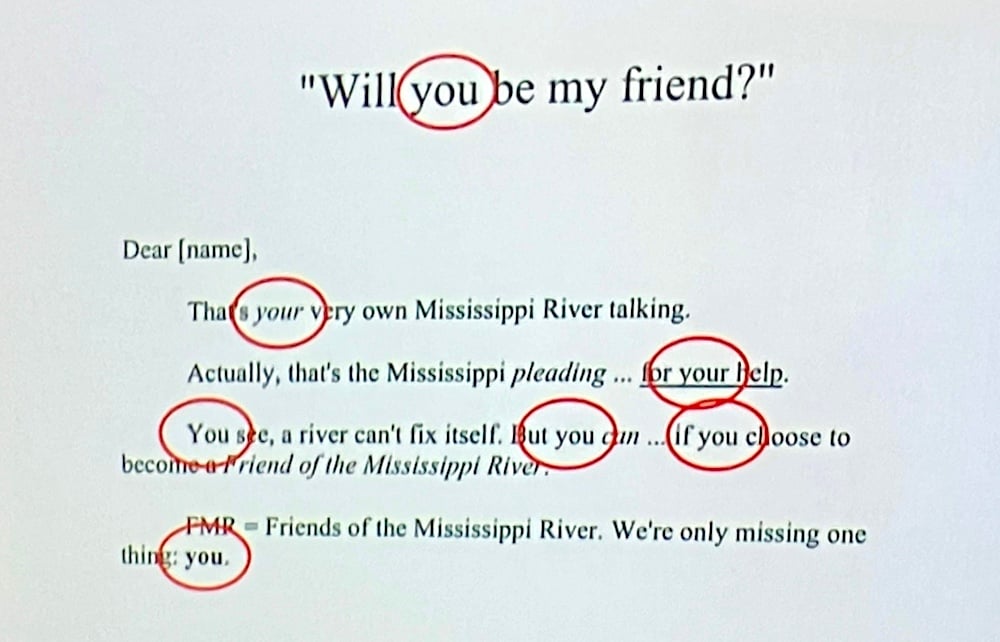
Begin by changing the way you communicate with supporters, because you’re not a corporate company. Stop talking about yourself! For example, “If we show them how important we are, they’ll support us. Corporate communications are about how great the organisation is and the most used pronoun is WE.”
Next embrace donor communications as they are about how great the donor is and the favourite pronoun is YOU.”
An example of this is shown in the communication below:
Understand your supporter better by conducting a simple donor survey. Sargent said, “We thought surveys were market research, but today we see them as part of a stewardship process for donors. The focus needs to be on how they feel to make them feel good.”
The survey needs to include and uncover the following:
– Profile data for personalisation and the ability to segment further communication, which shows that you listened.
– Needs/ preferences
– Special campaign questions, like a significant gift question.
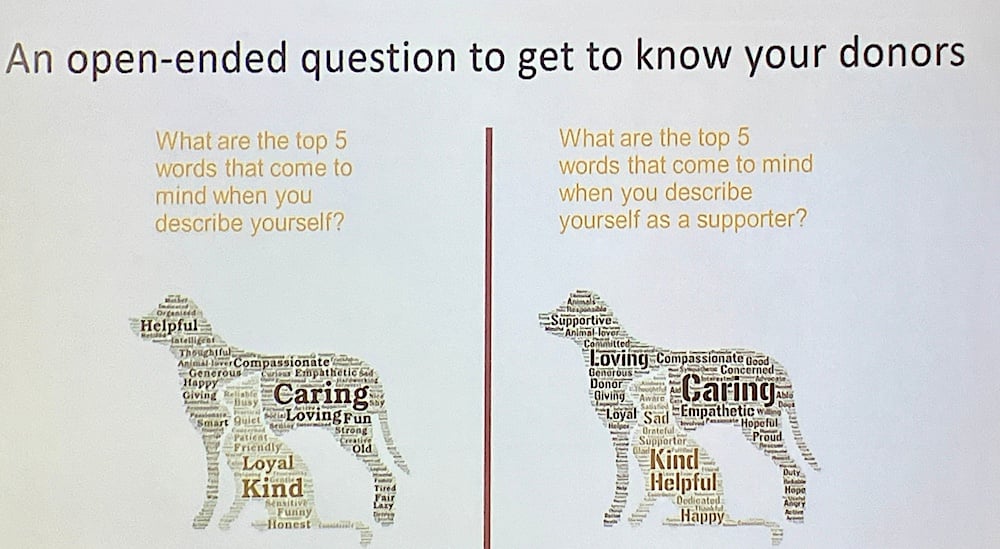
When constructing the survey, ask open-ended questions to get to know your donors. For example donors to the SSPCA see themselves as “kind and caring” which are moral words used to describe donating as a moral act. The same words used by donators to describe themselves can be used to send communications back to them as they will resonate and they will see themselves in the request.
Send a good thank you and make sure it’s:
– Personalised
– Timely
– Surprises
– Avoids cliches
– Has an underpinning strategy.
Thank donors four times a year to remind people how much they care and this will impact on future donations.
Build a strong case for support by asking, why would people be motivated to give? Include the following:
– Inspire support internally and externally
– Be a communications tool acting as a discussion document with prospects
– Be a marketing tool
– Be used to train and motivate staff
– Assist in the fundraising planning process and
– Be a resource document when developing fundraising propositions.
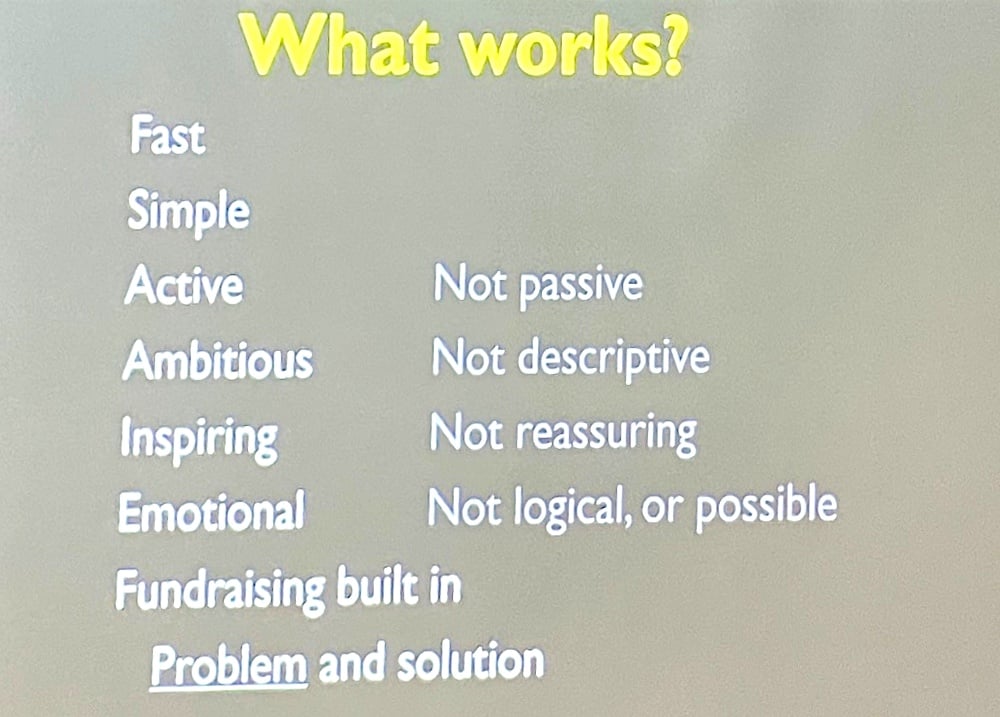
Be aware of these fundraising truths:
– People give to people because they feel a connection
– People give because you make them feel something. Emotion leads to action. “Fundraising is about making people feel something.”
– Negative emotion is a drain for people. Positive emotion encourages people to give long term.
– Emotion comes from the why? Consider the reasons your listeners listen.
Sargent advised that it can be hard to see ourselves as an object of people’s love…but keep in mind that supporters are proud of their radio station and proud of what it achieves for the community.
More CBAA Conference reports here.
Reporting from CBAA: Serena Ahern