
When Taylor Swift teased the launch of the video clip to accompany Opalite, featuring the entire couch of talent from an episode of the Graham Norton Show she appeared on, I, like many people went straight to YouTube to watch it.
But it wasn’t there.
In a further example of her influence over all media, on January 16 this year the US Billboard Charts make it so that YouTube streams, in fact the streams of any platform that is supported by ads, not subscription or payment, would no longer count to its charting methodology. So Taylor chose not to release the clip on YouTube upon debut. You could only watch it, for two whole days, on Apple Music or Spotify. I chose the latter.
On Spotify, Opalite is up to 533 million streams. For YouTube, post the clip’s release on February 8, nearing seven million. It is relevant to note that Opalite has been available to listen to on Spotify since October last year. A further note that American AM and FM radio does not pay recording artists for the songs they play.
In Australia, the stoush between ARIA and the PPCA, supporting Australian music and artists, and Commercial Radio & Audio (CRA) seemed to come to a head after the Copyright Tribunal of Australia ruled on an increase to broadcast licence rates and no change to statutory cap, which ultimately benefits neither party. ARIA however have been further dismayed by the Australian Communications and Media Authority (ACMA)‘s updated Commercial Radio Code of Practice 2026 delivered in collaboration with the CRA.
The ACMA said the Code ensures radio networks meet their Australian music obligations.
In a lengthy retort, ARIA and PPCA CEO, Annabelle Herd, said:
“We are extremely disappointed that despite all the evidence put forward showing that these quotas aren’t working, the ACMA has not pursued any reasonable or practical changes. CRA Code reviews don’t happen very often and yet this has become another instance of Australian radio policy failing the country’s homegrown culture and artists in the very market where they should have a natural advantage.
Commercial radio uses publicly owned spectrum to generate over $1 billion of revenue annually. That is a privilege, and it comes with a responsibility to surface Australian stories, Australian voices, and Australian music at times when audiences are actually tuned in. Under the current framework, stations are meeting their obligations while relegating Australian music to overnight and off-peak slots. The practical effect is that the quota exists on paper but delivers little for artists or the Australian listeners it was designed to serve.
For the ACMA to agree to changes to important music genre categories without any input from the music industry is baffling.
Numerous other countries enact policies to ensure local content on radio is not swamped with international music but in Australia, we continue to leave our artists exposed, undermining the National Cultural Policy and support for Australian artists undertaken across multiple levels of government and industry.
There is so much excellent Australian music being released right now. Many local artists are seeing large local fan bases and major success internationally. They are winning Grammys, performing to massive international festival audiences and sellout crowds. This is not a supply issue.
At a minimum we are simply asking for Australian music to be played when Australians are listening. That is a modest and reasonable expectation, and it is disappointing that the opportunity to deliver on it has been rejected by the ACMA.
It now falls to government to recognise this gap and examine the ways in which it can ensure Australians are hearing local music in their own country. Our artists carry Australian stories to the world: they deserve a framework at home that gives them a genuine foundation to build on.”
There were some surprises within the details of the Code, which comes into effect on July 1.
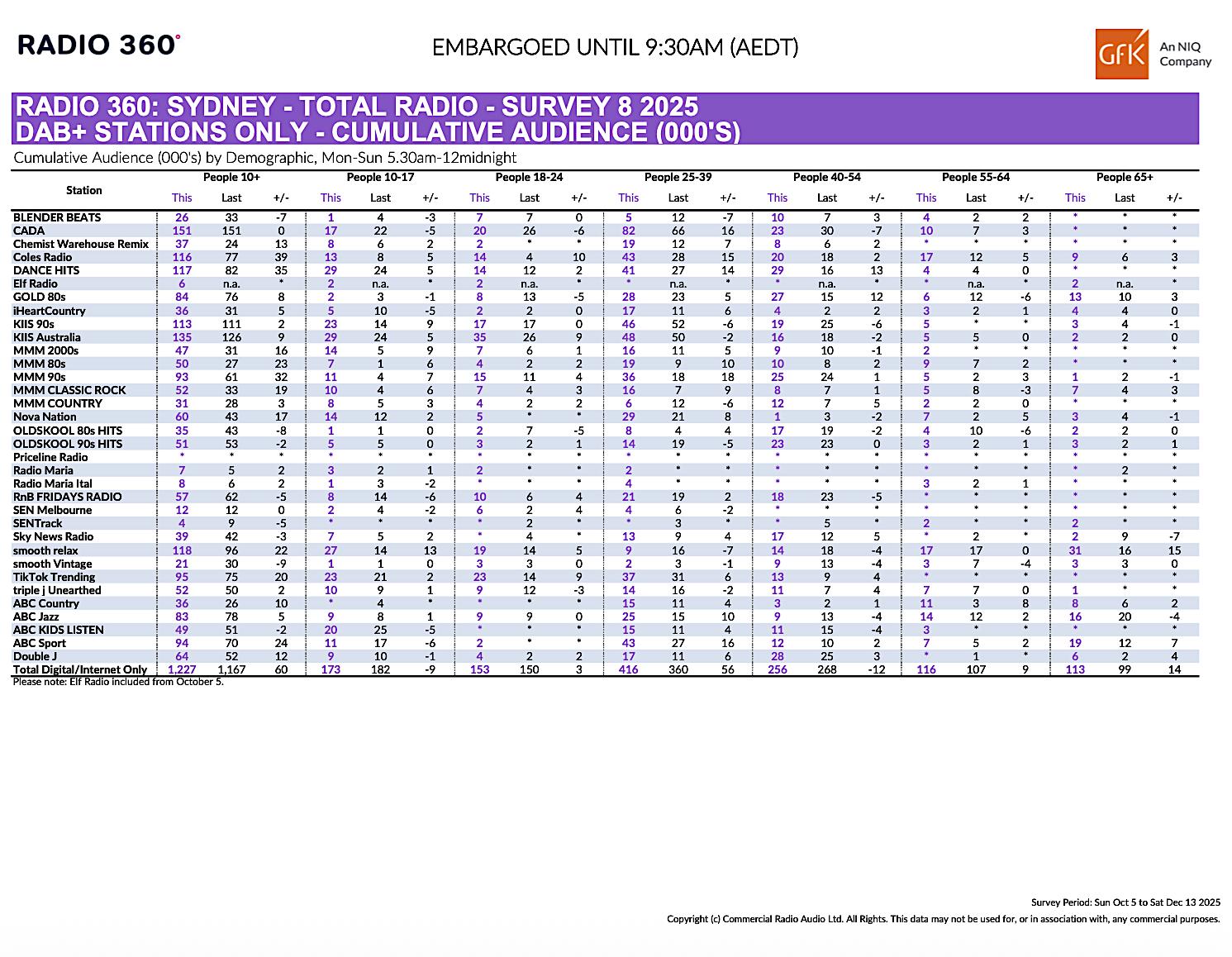
Firstly, clause 5.10 says Australian music quotas do not apply to digital only services, but that “(t)his exemption will be reviewed in conjunction with the next material review of this Code.” As I read that I thought of pop up DAB stations that have only played Taylor Swift – Swift on Swift on Swift for weeks. Countering that is KIIS Australia, ARN‘s digital station that plays only Australian music. In the most recent radio survey it had a 135K cume audience just in Sydney, so Annabelle is right in that there’s an audience for it. The most listened to DAB+ station in Sydney is also from ARN. CADA, since its establishment four years ago, has branded itself the home of new hip hop and R&B music. Based on clause 5.10 however, it need never play Australian music again.
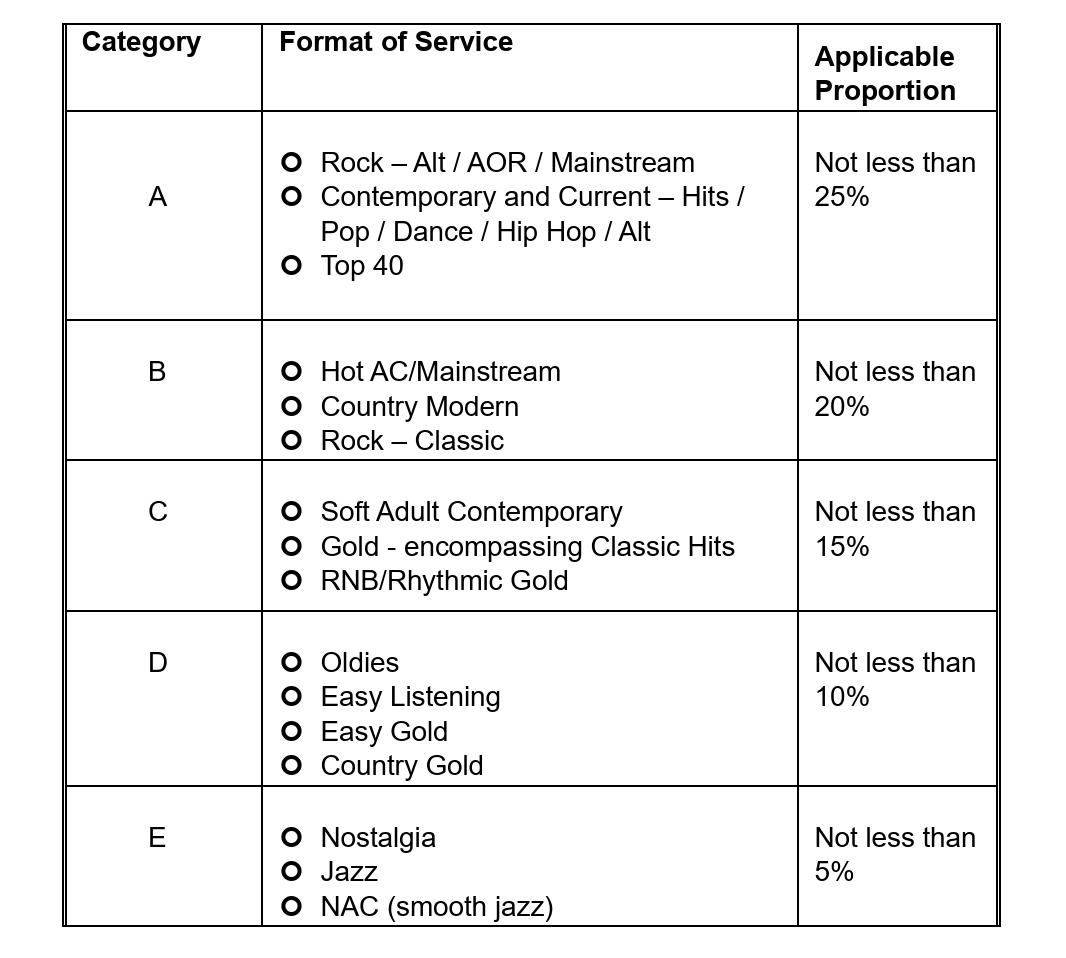
While on the subject of hip hop and R&B music, the changes to the music categories within the new code are confusing (see below). Would CADA need to play not less than 25% Australian music as a hip hop station, 15% for its R&B or whatever they like as a digital only service?
What even is country gold and is there any radio station across the nation that actually would tick that box if surveyed on their format? Considering the absolute bounty of Australian country music released across the decades, not less than 10% seems to me like the ACMA and CRA really should have consulted with ARIA, the PPCA and anyone involved in country music on that one.
And what’s the distinction between Nostalgia, Easy Gold and Rhythmic Gold? Is there a Frank Sinatra vs The Carpenters vs Lionel Richie template as to who fits where?
Clause 5.3 says: In the case of a radio service whose format is within categories A, B or C of the above, the broadcast of New Australian Performances as a proportion of total Australian Performances prescribed by this provision, shall be in accordance with the following table below, when calculated across all Australian Performance Periods occurring in any financial year, subject to 5.5.
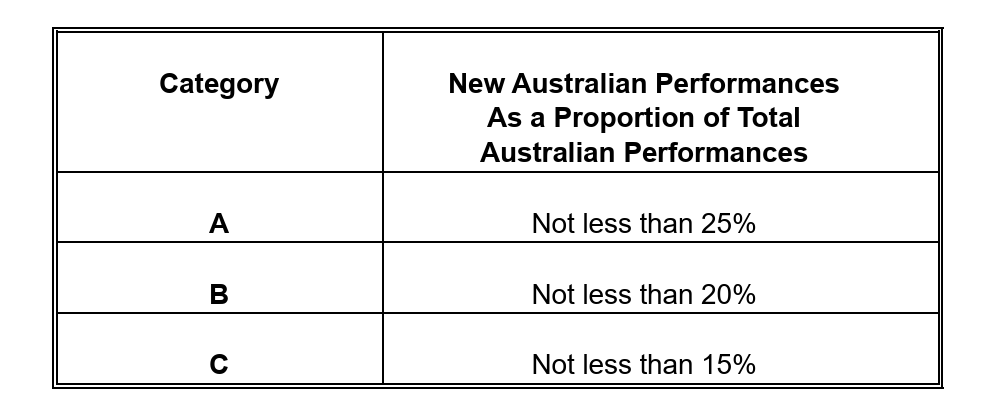
A classic rock station in Category B may not play any new music, but that’s okay because 5.5 says that if new releases aren’t in its weekly play lists, they don’t have to. Some contemporary stations may not specifically have a new release category, rather something called ‘recent’ for example. That will be difficult to police.
There’s one further clause that I think is worth a further look.
“Where more than one performer is involved in a musical performance, the Musical Items concerned shall be regarded as being performed by an Australian if the performance is predominantly by one or more Australians.”
The RCS Media Monitors National Radio Airplay Charts, the chart of what is being played most on top 40 type radio stations, including CADA and triple j, currently has 10 Australian acts in the 40, exactly 25%. The highest, at No 3, is Think About Us by Sonny Fodera, DOD and Poppy Baskcomb. Sonny Fodera is the Aussie among the trio, a DJ, and one of five listed songwriters.
At No 8 we have Gone Gone Gone by David Guetta, Teddy Swims and Tones and I, Tones and I is the lone Aussie and one of eleven songwriters. Both songs have notable local contributions but are not predominantly Australian.
Just outside the top 10, at 11, is West Australia’s Tame Impala with Dracula, which was also No 3 on triple j‘s recent Hottest 100 of 2025. Keli Holiday‘s Dancing2 was No 2 on that countdown, and, on the airplay charts, No 19. It has been on those charts for six months.
The Hottest 100 had 54 Australian entries and was for my mind on of the best in recent years. Artists in the top 20 also included Spacey Jane, Ball Park Music and Ocean Alley, all with songs that should have reached commercial radio, but somehow haven’t. The glorious Keith, at No 4 for Playlunch, perhaps not. That, played in breakfast, would see the station in trouble with the ACMA themselves.
It’s not for lack of talent and great releases over the last 12 months, as Annabelle said. And, if you take the example of Triple M’s Homegrown program, hosted by Matty O, some stations have designated programs for local acts well within the hours that people are listening.
Is it that there are just too many cooks? Everyone keeps wanting to add or take away from the pay for play pot while the other’s back is turned?
Once upon a time the combined results of the Australian radio and music industry working together were harmonious, finely tuned and attuned, and delicious.
Jen Seyderhelm is a writer, editor and podcaster for Radioinfo.
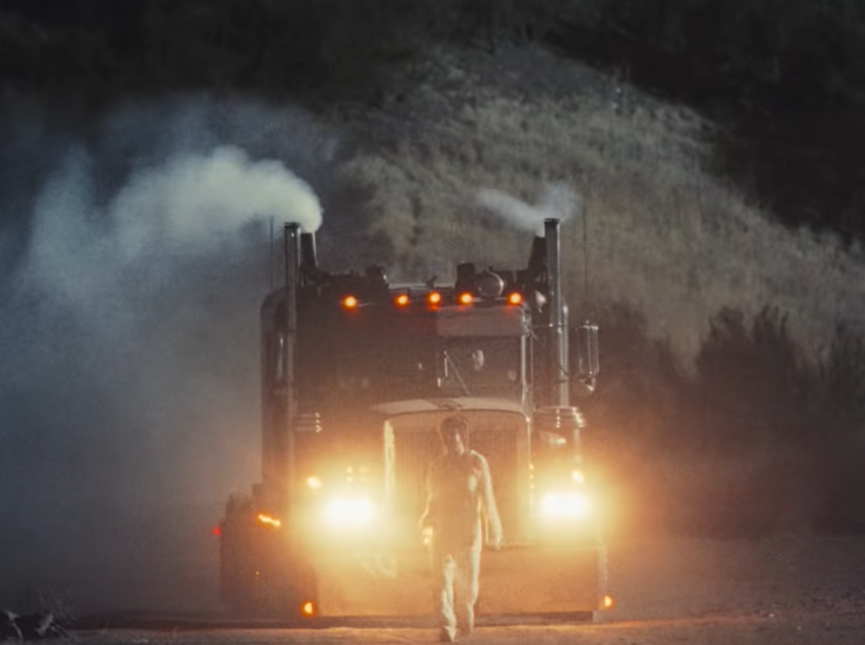
Image: West Australian Tame Impala singer and multi-instrumentalist Kevin Parker from his music video for Dracula, No 3 in the recent triple j Hottest 100 of 2025.
Related stories:
It's commercial radio. Australia once had a thriving commercial music industry closely aligned with our commercial radio industry but that's changed now. Many of the Australian acts that emerged during the late 70s and throughout the 80s will be some of the greatest this country has ever produced and they are still responsible for most of the Australian music played on commercial radio today. Perhaps some of them today are making it harder for new emerging Australian acts to get a foot in the door. It is getting harder to find modern Australian music of broad commercial appeal. Triple J is not a commercial radio station. It's appeal is niche and it's been waning in recent times. Triple J has launched the careers of many commercially successful acts in the past but it mostly provides a platform for Australian acts who wouldn't otherwise have one.
It's worth posting another comment because I've been thinking about this article a bit. Just get rid of the distinction between formats. 20% across the board. If the radio station is KIIS 101.1 FM radio Melbourne and you play 10% new hits by Taylor Swift and Miley Cyrus, then 10% of your 20% Australian music quota has to be new releases from the past 12 months. Magic 1278 might decide to play nothing but the best hits from the 50's 60's and 70's. 20% of it has to be Australian. They could play Russell Morris singing Sweet Sweet Love and the Wings of an Eagle and the Seekers singing The Carnival Is Over. Their role is to preserve our Australian music heritage. Then they could play Dream Lover by Glen Shorrock.