
By Anthony Dockrill
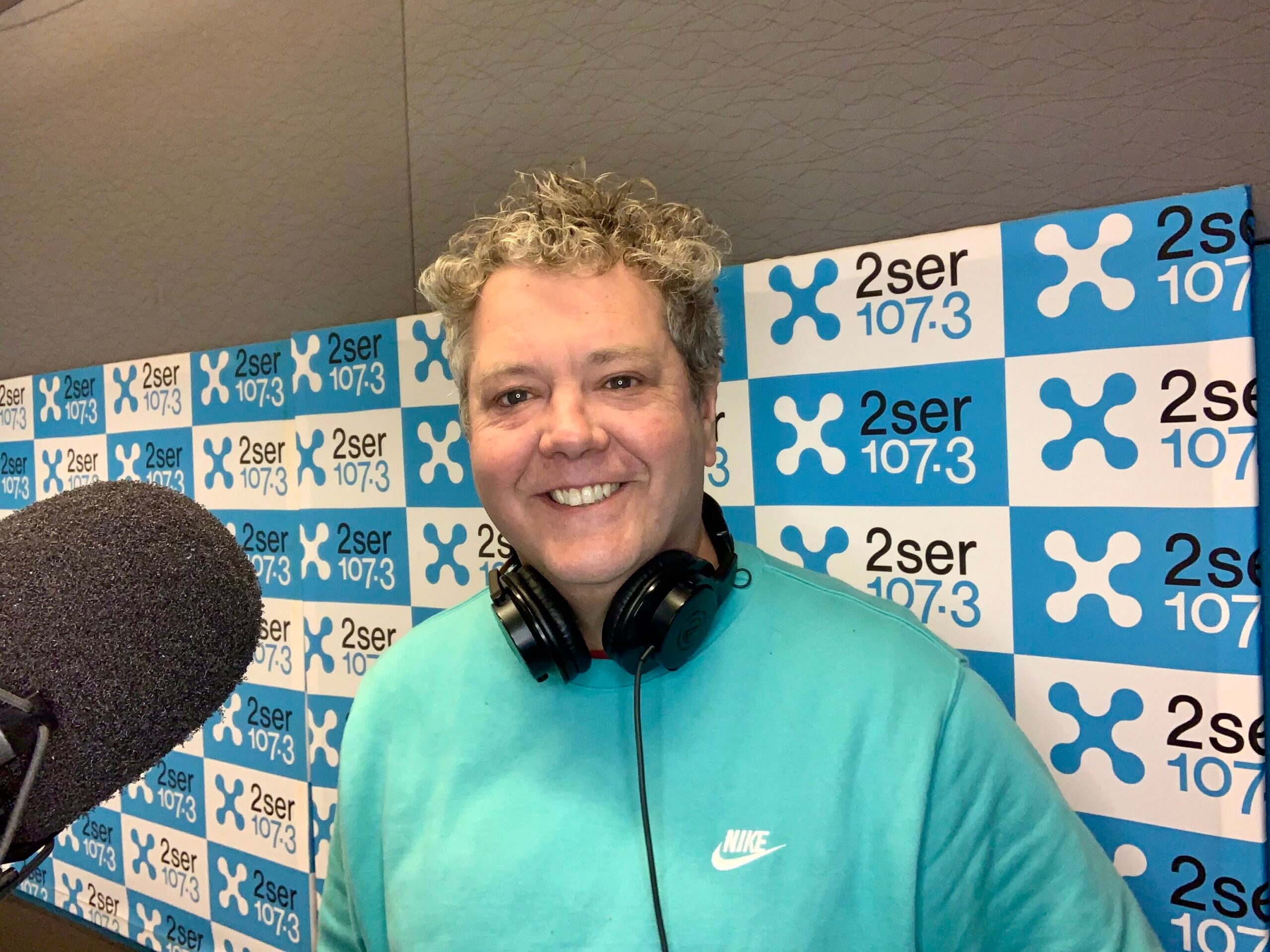
This week brings to an end a four-year run on 2SER breakfast of one of the most creative and much-loved presenters the station has ever had. It’s a change brought on directly by Macquarie University moving on from its 47-year support of the station. While its students won’t have direct access to a world-class broadcaster and podcast production house anymore, it also means the station won’t be able to maintain a paid breakfast presenter, meaning a loss of quality and consistency in the most crucial radio slot there is: breakfast.
I was the Program Director when Danny Chifley started as a volunteer presenting on Friday Drive, and straight away it was clear Danny was a unique radio talent. The kind you see as a Program Director once if you are lucky. The move to breakfast was a logical one, and he quickly made the slot his own.
I moved on from 2SER a couple of years back, but when I heard Danny was wrapping up his time at the station, I had to reach out and speak with him. It felt like the end of an era, not just for the station, but for Sydney breakfast radio.
Anthony: So Danny, you’ve clocked up four years on Sydney Breakfast Radio. An achievement I don’t think many people really understand how significant that is. Now that you’re hanging up the headphones at 2SER, tell me how you’re feeling about your time here, and what do you think you were able to achieve?
Danny: I keep thinking about all the things that I wish I’d done during the four years that I was here. I’ve been getting a few text messages in from the audience, and even though it doesn’t seem like much when you’re in here grinding it out day to day, the cumulative work, it all means something.
The people that we’re able to platform here, I think, is the most important part of it because the whole point of community radio is to be out there doing what you can for the community.
After four years of doing that, we’ve actually done some really good stuff to try and shine a light on all of the wonderful things that are happening in Eora, Sydney, and surrounds. There’s still so much more that I wanna do, so many jokes to tell.
The volume of jokes that you put out on air, as someone who has done breakfast radio and supported a lot of breakfast presenters over the years, has always astounded me. You start your show every morning with a monologue, and the monologues were always hilarious, and the quality of them was just so consistent.
How much work have you been putting into this?
It’s basically a 24-hour job. Thank you, technology, for ensuring that we’ve got emails in our pockets at all times.
2SER was a perfect station for me ’cause I’m a little bit weird. The station’s a little bit weird. The music on the station is awesome, and all of the music being played here on the station is stuff that I’m really, really into. So it wasn’t sort of like I was playing songs and going, “Oh, geez, this song again.”
I’ve loved everything to do with it and just the general vibe of the station. What the station is trying to achieve by being a progressive voice there in the community was something that aligned with what I was doing. So it wasn’t so much a job. It was more a vocation.
Now, look, there’s been actually an outpouring of grief from listeners at the news that you’re moving on and as always, you’re being too humble about all of this stuff.
Yeah, I wouldn’t say outpouring.
Tell, tell me about some of the messages and, and how does it actually make you feel?
It’s weird because when you’re in here in the studio, it’s like, okay, it’s just me in a room talking into a microphone. I don’t know if anyone’s listening.
And then, sometimes you will get text messages from people, and you’ll find out about the people that are aware of the show when it comes time to do a subscriber drive, and people are able to cite the shows that they like.
There’s just so much awesome stuff coming through, people saying that you’re a part of their life, that you’re there accompanying them in the morning as they’re starting their day, and you’re a trusted voice and a friendly voice, and someone that’s on their wavelength.
So it’s kinda like your friends and having these chats with the thousands of people who you don’t even know. People are like, “I love it when you were talking to Peter ‘Blackie’ Black from the Hard Ons, or Coops who does the Footy Tips, or Benny who does the surfing and fishing report.”
You become part of people’s lives, and you don’t even know it. That is the magic of radio.
It’s a technically challenging job; you’re constantly thinking about what’s coming up. But the big job that every presenter has is that one-on-one connection. But breakfast can be a slog.
You’re getting up five days a week, really early, coming in here quite often the first person into the building. How do you stay connected to the listener?
I think I’m just wired that way. I’m living through a period of my life at the moment where, because of this I’m not really getting out and doing much stuff outside of it, so this is my way to connect with the community. It’s kind of like instead of getting to go to gigs on the weekend, I get to talk on the radio about the gigs that are happening.
That’s one of the things I regret about bloody leaving this job. You used to get tickets to so much free stuff and couldn’t go to it because you gotta get up at 4:00 in the morning! I remember a guy came in who ran this really cool venue in town, and he’s like, “Just let me know whenever you wanna come by. You’ll be on the door every day.”
And I was like, “This information would’ve been useful 10 years ago when I wasn’t doing this radio show.”
My life has always been about friends and music, and it’s like I just plugged my brain into pivot to connecting with friends and music via the radio show.
You also had a long career in music and, I also believe, stand-up comedy. So tell me…
Unsuccessful careers in both…
Tell me, about that part of your life, what did you take from those kind of disciplines into your radio career?
Oh, the music stuff, you learn, obviously learn to do a bit of audio editing. The comedy thing – my career in comedy was very short, but I burned brightly. Dudes I went to university with started an open mic here in Sydney that’s still going, Friend in Hand in Glebe.
When I moved to Sydney, I needed an artistic outlet, they were running that, and they were like, “Oh yeah, just come and do open mics.” And every time that I would do open mics, my flatmates would always be there. Generally the rule with open mic is that you sort of do the same routine again until you get it really, really good.
I couldn’t, so it used to have to be a different routine every time. Eventually it was “That’s it. Let’s move on to something new.”
Well, that’s kind of what you brought to Breakfast, because that’s the thing that always amazed me. Your comedy output was just enormous. There’s no team of writers here. There’s no writers’ room. You just come in and, over the course of each Breakfast shift, just lay down this material, and then you would just leave it behind and move on.
So maybe that’s the key and the sort of genesis of what you’ve been able to do here.
Yeah. I mean, I guess so. I’ve got to think about something on the bus on the way in! That’s all I know.
Yeah. And, and what did your flatmates think of it all? They got a lifetime career of comedy in the space of a few months.
They keep saying, “Oh, you know, you should do more comedy.” Right. And I’m like, “Well, you should go and do your old job too.” I’m moving on, man.
Let’s go back to the beginning. So when I first met you, you were working at the Community Broadcasting Authority of Australia, the CBAA.
And you had a sideline gig as the MC at the CBAA Awards. And I remember seeing that and thinking, “This guy’s gotta be doing radio.” I remember chatting to the station manager at the time, and they were like, “Oh, I believe Danny doesn’t wanna do any radio because he’s working at the CBAA, and he doesn’t wanna be seen to be in conflict.”
And I was just like, “You gotta be joking. This guy’s gotta be on air.” But you did actually have a connection with radio. It goes way back. Tell me about your start in radio.
I did, year 10 work experience at the mighty 2MCE in Bathurst on the campus of Charles Sturt University, which is still a station that this year celebrated 50 years on air. It’s an awesome station. It is also the station from which the national radio news emanates. It’s a station, though; when I first started there, I think Ian Stanistreet was the manager who went on to run the Community Broadcasting Foundation for many years.
John Martin, one of the longest-serving soldiers in community radio, is there. Seth Jordan worked there for a bit. Yep. Now the host of The Tiki Lounge. Total legend. Yes, which you can listen to if you’re lucky enough to live in Bellingen. He’s on 2BBB in Bellingen.
So that was a cool place to learn stuff ’cause there’s really all these awesome, these doyens, the dons of the community broadcasting sector all through there. It was fantastic facilities. And so I did work experience there, and I thought I’d just be making coffees and doing photocopies. And then, uh, on the second day they said, “Hey, you’re gonna host the afternoon show.”
And my mom still has the tape of that, I believe. We’re not listening to that.
We’re not?
I’m not asking her to dig it up. Oh, no.
But I don’t even know if my voice would’ve broken then. I don’t even know what I would’ve talked about. I think I only had one awesome moment there at 2MCE because they were one of the first stations with the talking newspaper.
So you get the local newspaper there and read it out. And one day there was a story in there about some bug infestation in town. It was a very… Every day was a slow news day in Bathurst, and there was a misprint there to say that the bugs were two meters long, and I made some joke about that. And so I went like, “Surely these bugs will destroy us all.” “Anyway, in sport, the Bathurst Bulldogs are playing Orange this weekend.” And, yeah, I’ve always remembered that, and I’m like, “Oh, yeah, I’m proud of that joke.”
Well, just to segue from that, so you got the bug of radio really early. Why do you love radio?
I didn’t just get the bug of radio. I think I got the bug of community radio because I wasn’t really sort of aware of community radio before I did the work experience.
But then, you know, there was all these cool uni kids there doing it and playing… really awesome music, and then you sort of, the more you get into it, the more you realise, oh, hey, it’s this volunteer people-powered stuff, and everyone’s into it for the right reasons, and they recognise that there’s value there for the, the community to retain some of the airwaves.
So all of that, because a lot of the aspects of democracy and people and participation…and voices there for the underrepresented. Like, once you sort of find more and more about it, it’s just sort of like, oh, well, this is like a, a really cool thing to be a part of. It combines interests like social justice is a cool thing.
And music is a cool thing. It’s all happening in the one place, community radio.
Going back to the breakfast gig here you, you know, you’ve been getting up early in the morning now for four years. And I wanna dig into that a little bit because, you know, when the alarm goes off, in the wee AM hours, you don’t have a Bentley waiting for you.
Why did you keep doing breakfast? Why did you keep getting up? You know…I’m gonna say that you had the best breakfast show in Sydney, but you were almost certainly the lowest paid. What was the motivation? How did you stay focused for four years?
Well, you think it’s the best breakfast radio show in Sydney. I actually took the bus to the breakfast radio show that had the billboard on the side of it that said, “Ben Fordham is the best breakfast radio in Sydney.” So the irony was not lost on me. I don’t know, I mean, it’s just a, a great spot.
Not only do you connect with the community… it’s a great way to sort of meet everyone here at the station. And hopefully as well through some of my work, I’ve been able to help some of the up-and-coming presenters and producers do their thing. It just, It’s worthwhile work.
Every fortnight on here I had a segment with the Justice and Equity Centre, an organisation of lawyers all working in different public interest and advocacy stuff. And I’m not clever enough to be a lawyer, but as part of the radio show, I can be part of that.
I can provide a platform for the work they’re doing, and it’s not like you’re there as one of those Doctors Without Borders changing the world that way. But you’re sort of a smaller wheel in a bigger machine that’s doing good things, and it just always seemed like what I was doing was worthwhile.
It obviously wasn’t generating much revenue for myself or the rest of the shareholders, but if I’ve only got a finite amount of years on Earth, if I can do something that means something, then you better get up and do it.
Now, looking over the last four years, you’ve done thousands of interviews, literally. You’ve interviewed the PM, and you’ve interviewed artists who are having their very first radio interview ever. What, for you, have been some of the highlights?
I love talking to writers. Writers are always really cool to talk to about their process. That just fascinates me. There’s someone with a blank piece of paper in front of them, and then they can create worlds from that. How do you even do that?
I love talking to artists about their process as well. Talking about visual arts on radio, I gotta tell you, that’s tough stuff. But talking to them about how they approach their work, they’re basically starting with nothing as well. They’ve got their materials that they use, and they’re able to take these rudimentary materials that are available to everyone and create such magnificent works.
And all of the musicians I talk to, it doesn’t matter sort of what level of musician or popularity or fame that they’re at, talking to them about their process is just such a great thing as well.
I just love talking to everyone who’s creating art.
One of the things too about doing breakfast is it’s a busy time for the listener. It’s a transitional time. They’re getting up. They are time poor. When you’re doing an interview on breakfast radio, there’s no time to chew the fat. You can’t ponder the universe and look into your navel. How do you approach interviews, and how do you keep them flowing but also make sure that they’re snappy and they get to a point?
All my life, one of the things that I’ve most looked forward to is just hanging out with friends and talking. When you were a kid, did you think it was weird when adults would get together, and they would just sit around and talk, and you’d be like, “Oh my God”?
And one day you realise that’s the best thing ever because if you have various existential crises every day, you can ask, “What’s the point of it all?”
And the only way to make sense of any of it is listening to music or talking to people about it. And that’s just sort of been it. I just love talking to my friends and have hopefully been able to transfer that to radio to just sort of talk with people about the many things that they do as a way of understanding where I’m at in the universe.
One of the unique parts of doing breakfast here on 2SER is that you work and help train volunteers. You’ve worked with dozens and dozens of producers.
Tell me about that working with students and volunteers, how you approach it and what you’ve got out of it.
I think the best thing with the young volunteers and the young students, alarmingly, is the icebreaker “Oh, what’s your favourite radio show or what are the podcasts you’re listening to?” And even though there’s more choice now than ever that you can access and all of the music that’s at your fingertips, it still seems really narrow.
They’re being fed stuff by the algorithm.
And then they get a taste of radio and find out more about it, and they’re just absolutely hooked. There’s some hosts here on the drive shows on 2SER who a couple of years ago weren’t actively listening to radio and are now absolutely addicted to it and love it more than anything in the world.
It’s just a discovery process. One of the things with community radio is there’s never any money, so that means there’s no money there to go on some big PR campaign and talk about how great community radio is. The only way you can do it is by the staff aligning, people getting involved, and them finding out for themselves how much awesome fun it is.
That is unique about what 2SER does. And another reason why I think this is the best breakfast show in Sydney, because you’re not just doing radio; you’re doing a whole lot of other things. What’s going on behind the scenes actually has a point to it as well.
Everyone knows now that 2SER has been through some tough times and, unfortunately, you’re feeling the brunt of some of those tough changes.
The sacrificial lamb, our precious little lamb, Danny.
Look, it must be pretty bittersweet. You’ve poured four years into this place. And actually more as a volunteer. It’s been a tough time for radio. But breakfast itself is a tough gig and a lot of breakfast shenanigans have been going on in Sydney.
What are your final thoughts and what’s next?
Oh, final thoughts. Everyone that’s wronged me, I remember, and I’m coming to get you. My vengeance will be swift.
And also, the best interview I ever did was with Jim White from The Dirty Three. You’ll note how I dodged that question before.
Shout out to Jim White from The Dirty Three. You’re an absolute bloody awesome hang. Lives next door to the guy from Fugazi in New York. I was speaking to him about that, and he’s like, “Oh, yeah, we go and jam at his house.”
I wish I was still doing the show, but I’m not, and the station’s still here, and that is the main thing. I think my role here is a very small price to pay for the station to continue.
There’s so many hundreds of volunteers here who do absolutely awesome stuff, and it was great to be able to share this station with them. And all I can hope is that they thought that my work was halfway decent and will continue to be mates with me outside of this.
And, do you have any thoughts of what’s next?
No idea. So if you wanna send your job offers to [email protected]? They’ll have that up for another week or so. Or carrier pigeon will always generally get to me. I don’t know what I’m gonna do. I think I’m gonna do some study. As I’m getting on a bit, if the dream is to excel in professional sport, the window’s closing.
Coops does my footy tips and runs a pub. He said I can go and pull beers there.
There you go.
Well, look, Danny Chiefly, you’re a singular radio talent. It’s been a career highlight for me to work with you. I wish you all the best in your next chapter.
Anthony, I really appreciate your time, and I wasn’t joking about the revenge thing. Watch your back.
Danny Chifley’s last morning on 2SER breakfast is July 3. You can listen from 6 am on 107.3 FM or streaming.
Anthony Dockrill is a Digital Producer at Pod Jam and the former Program Director of 2SER FM Sydney.