
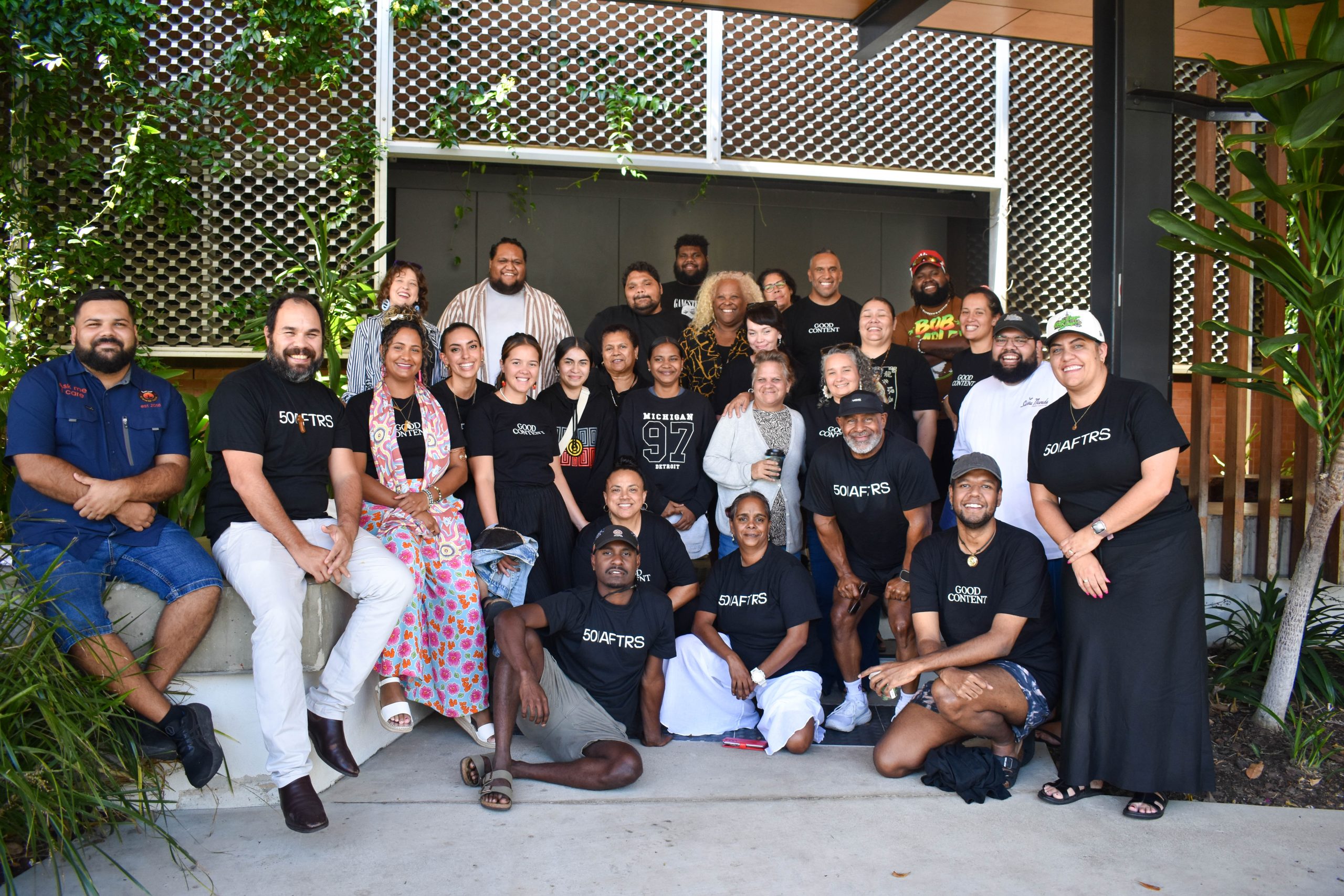
“People speak about us going out from the community to Sydney or Brisbane but it’s nothing like being in your own community. I was able to go home to my kids and also come back to AFTRS and do what I need to do, and learn what I need to learn.”
Samara Barlow – On Country Pathways Program participant.
Five years ago the Australian Film Television and Radio School (AFTRS) pivoted hard in the face of the pandemic to create online, external and flexible learning methods. It has worked well for the organisation, allowing people to access courses where they might not have otherwise. But as life returned to normal AFTRS Chair Rachel Perkins felt there was need to deliver bespoke training on country, creating pathways into film, television, radio and podcasting for emerging First Nations creators living in remote, rural and regional areas across Australia.
She set the wheels in motion through discussions with the Arts Minister Tony Burke who said:
“On agreeing to become chair, Rachel immediately started talking to me about how to make these sorts of opportunities real. There’ll be stories told and careers forged, which would have been unthinkable without this work.”
What emerged was The On Country Pathways Program (OCPP). AFTRS partnered with ICTV and PAKAM to run a pilot program at the PAKAM Festival in Warmun, WA in September 2024. They then took the program to Gimuy/Cairns in April in partnership with Arts Queensland with another two workshops to come during FRAIM (the Festival of Remote Australian Indigenous Moving-Image) in Bidyadanga community, two hours South-West of Broome, WA, from 13 to 20 July. It has been made possible thanks to the support of a Commonwealth Government grant as part of the National Cultural Policy.

Convenor of the AFTRS Graduate Diploma in Radio and Podcasting Natalie Pozdeev (pictured above – right) has been part of all the sessions and said that as soon as a playlist of creative options was put forward to participants, they would run from there:
“It was simply a case of stepping into places we were wanted and needed. These are not our stories to tell. The role of AFTRS is to support communities and individuals to do that to the best of their abilities. Our training can be portable as well as digital. Students were so quick to pick up the technology. There is likely to be several additions to the Graduate Diploma class of 2026, and we as an organisation are the better for it.”
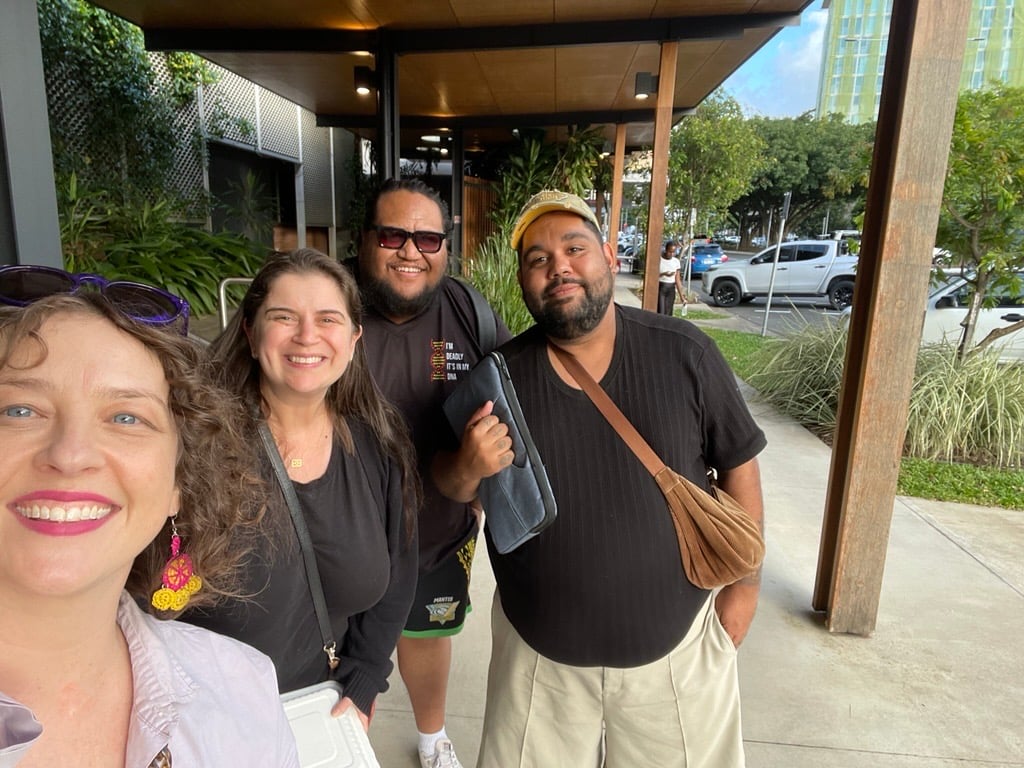
From left – Natalie, Jodie Dowd, Dre Ngatokorua (co-facilitator of the podcasting session) and Kerrod Meredith-Creed
AFTRS Future Student Engagement Officer Kerrod Meredith-Creed was part of the AFTRS team at the Cairns workshops. Kerrod graduated from the Bachelor of Arts Screen: Production in 2021 and said:
“One workshop by AFTRS First Nations changed my life. It gave me the push to chase my dreams. I applied, moved to Sydney, got a degree and built a career. Now I’m living proof that the OCPP works, I want to be that spark for the next Mob coming through.”
The Gimuy/Cairns program saw 40 First Nations creatives from Townsville to the Torres Strait Islands and the Cairns area come together at the Bulmba-ja arts centre to explore storytelling through podcasting and writers room workshops in a culturally grounded space. Radio can be the lifeblood of remote communities and the popularity of podcasts is equally shared in First Nations communities. The workshops aimed to equip participants of all levels and experiences with the knowledge and tools of how to tell their stories, what makes a good podcast, how to develop the idea for a podcast or radio show, planning and producing, recording an episode, video and other visual elements, and publishing podcasts.
After Bidyadanga, planning is underway for future programs across Australia, including in the Northern Territory. Select participants from each workshop will then travel to AFTRS’ Sydney campus on Gadigal/Bidjigal Country in early 2026 to undertake short courses, hands-on workshops and mentoring. Travel, accommodation, and per diems are covered, minimising financial barriers. Alongside the training, AFTRS will engage with experts to conduct a sector-wide skills audit to identify current employment and training gaps for First Nations practitioners. The findings will help shape future iterations of the Program and be made available to industry partners to guide future training initiatives and support.
Pete Noble, AFTRS’ Director of First Nations, Outreach & Events, said:
“We’re excited to empower First Nations talent with tailored training and mentoring and applying for placements, where there is a genuine want and need.
AFTRS is passionate about taking our School into remote and regional areas across Australia to help create career pathways for emerging talent to thrive in the screen, radio, and audio industries.”
Rachel Perkins is thrilled with the positive impact the program has already had:
“The program has really been embraced by the First Nations communities who co-design the workshops with the skills needs and cultural context of local participants at front of mind. And for the participants themselves the outcomes can be life changing.”
Images and video by Kerrod Meredith-Creed.