
This is the eighth in a series of interviews exploring the career and life journey of women in the media industry. The aim of the series is to reflect on the wisdom they have gained during their journey.
So far we have had a cross section of women in different roles and career stages: Lauren Joyce, Laura Bouchet, Cathy O’Connor, Megan Smith, Kim Napier, Amanda Lee and Jacquie Riddell.
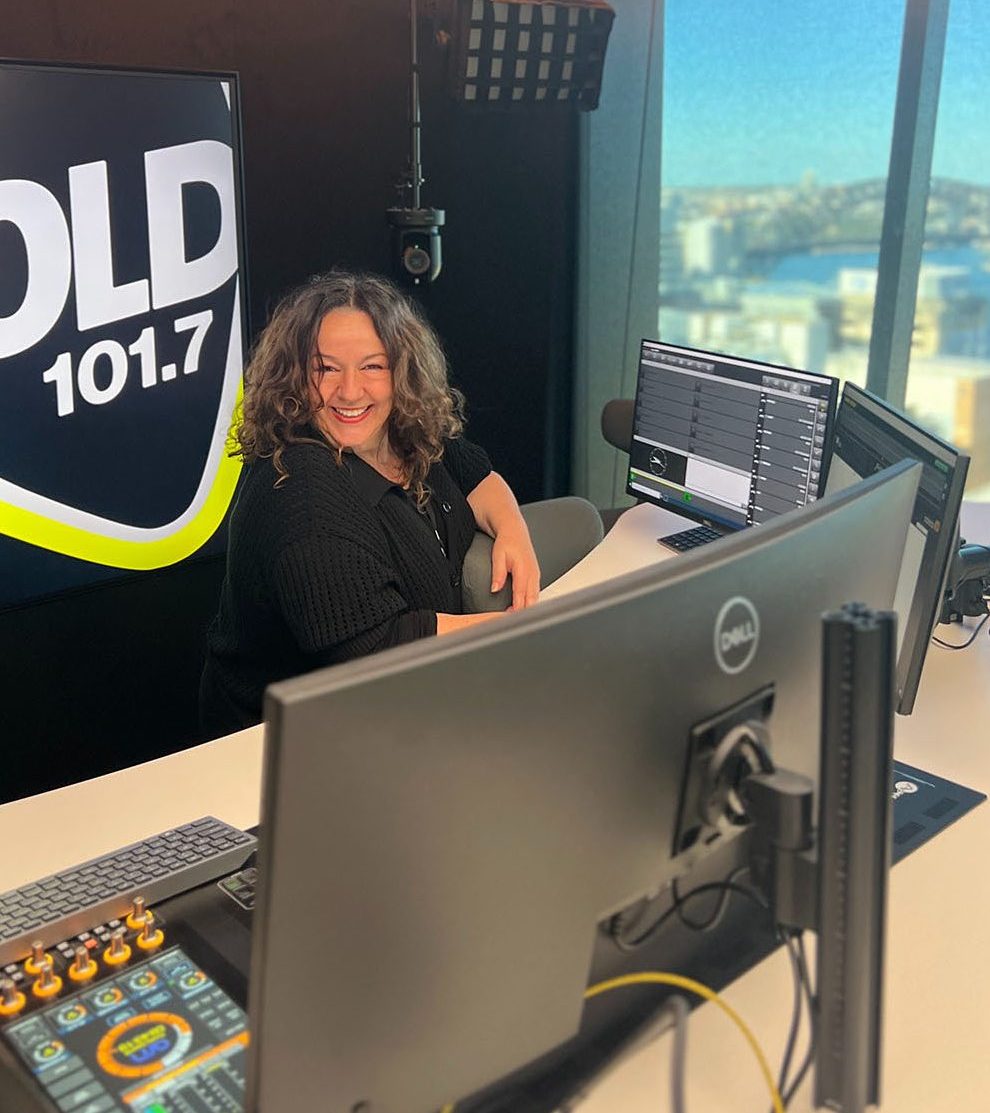
This week we profile Helen Tzarimas, who began her career in commercial radio, went to the ABC and has now come back to commercial radio as journalist and morning newsreader at Gold 101.7.
1. Describe your current professional life and your stage of life.
After three decades in radio news, i have by no means run out of steam or passion for journalism. I’m currently working as a senior journalist and newsreader for the wonderful Jonesy and Amanda at Gold101.7 (owned by ARN).
I’ve had the privilege of working across radio news, radio current affairs, digital journalism, as a radio announcer/presenter, a mentor and I also have extensive experience as a journalism/presentation/media trainer both locally and internationally.
It has been a hell of a ride as I’ve watched the dynamics and evolution of the news media and those who use it. I feel grateful that I am still seen as valuable to this industry, after watching it change dramatically over the last few decades. The job shrinkage and the loss of experience that has gone with that has had a dramatic effect on news services.
I’m still passionate about my job but I guess you could say my focus after three decades has shifted from advancement to impact. I now see this stage of my career as an opportunity to consolidate my experiences and contribute in ways that matter most. I really hope to leave a legacy of integrity and dedication.
2. How did you come to be in this industry?
As a kid, I dreamed of being a journalist – probably because I was nosy, always asking questions, loved telling stories, and thought it might have been really cool to be the one to inform people. So naturally, when it came time to further my education, I went into psychology (don’t ask me why, maybe it sounded deep?). But somewhere between Freud and successive semesters, I had a horrifying realisation – if I kept going, they might actually let me mess with people’s minds – legally.
That felt like a terrible idea – for both me and the patients I would be inflicted upon. So I re-assessed and realised it would be safer to move into communications studies. Thankfully, it worked out. I became a journalist, just like the nosy little kid in me wanted.
3. What are your core beliefs? How are your values evident in the work you do or the life you lead?
I believe that ethical journalism enhances the power of democracy. Truth telling values fairness and empowers people to make informed decisions . I also strongly believe honesty and facts are far more important than anyone’s spin.
In both my professional and personal life, I aim for integrity and inclusion. I think I’m a good listener and observer of people – their words, actions and body language often tell the truth. It can actually feel a bit unsettling when you see through what they want you to hear.
I also try to approach decisions with fairness and transparency, and I see leadership as a way to empower and strengthen others.
4. How did your education, formal and informal, enrich your career/ life journey?
I’m going to be honest, formal education was good, but there is nothing like the learning curve that comes from working in a fast-paced radio newsroom as that’s where I learned the most, thinking on my feet and quickly.
Using critical thinking at pace to understand the core, main impact or even the legitimacy of a story/news item, and of course, the never-ending deadlines. It’s a learning curve that soaks up a lot of adrenalin, especially at the start of a career. The adrenaline rushes tapered off the more I saw (news-wise).
However, and thankfully, the adrenaline surges never go away completely if you remain passionate, because, just when you think you’ve heard it all…..along comes something that you’d never imagined. I can’t say that much shocks me these days, but sometimes I do get winded…
A couple of big ones for me (there’s no room for more here, but there are SO many stories I could tell): the disappearance of Malaysia Flight 370 and being in the newsroom, watching live an earthquake destroying parts of NZs Christchurch, just weeks after I had been in those buildings as a tourist.
I am a firm believe that the truth is stranger than fiction.
5. When did you stop, take a break or try something different in your career? How did this change impact you?
I took a six month break when I left the ABC in 2023. It’s by far the longest break I’ve ever taken from journalism and it was exactly what I needed.
It gave me the opportunity to explore and try new things. I even did a stint writing feature articles and I loved doing that again!
You see, if you spend a long time (or decades in a lot of cases) doing what I call, talking about mostly death, destruction and hatred, it can take a toll – even when you have a strong grip on that necessary coping mechanism known as a warped sense of humour.
And, in radio/audio news, you get to repeat versions of all that every half hour – or as in one job I had, every 15 minutes!
Despite all that, and after an extended break spent contemplating a peaceful, normal life, I was inevitably undone by the scent of news, my inability to mind my own business, and a questionable dependence on adrenaline, cortisol. Naturally, I found myself back in a newsroom.
6. What makes you happy? What makes you get up in the morning?
I love my job – being the ‘bearer of news’. I take it very seriously because I believe informing an audience of what could affect their lives or those around them is a privilege and a big responsibility. I also follow the news cycle closely – not just because it’s my job, but because I am genuinely interested.
Journalism also brings with it lifelong learning and I love that. Whether it’s new events, technologies, policies, conflicts, perspectives and cultural shifts or the way the industry is being affected by change (there’s been a bit of that lately – hello digital/blogs. podcasts. AI etc) I mean, I went from being a complete luddite to helping pioneer digital at the ABC at least 15 years ago.
I love a challenge, which is why I’ve tried so many different roles in journalism. One thing you learn quickly is the world is always evolving and that fascinates me.
I’ve been lucky enough to be a part of almost every show I’ve read news for.
From my early gigs on FM radio, to surviving the wild energy of the late, great Stan Zemanek at 2UE and working with legends including Richard Glover at the ABC. The chaos, the laughs, the live mics, my (excellent) banter, and my (hilarious) sense of humour, all the while, maintaining my credibility as a newsreader. Did I mention it’s been a wild ride?
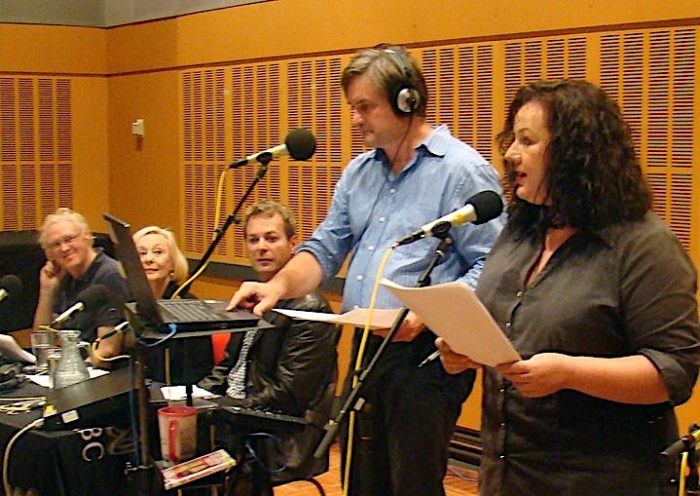 Helen Tzarimas and Richard Glover on TGIF |
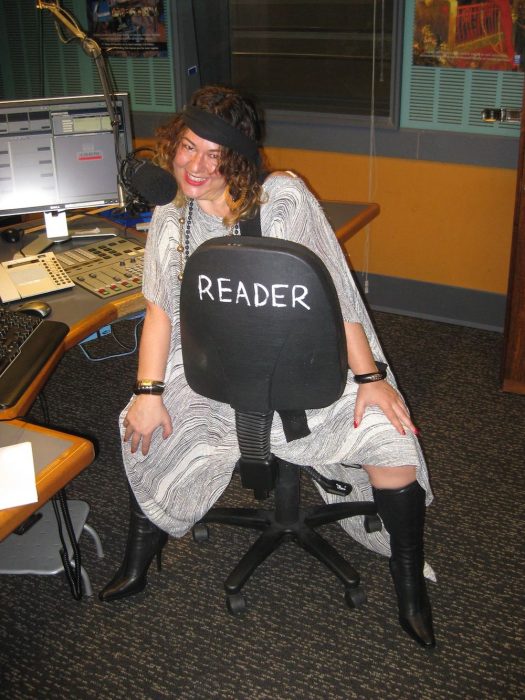 Helen in fancy dress for TGIF |
7. How is it different working in the Gold newsroom compared with the ABC?
Well, it’s completely different, but just as I loved working at the ABC, I love working at Gold.
I apply the same editorial principles as I did in my almost 19 years at the ABC. There is no compromise and the audience is still front and centre of everything I do.
Of course, it is a much smaller newsroom, but that has its benefits and I love the lack of rigidity with news bulletins which I believe provides a better listener experience.
When I first joined ARN after leaving the ABC and taking a six month break, it was like going home. I started my career at FM stations and to be honest, I’ve always missed the music!
And I don’t want to brag, but I could never be bored by the extensive harbour views from our North Sydney headquarters.
8. Share your words of wisdom for others in the industry or those wishing to work in the industry?
I urge anyone wanting to be a journalist to ask themselves a series of questions to work out their motivation.
That includes why they want to be a journalist – is there genuine curiosity about people and how the world works coupled with an open mind?
Could they handle constant deadlines and work under intense pressure?
Are they prepared to report facts that are unpopular or uncomfortable? #NoFearNoFavour<
Do they understand the responsibility that comes with shaping public perceptions?
Are they willing to work early and late shifts and get paid a tonne to do so (joking about the pay)?<
Once you’re in, I recommend you try every aspect of journalism.
My advice is to become an all-rounder. There are immense benefits in learning journalism from all perspectives for both you and your audience.
It means reporting from the newsroom and from the field, producing news stories/bulletins/programs on various platforms, podcasts and whatever else you can get your news sense into.
I think I have done everything there is to be done in audio news and possibly digital news. I have also, as mentioned earlier, taken on digital in a pioneering role and still keep up to date with that platform. I’ve produced and presented my own national programs, and produced other programs. I’ve been a field reporter for a major radio station.
I’ve mentored and trained more new journalists than I can remember. I have taught undergraduate radio news at a major Sydney university and digital journalism to postgraduates at another. My teaching/training skills also led me to overseas opportunities with radio and tv journos.
I’m also now venturing into the podcast world. But that’s all I can say at this stage 😉
Oh, and if you’re lucky, you’ll get painted for the Archibald’s, like I was in 2015.
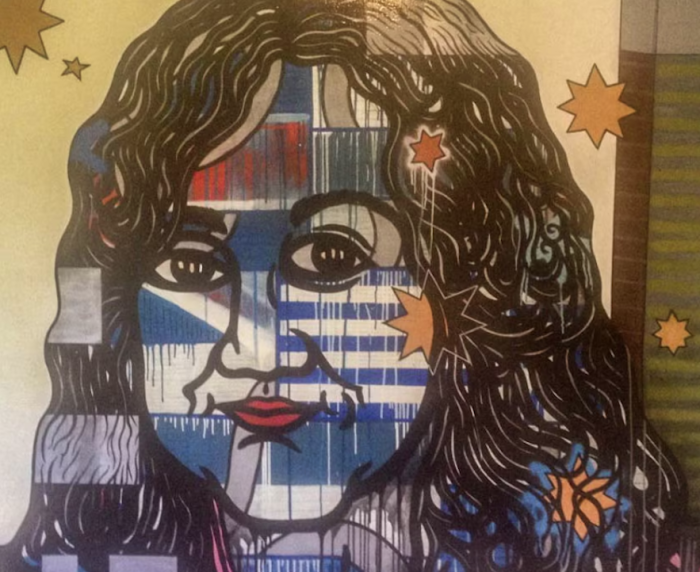
Artist Justin Feuerring’s portrait of ABC Radio newsreader Helen Tzarimas for the 2015 Archibald portrait prize. (Supplied)
9. Describe your vision for the audio media industry in the near future.<
I think we need to be flexible and give the audience what it wants, how it wants it. The target audience and its evolving behaviour should be front and centre, after all, it is the reason we exist.
I would hope that the industry is not afraid of the global changes as there’s no escaping them or how they influence audiences.
I know there’s some talk that traditional broadcasting is in trouble, but I prefer to think it’s evolving for the better. Remember they thought video would kill the radio star, it didn’t, it just changed it.
10. What role would you like to play in shaping the audio industry of the future?
I would love to immerse my experience in the evolution of the audio industry, no matter which way it goes. I hope there will always be a place for experienced audio operators – it’ll just be different. And I like change.
Series compiled by Serena Ahern for radioinfo.
If you have a suggestion for someone to be considered for this series, please send a note to [email protected]
Previous articles:
Wisdom of Women in Media: Kim Napier, Breakfast Presenter ABC Northern Tasmania
Wisdom of Women in Media: Megan Smith, Senior Producer Gold 101.7
Wisdom of Women in Media: Laura Bouchet, Content Director Triple M
Wisdom of Women in Media: Lauren Joyce, Chief Audience & Content Officer ARN