
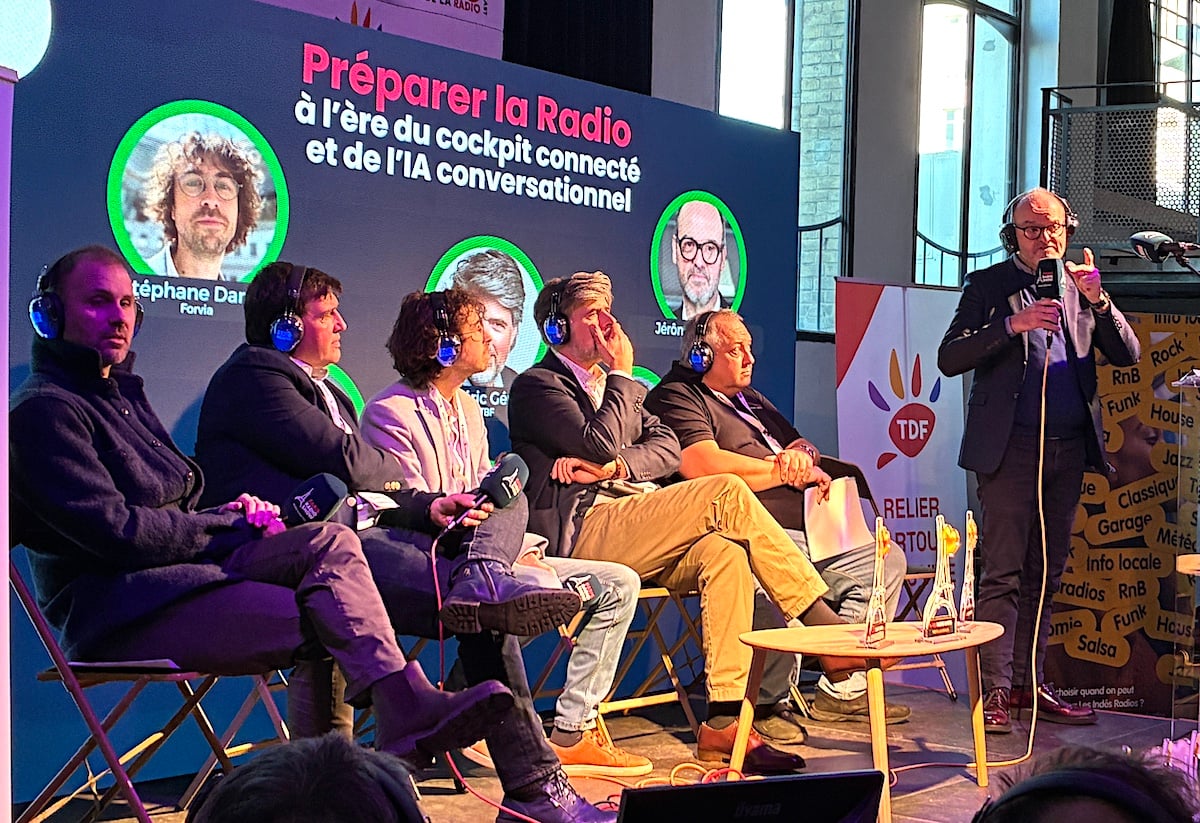
Many automobile discussions I have heard at conferences have begun from the point of view of radio. At the Paris Radio Show, there was a wide ranging discussion about the future of audio in cars that offered a refreshing approach, starting from the viewpoint of the driver and the evolving car technology, not the radio industry.
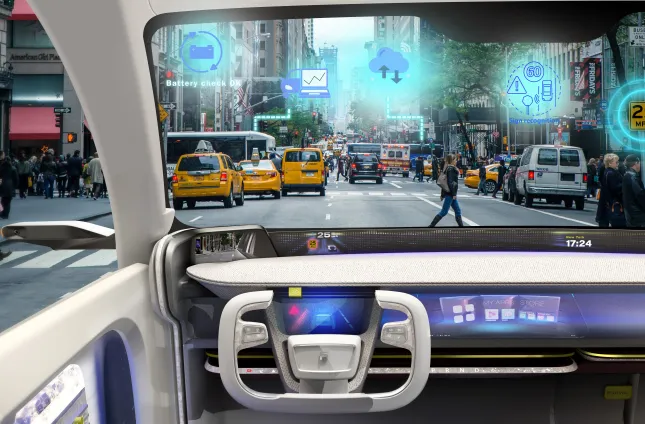
Panellists who have been dealing with the car industry canvassed the future of the ‘cockpit,’ looking particularly at AI, entertainment bubbles and autonomous driving.
With discussion of robot taxis as a possibility for Paris, the panellists referred to San Francisco as an example of one use-case.
As passengers get into an autonomous drive taxi, they are required to talk to the system, which uses voice commands and prompts to verify the booking the person has made through their app. It is expected that passengers will become familiar with giving voice commands to the system, which could extend to tuning the environment by using music or information requested from the entertainment system linked to the voice command functionality.
There is an inherent tension in this, because passengers are required to be aware of their surroundings even though the automated car is doing all the work, but panellists think this is a solvable issue when “the holy alliance between the radio and car industries” work together to develop the best experience for the passenger. Self drive taxis will be one of the best ways to refine the offering for users before autonomous car functionality becomes mainstream for all new car drivers.
In redesigning the cockpit, car manufacturers often raise the possibility of removing radios altogether, but the industry is lobbying governments to mandate that radios stay in the car for the foreseeable future. But lobbying alone is not enough to guarantee radio’s long term “alliance” with connected autonomous cars.
“We need to do the work to make radio enjoyable and appealing in the new cockpit hub environment.”
Enhanced radio interfaces such as RadioPlayer and Xperi’s DTS Autostage are all part of the mission to offer the customer a richer experience. Album art work, station logos, podcasts, catch-up radio and now-playing details are part of the offering, but there needs to be more. The interfaces need to be appealing in the dash environment and additional options need to be available when the car is in self drive mode. Song lyrics, enhanced advertising click through options, ‘buy now’ and ‘bookmark this song in my playlist’ voice commands may be some of those enhancements once the driver or passenger is no longer required to keep their hands on the wheel and their eyes continuously on the road.
As the dashboard is reimagined to go beyond prioritising driver telemetry, it will open up new opportunities for further enhancements, according to Stéphane Darriet from Forvia.
“We can’t force people to listen to radio, nor can we force car makers to love radio, but we will have success if we can show them it is exciting and creative… that there is beauty in the dashboard.” Citing innovative examples from China, he said Chinese cars have “much cooler media content that we think.”
Further innovations on the way include better personalisation of audio. You can personalise the seats in the car to remember your driving position and temperature setting so the car sets the cockpit up to your liking as soon as you press your personalised remote to open the door. The same could be done for your audio settings. Maybe when you start the car your radio can begin by giving you a weather forecast and a news update, before activating your favourite station or show for that day. “It’s about improving the audio user experience.”
Forvia is made up of six international business groups covering different aspects of car interiors: Seating, Interiors, Clean Mobility, Electronics, Lighting, Lifecycle Solutions. Forvia’s electronics division provides “a comprehensive electronics offering” for car makers, including sensors, automated driving and displays.
For audio companies, having the best offering is “a very important weapon in the economic war.”
Frédéric Gerand, the Head of Audio at Belgium broadcaster RTBF reinforced the idea that radio industries should market their offering in a contemporary manner, focusing on UX. He highlighted that live to air radio is “an important part of the user experience, we need to promote it in current terms to show that the consumption of culture and real time reliable information is still very relevant.”
Unlike digital media “we do not hide our identities, we don’t tell fake stories, we are accountable… We must play offensively not defensively,” he said.
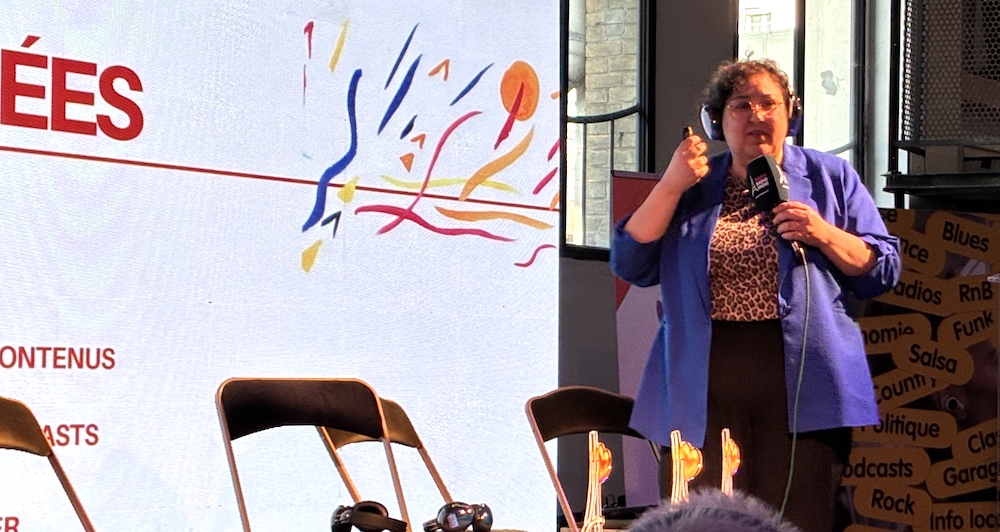
In a later session, with a similar theme of improving the audio industry’s UX offering, Carine Fillot from Elson Media offered techniques for improving the messaging for podcasts and radio. She urged podcasters to optimise their search profile and maximise the content of your metadata so it is easily accessible to search engines and uses the right words for prominence.
Other tips included: update content regularly, build a fan base, enhance discovery by spending a little time each day to work on it, and of course use regular marketing channels so that you reach the audience with a content that gives them something they can use in their lives. “Look at Google trends and use words that trend strongly in your show notes and episode names.”
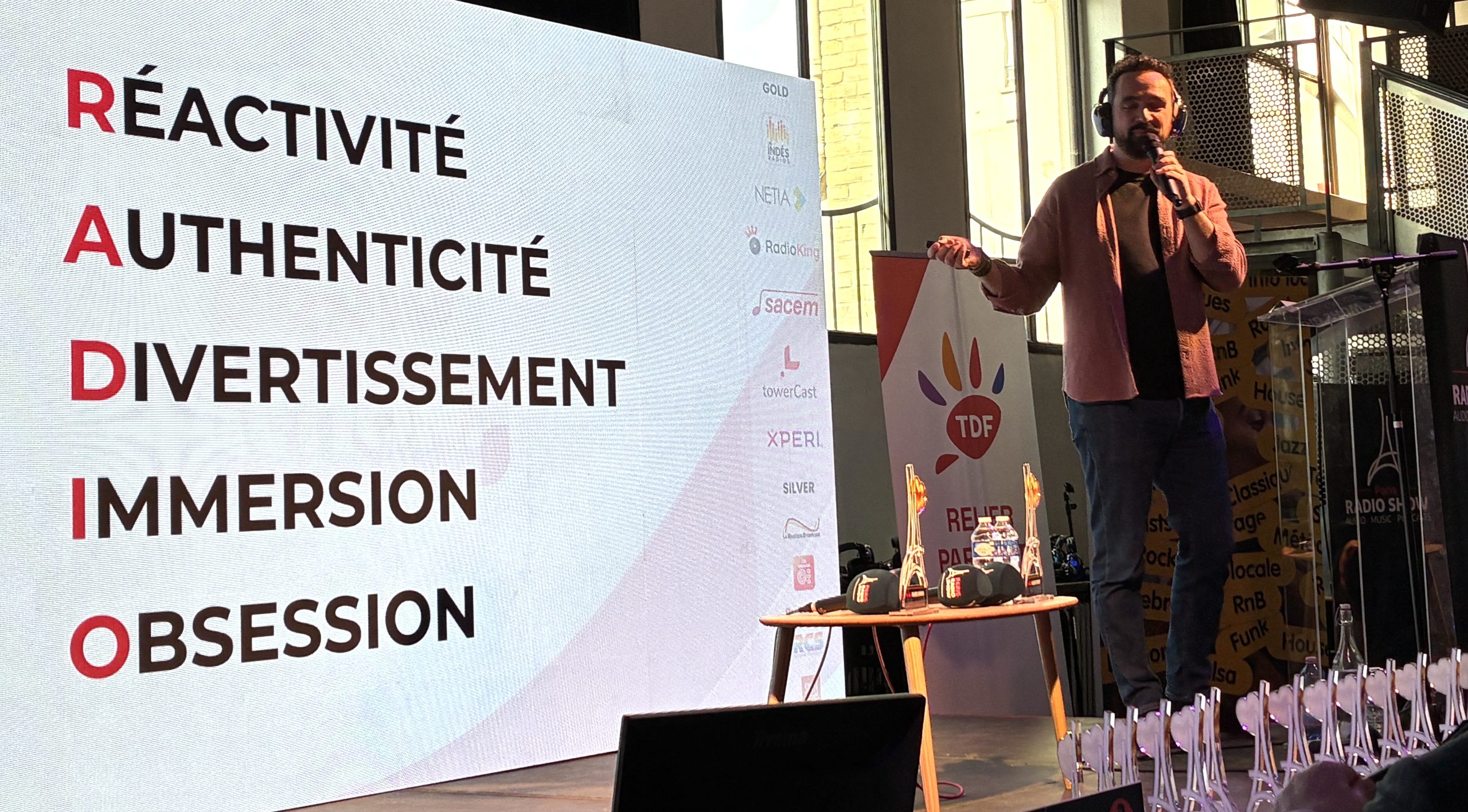
From marketing insights to programming tips, Vincent Soulet from the Yello Agency shared these programming insights that his clients still find to be successful:
Mornings (ie. Breakfast shows) must be in the now. “People still use breakfast and morning radio to set up their day. There must be lots of small topics relevant to my day throughout the show.”
Your content must be impossible to repeat. “In these days of AI, anyone can use AI to come up with dozens of show prep topics, but they will not be unique. AI can only synthesise what is already out there, the point of difference will have to be the personal experiences or angles that you bring to a topical subject… What was the wine like when you opened the cork last night, what is your take on the football results from yesterday, what was the topic of conversation over coffee in the bar on your way to work this morning?”
Start an events calendar to play topics across the month and year. Reuse topics regularly, but move them around to different hours within your show’s timeslot, come back to them for several days to add to them if the topic is still being talked about.
With changing consumption patterns this ‘in the now’ programming philosophy no longer applies to all timeslots, Find out what the expectation is from your audience at different times of day to determine what they expect their user experience to be. In afternoons and evenings some audiences are gravitation to podcasts as they curate their own content. For these audiences the old idea of ‘appointment listening’ applies. Ensure they are reminded to come back to your content, whether it is live to air or via catchup and podcasts, use every marketing method to create FOMO, so that they will not want to miss out on what is in your show.
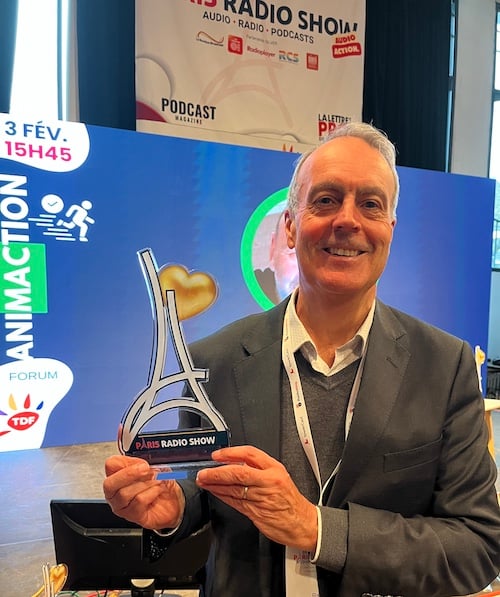
Using his own marketing advice, Vincent said he sometimes has trouble convincing his mother that he has a real job, so he asked the audience to “take a photo of me in front of my slides and post it, so I can show my mother that I am doing something that matters.”
So I did
Reporting:
Steve Ahern in Paris
Related reports:
Radio is a national treasure that needs to be maintained and supported: Paris Radio Show