

78% of Australians listen to radio and 62% listen to commercial radio in any week, according to results from Edison Research‘s Australian Infinfite Dial study.
The results, just released by Commercial Radio and Audio, show that most Australians (94%) listen to audio, in a mix that includes radio, podcasts and streaming music, across multiple audio consumption platforms.
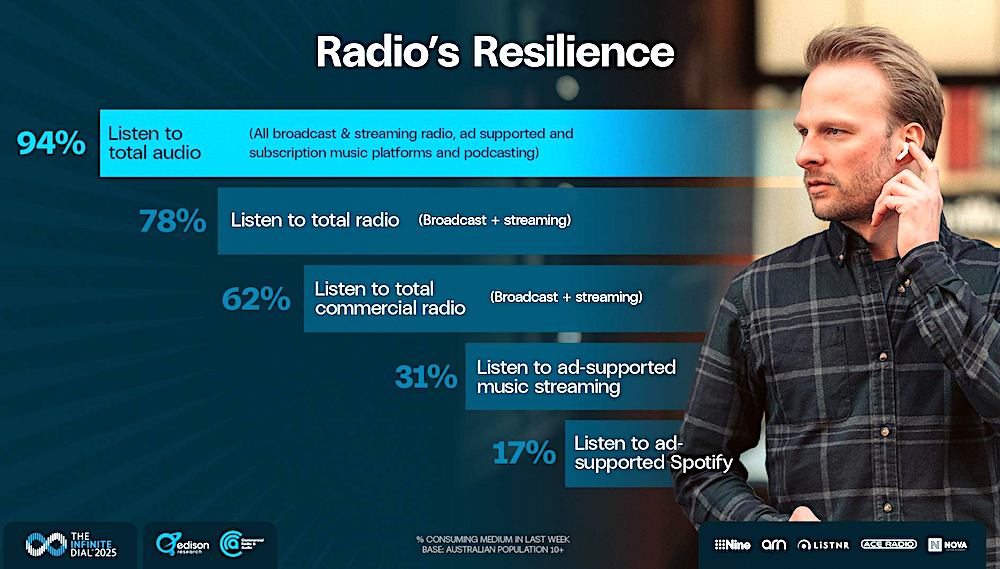
Commercial radio continues to dominate Australia’s audio landscape, reaching 15 million people weekly, four times more than ad-supported Spotify.
The ninth annual report was presented at a webinar led by Edison Research President Larry Rosin, alongside panellists Margie Reid the CEO of agency Thinkerbell and Lauren Joyce, Chief Audience and Content Officer at ARN.
In the panel discussion after the resutls, presentation, Margie Reid revealed that “60% of agencies are predicting an increase in audio spending next year.”
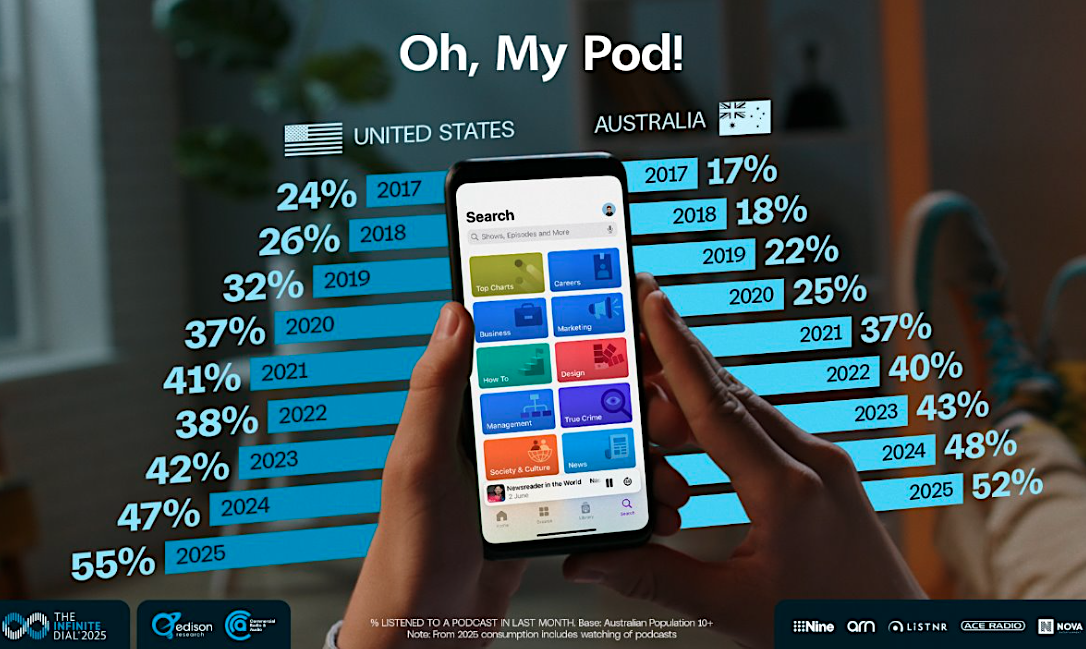
Other findings reveal that half of Australians (52%) are choosing to consume audio or video podcasts monthly. “Podcasts can give advertisers the opportunity to add targeting. There has always been targeting through different radio formats, but now podcasting can allow advertisers to drill into very specific audiences. Put them together and you achieve tremendous reach,” said Rosen.
Total radio remains the top choice for in-car audio, with 84% of Australians 18+ who travelled in a car in the past month tuning in while on the road. Radio’s digital evolution is now well established, with more than one in four Australians streaming radio in their cars, demonstrating how audiences are embracing new ways to access their favourite content.
The report also reveals that smart speaker ownership is a fixture for four in ten Australian households, maintaining its role as popular touchpoint for audience connection. “Owning a smart speaker is important people with smart speakers listen to more audio,” said Rosen.
Lauren Joyce said: “Smart speaker success speaks to the accessibility of audio. We’ve grown our understanding of how audiences want to connect with audio. We can now deliver content to suit their interests through radio’s many different formats and different devices… Radio is an enormous reach builder. Bring them into the funnel with radio, then target them further once they are in the funnel.”
Rosen also highlighted the power of ad supported radio for advertisers. “Commercial radio has changed with the times and consumers are going with new methods of listening. Compared with the ad supported version of Spotify, [ad supported music streaming] pales into insignificance against the broad reach of commercial radio.”

In the discussion that followed Rosen’s presentation of the statistics, Lauren Joyce advised advertisers to consider radio’s mass reach in combination of podcasting’s niche targeting to get the best results for campaigns. “Radio is not a ‘legacy medium,’ it is a content format. Consumers have changed the way they are accessing that format. Considering radio only as a ‘channel’ is a mistake.”
Margie Reid highlighted the need for good creative to reach audiences through audio: “People, are hungry for content, use the power of audio to get in their ears and use creativity to connect them with great content.”
Larry Rosen’s takeaway was: “Audio is a dynamic and powerful space, it is changing, people are excited about it. It’s a very intimate medium that creates a powerful bond for advertisers.”
At a time when the cost of living is rising and people are cutting back on subscription services, ad supported free to air commercial radio is well ahead of ad supported music streaming services in audience reach.
The ABC’s free to air taxpayer supported stations and community radio’s sponsor supported broadcasters are also other offerings for those cutting back on subscription audio services. Australia has a rich audio landscape.
The full presentation is available for download here.