

This is the seventeenth in a series of interviews exploring the career and life journey of women in the media industry. The aim of the series is to reflect on the wisdom they have gained during their journey.
So far we have had a cross section of women in different roles and career stages, from the first feature with Lauren Joyce to the most recent articles on Justine Kelly, Lizzie Young, Archana Kapoor, Millie Starling and Emma Lawson. All the past features are listed below.
This week we profile, Andrea Ho who began her career in Melbourne community radio, then moved to work in ABC regional radio stations where she was at the forefront of emergency broadcasting, before combining her love of audio and podcasting with teaching and mentoring students. She now works as Discipline Lead, Radio and Podcasting at AFTRS.
1. Describe your current professional life and your stage of life.
At present I’m teaching for the Graduate Diploma of Radio and Podcasting at AFTRS. Some people say I’m in the third phase of ‘learn, do, teach’ which is true, but that sounds linear which it isn’t. What drew me to AFTRS was the chance to drive transformational change for the course, in line with industry change and AFTRS strategy; paired with teaching has been a gift. I’m also still doing some radio and some podcasting. So I think my professional career is more matrix-like, and perhaps cyclical with more learning and doing ahead.
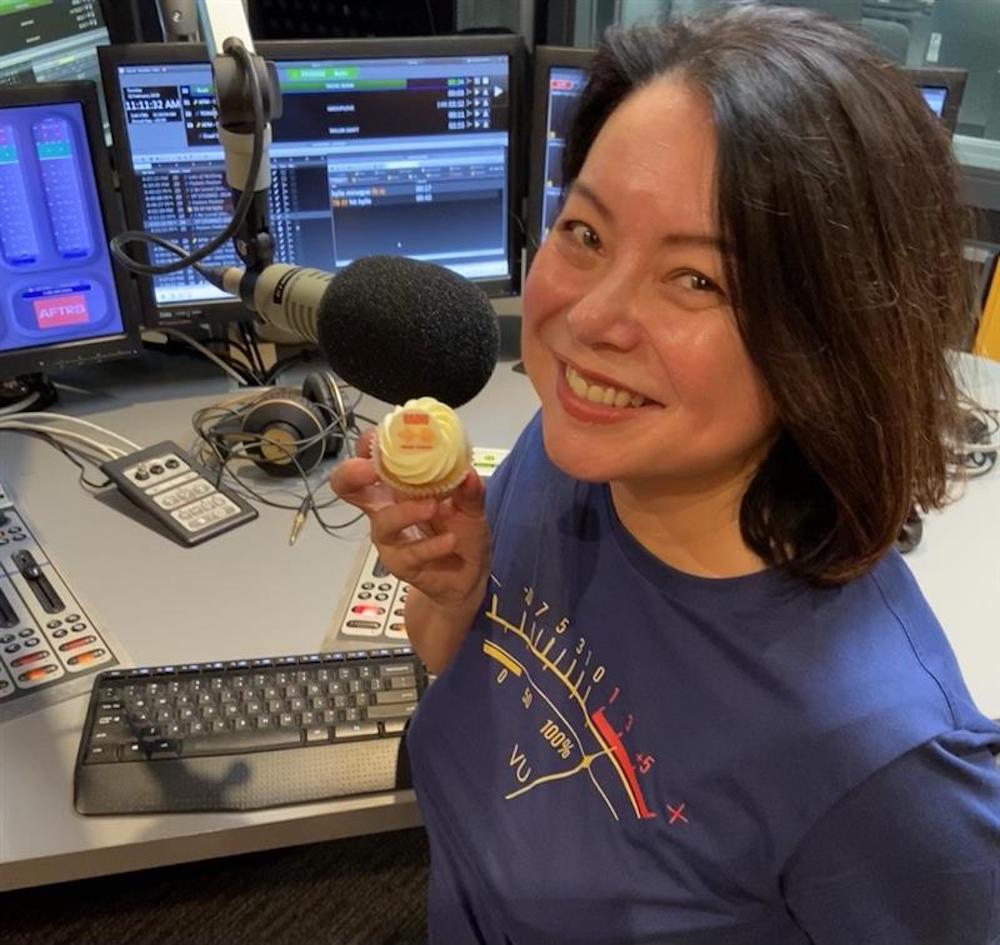
In the studios at AFTRS, on World Radio Day 2025!
A more personal and frankly weird way to look at this stage of my life is, I’ve worked in audio so long that almost everything in the world looks like audio. It’s the only framework I really have for life. Everything is like a program. Teaching a class? Running a meeting? Hosting an event? They’re all programs. Doing a presentation? Like a segment. Stakeholder engagement? That’s talkback. Managing a team? Project contract? Like a series. Weird mindset, but it works for me.
2. How did your education, formal and informal, enrich your career/ life journey?
One day at high school a teacher asked why I was aiming for the sciences when my best marks were in English. I had no idea what to do with that. They suggested journalism.
This was not a popular choice in my family who were about as far from media as it gets. It looked like a dangerous move, a waste of the opportunities they’d worked so hard for. The compromise was to do a university degree before pursuing media so I studied journalism.
It proved a good move to at least learn some craft skills as I had no industry contacts whatsoever. My poor family looked on with a mix of disapproval, bemusement, and support for me despite my rash life choices.
3. How did you come to be in this industry?
Walking into the student radio station at RMIT with some classmates quite literally changed my life.
BR (Before Radio) I had vague notions of being a feature writer, maybe doing TV one day, but none of it was quite landing. At SRA (which has since become part of SYN) there was music, cool people, and we were live-to-air… only to the student cafeteria, but still live! It was so DIY, and we were so close to our audience. Mind blown.
Before that day I had hardly thought about audio. Now I hardly think of anything else. I’ve never looked back.
4. What are some of your key decision change points and how did they shape your career/ life journey?
Some pivotal moments:
• Getting my first story published. The uni lecturers were all hard-bitten ex journos, and most terrifying was our first teacher, Sally White. She spared nothing in her feedback, and I often questioned whether I was cut out for it. She sent us out to gather an original story, but I didn’t know anyone important or famous to interview so I was stumped.
Eventually I wrote about my former high school, a test site for proposed HSC changes: students studying English as a second language aimed for uni to break out of poverty but these new mandatory subjects lowered their prospects for high marks, they were scared and transferring to other schools to escape the trial. Sally told me I had an actual story, subbed the heck out of it, and helped me send it to The Age which printed academic letters in the Education section.
Seeing those words in print showed I could spot stories others might want to hear.
• Moving to the country. As students we were told to get regional experience. Naturally I ignored this, and instead had a great time working at 3RRR because the 90s were a fine time to be alive and in alt-music radio in Melbourne!
Then politics and the community changed: fringe parties emerged with ugly policies I had thought were part of the past. Around me people were laughing or sort of outraged, but I couldn’t understand what was happening. Worse, I began to feel afraid. So I decided to figure it out through journalism. I headed to rural NSW where I had never been and knew no one. It was a big, uncertain leap.
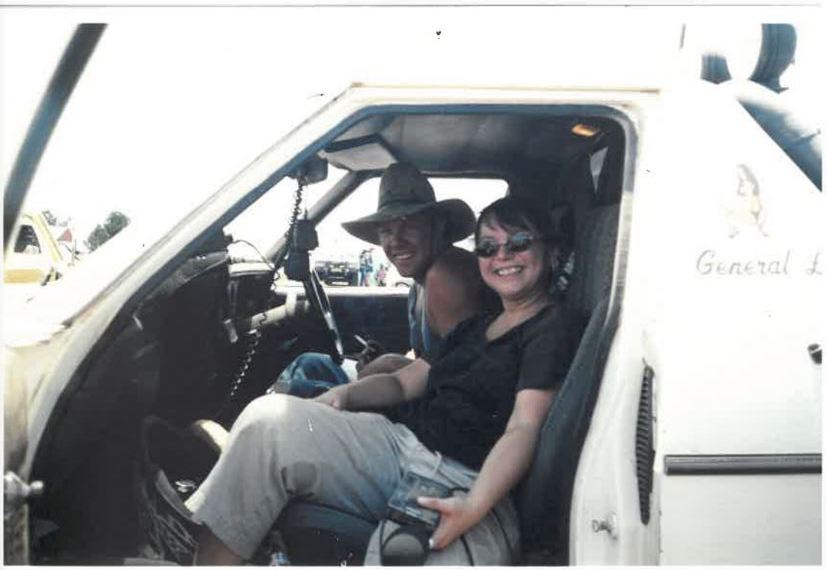
Circlework: field recording at the Tamworth Country Music Festival in 2000, dropped in at the Feral Ute competition.
• Trust: In time I got a job at ABC radio and did a sort of belated cadetship under Jacquie Bowmer, another fabulous hard-bitten old journo. She showed me you are never as close to your audience as in the regions.
I experienced building connection and trust without being judged by appearance, and learned a lot about craft, and about people: how complex we are beyond politics, how important it is to listen deeply, and how impactful it can be to be heard in return.
It was a challenging and amazing time, and I still have good friends there.
• Service: My appreciation of radio was transformed by emergency broadcasting. I’ve broadcast emergency updates for fires and floods over five states; managed a team for a cyclone while backfilling in Darwin, EP’d coverage of the Beaconsfield mine collapse while stationed in Hobart, led a relief team during Black Saturday in Victoria, and oversaw rolling coverage over Black Summer and then the pandemic, for ABC Local.
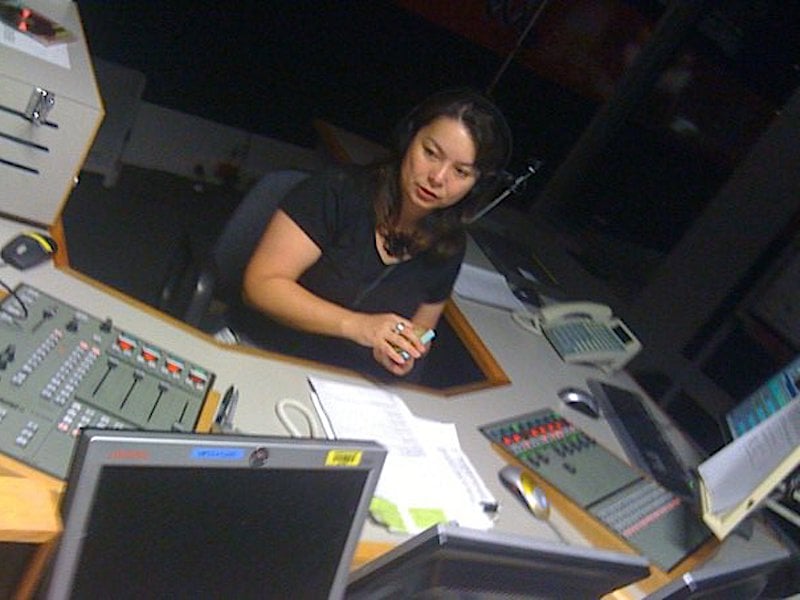
2009 EB for Michelago fires: Newly arrived as station manager at ABC Canberra, with bushfires bearing down on nearby Michelago, I got in with everyone to broadcast emergency updates.
This is what you build trust for: to stand with your listeners and be of service when they need you most. This idea of serving the audience has also underpinned my work to make our industry actually look and sound like Australia as we are today, which informed my Churchill Fellowship and in turn led to co-founding the Economic Media Centre and a period at JNI.
5. What are your core beliefs? How are your values evident in the work you do or the life you lead?
I believe in a fair go.
Not everyone wants the same things – we will naturally go on different journeys and finish in different places and that’s right. What pushes my buttons are the many ways a fair go doesn’t happen, and how often we look away from it. Some people start from so far ahead while others are held back through no fault of their own; we waste so much talent and cause so much pain.
In this industry it’s important wherever I am to hold open the door for the next person and the next, to try to even the opportunities. And where possible to find the flaws in the structure of things, to create lasting fairness so I don’t have to hold doors open anymore.
6. What makes you happy? What makes you get up in the morning?
The thing I love most of all is creating understanding: getting people to see something new, to see and understand each other.
When I’m on radio, I love to get listeners to see an old story in a new way; to hear each other and sit in someone else’s shows for a bit. To think differently, fill in gaps, to reach an “oooohhhh” moment. Same when facilitating events or forums.

2012 LNY: presenting a special national program about Lunar New Year, shining a light on a huge cultural festival celebrated across Australia. Pic taken by program cohost David Hua.
In leadership I loved bringing disparate people together to achieve shared outcomes, where everyone got what they wanted and then a bit more. Techs with content makers? Tick. Competing silos to collaborate for resources and audience? Tick.
Maybe it’s some deep-seated reaction to conflict-avoidance! Or being misunderstood in my youth. Who knows.
7. Share your words of wisdom for others in the industry or those wishing to work in the industry?
Say ‘yes’ as often as you can: make your own ‘luck’ by taking chances.
Make yourself the person others want to invite – to work, to collaborate, to lead.
Have one eye on the future, but the other eye on the present: remember to be in the moment.
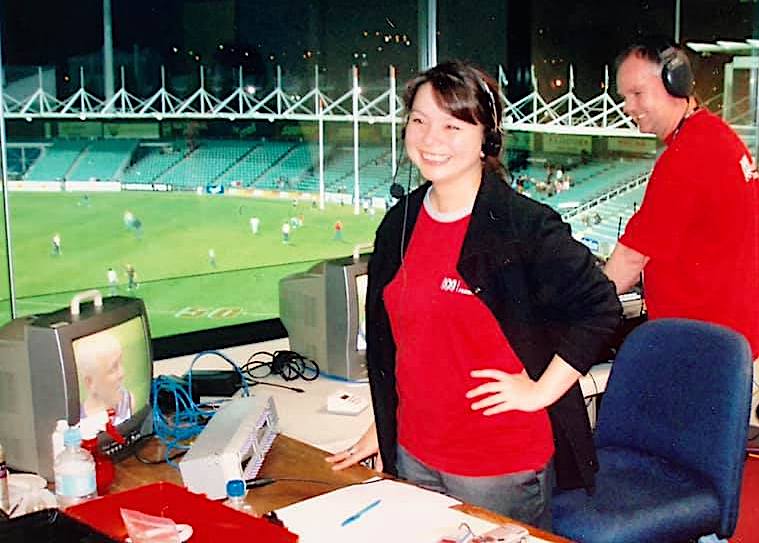
Relive The Rivalry Launceston: Directing the first live radio & DTV simulcast for Relive the Rivalry footy match in Launceston in 2008 as CD for ABC Hobart, pictured here with Michael Merrington. With these new platforms like digital TV channels no-one told us we couldn’t do things so we just did them.
8. Describe your vision for the audio media industry in the near future.
This is an extraordinary time to be in audio. I’ve never before seen so many people with headphones on, earbuds in. Audio-on-demand has added such depth to listening, while live audio has never been more important for the listener in an emergency or battling loneliness. And when we don’t make what listeners want, they can make their own audio – it’s surfacing amazing new talent, while keeping the industry honest and accountable.
Listeners and how they use technology are profoundly reshaping our industry. Change is going to be difficult and painful. There are definitely more challenges and casualties ahead. But (unlike screen or print), I think we are yet to hit peak listening – there is still room for growth. And there will always be a desire for more creativity and originality. I’m hopeful and optimistic.
9. What role would you like to play in shaping the audio industry of the future?
There are so many amazing possibilities to shape the audio industry! On-air with audiences, working with teams, shaping structure and strategy, developing talent – I could do it all, again and again. The only thing I’m not planning to do is be a bystander.
Series compiled by Serena Ahern for radioinfo.
If you have a suggestion for someone to be considered for this series, please send a note to [email protected]
Previous articles in this series:
Wisdom of Women in Media: Emma Lawson, Platform Specialist, ABC
Wisdom of Women in Media: Millie Starling, Content Director & EP, SAFM
Wisdom of Women in Media: Archana Kapoor founder Radio Mewat
Wisdom of Women in Media: Justine Kelly, Manager Audio Output & Strategy, ABC International
Wisdom of Women in Media: Manpreet Kaur Singh, SBS Audio Program Manager
Wisdom of Women in Media: Cheryl Lee Co Founder and Manager Rebel Radio Network
Wisdom of Women in Media: Rebecca Ackland Chief People & Culture Officer SCA
Wisdom of Women in Media: Helen Tzarimas News Reader and Journalist Gold 101.7
Wisdom of Women in Media: Amanda Lee, Head of HIT Metro Content/Fox FM Content Director
Wisdom of Women in Media: Kim Napier, Breakfast Presenter ABC Northern Tasmania
Wisdom of Women in Media: Megan Smith, Senior Producer Gold 101.7
Wisdom of Women in Media: Laura Bouchet, Content Director Triple M
Wisdom of Women in Media: Lauren Joyce, Chief Audience & Content Officer ARN